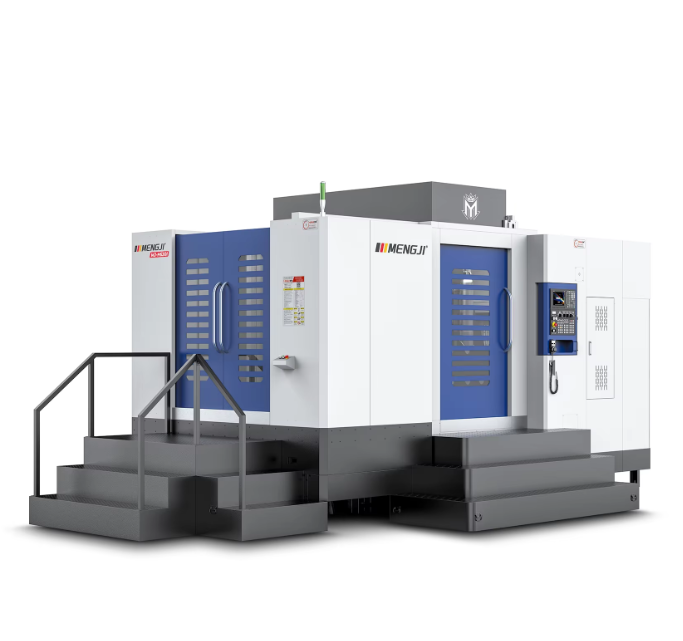
Cost-Effectiveness of Small CNC Machining for Low-Volume Production
Understanding the cost structure in small-batch CNC production
The cost benefits of small scale CNC machining come from running operations in a streamlined way. When making smaller runs, most of what gets spent goes towards running the machines themselves about 35 to maybe 45 percent, then there's labor costs around 20 to 30 percent, and roughly 15 to 25 percent ends up going toward wasted materials. Big manufacturing facilities typically spend around two thirds of their budget just keeping lights on and equipment maintained. But these compact systems cut those extra expenses down significantly, somewhere between 40 and 60 percent while still maintaining good accuracy levels. A recent report from SME in 2024 found that parts produced in these smaller shops actually cost about 27 percent less per item when looking at production runs below 500 pieces. This makes sense because there's simply less overhead to pass along to each finished product.
Reduced tooling and setup costs compared to large machining centers
Small CNC systems eliminate the need for dedicated fixturing and custom tooling, cutting upfront investment in jigs and dies by 80–90% compared to industrial-scale alternatives. This flexibility enables rapid job switching, reducing setup time to one-third that of traditional machining centers—critical for manufacturers producing 5–10 unique parts weekly.
Operating cost comparison: small CNC vs. large machining center
Hourly operating expenses highlight significant savings with compact systems:
| Cost Factor | Small CNC (10-15kW) | Large Machining Center (30-50kW) |
|---|---|---|
| Energy Consumption | $2.10/hour | $8.50/hour |
| Maintenance | $5.80/hour | $14.20/hour |
| Floor Space | $1.50/hour | $6.80/hour |
NIST data (2023) shows total operating costs average $18/hour for small CNC systems versus $53/hour for full-scale centers in low-volume scenarios. This 67% cost differential translates to an ROI within 8–14 months for compact systems, compared to 22–36 months for industrial installations.
Precision, Consistency, and Quality in Small-Batch Manufacturing
Achieving Tight Tolerances with Compact CNC Milling Systems
Modern compact CNC systems achieve dimensional accuracies within ±0.002 inches—sufficient for 85% of industrial applications—and match traditional machining centers in precision. Advanced linear guides and micro-step motor controls enable intricate geometries with positional repeatability below 5 microns. Real-time thermal drift compensation via embedded sensors ensures stable performance during extended runs.
Automated Processes That Reduce Variability and Ensure Repeatability
CNC automation removes human error from 92% of machining stages. Toolpath optimization algorithms dynamically adjust feed rates and spindle speeds to maintain consistent surface finishes. Closed-loop feedback systems automatically compensate for tool wear, reducing dimensional variance by 40–60% compared to conventional setups.
Case Study: Producing Aerospace Components Within ±0.001-Inch Tolerance
An aerospace fastener project recently needed 316L stainless steel components where hole positions had to stay within 0.001 inch tolerance across entire batches of 500 units. The team turned to compact 5-axis CNC machines which managed to hit 99.8% compliance rates. These machines used special boring techniques verified by lasers, recalibrated coordinates during production every 25 parts, and automatically tracked when tools needed replacing after about 78 cycles. What this meant in practice was just 0.2% scrap waste and each part taking less than 8 minutes to make. Pretty impressive really considering these aren't the huge industrial systems typically associated with such tight tolerances. Smaller equipment is proving it can handle big manufacturing challenges these days.
Accelerated Prototyping and Faster Time-to-Market
Rapid Prototyping Using CNC Machining for Iterative Design Validation
The speed difference between small CNC mills and old school methods is pretty staggering actually. We're talking about getting working prototypes done around two thirds quicker, which means most shops can knock out three to four design versions each week instead of just one or two like they used to with hand tools. And what really makes these machines stand out is their ability to tweak cutting speeds on the fly. The spindle can spin anywhere from five thousand to fifteen thousand revolutions per minute while feeding material at rates approaching one and a half meters per minute. This kind of flexibility lets engineers play around with different approaches during development, so when it comes time to make real products, everything has already been tested and refined through multiple trial runs.
Reducing Lead Times and Accelerating Product Development Cycles
CNC-based prototyping reduces development timelines from 14 weeks to 6 weeks for complex mechanical components. Key advantages include same-day toolpath adjustments without retooling, 24/7 unmanned operation maintaining <0.005" tolerances, and energy-efficient performance—compact mills use 38% less power than full-size centers.
Trend Analysis: Shortening Innovation Timelines (2018–2023)
The shift to small-batch CNC prototyping has compressed development cycles across industries:
| Metric | 2018 Average | 2023 Average | Improvement |
|---|---|---|---|
| Concept º Prototype | 22 days | 9 days | 59% faster |
| Design Revisions | 4.7 cycles | 1.9 cycles | 60% reduction |
| Material Waste | 18% | 6% | 67% decrease |
Recent data from automotive prototyping teams shows 72% of companies now complete 90% of product testing during the CNC prototyping phase, avoiding costly late-stage revisions—an average savings of $240k per project.
Flexibility, Customization, and Scalability for Evolving Needs
Design Flexibility and Rapid Iteration Without Retooling
Small CNC systems allow design changes via software updates instead of physical tooling modifications. A 2022 Aluminum Association study found this approach reduces iteration time by 73% compared to traditional methods. Operators can test over 24 design variations weekly—especially valuable for custom medical devices requiring frequent dimensional adjustments.
Support for Customized Parts With Complex Geometries and Material Versatility
Today's compact CNC machines can handle more than 30 different engineering materials from stuff like aerospace aluminum to specialized plastics such as PEEK, all while keeping tolerances within about 0.005 inches during complex multi-axis cuts. When paired with 5-axis technology, these systems open up possibilities for creating really intricate designs that bigger machines just can't manage without breaking the bank. Think about those smooth, flowing shapes we see in modern product design, walls so thin they measure less than half a millimeter thick, or even tiny internal cooling passages inside components. A recent industry poll from last year showed something interesting too: nearly 6 out of 10 manufacturers now rely on smaller CNC mills specifically for making complicated parts when they need fewer than 500 pieces at a time. Makes sense really, since nobody wants to invest in massive equipment for occasional jobs.
Scalability From Prototype to Growing Production Demands
A single machine capable of making just 10 prototypes actually has the potential to crank out batches of 1,000 units when equipped with those handy automated tool changers and allowed to run longer without needing any changes to the factory itself. According to the SME 2023 report on machining trends, around two thirds (that's 62%) of job shops managed to boost their batch sizes anywhere from three to five times bigger right on their existing small CNC machines whenever there was a spike in demand. And interestingly enough, only about one in five shops needed extra room or more power to handle this increase in production volume.
Resource Efficiency and Sustainable On-Demand Manufacturing
Minimizing Material Waste Through Optimized CNC Cutting Paths
Small CNC machining reduces material waste by 18–32% compared to manual milling (2023 Manufacturing Efficiency Report). Advanced CAM software uses intelligent nesting and adaptive cutting strategies to maximize yield from aluminum blocks and titanium billets. One automotive supplier reduced scrap rates from 22% to 9% by implementing AI-driven nesting algorithms.
On-Demand Production Reducing Inventory Risks and Energy Use
On-demand CNC machining eliminates the need for mass-produced inventory and its associated warehouse costs. A 2024 industry analysis found companies reduce energy consumption by 37% per unit by avoiding climate-controlled storage, cutting 62% of material transport miles through localized production, and preventing 28 tons of CO₂ emissions annually per machine.
Sustainability Benefits of Decentralized, Localized CNC Machining Networks
Regional CNC hubs reduce supply chain emissions and support circular manufacturing. A distributed model delivers:
| Sustainability Factor | Improvement vs Centralized Factories |
|---|---|
| Raw material transport | 84% reduction in freight distance |
| Production lead times | 63% faster order fulfillment |
| Carbon footprint | 41% lower per completed part |
This approach supports compliance with ISO 50001 energy management standards and aligns with global sustainability goals in precision manufacturing.
Table of Contents
- Cost-Effectiveness of Small CNC Machining for Low-Volume Production
- Precision, Consistency, and Quality in Small-Batch Manufacturing
- Accelerated Prototyping and Faster Time-to-Market
- Flexibility, Customization, and Scalability for Evolving Needs
- Resource Efficiency and Sustainable On-Demand Manufacturing