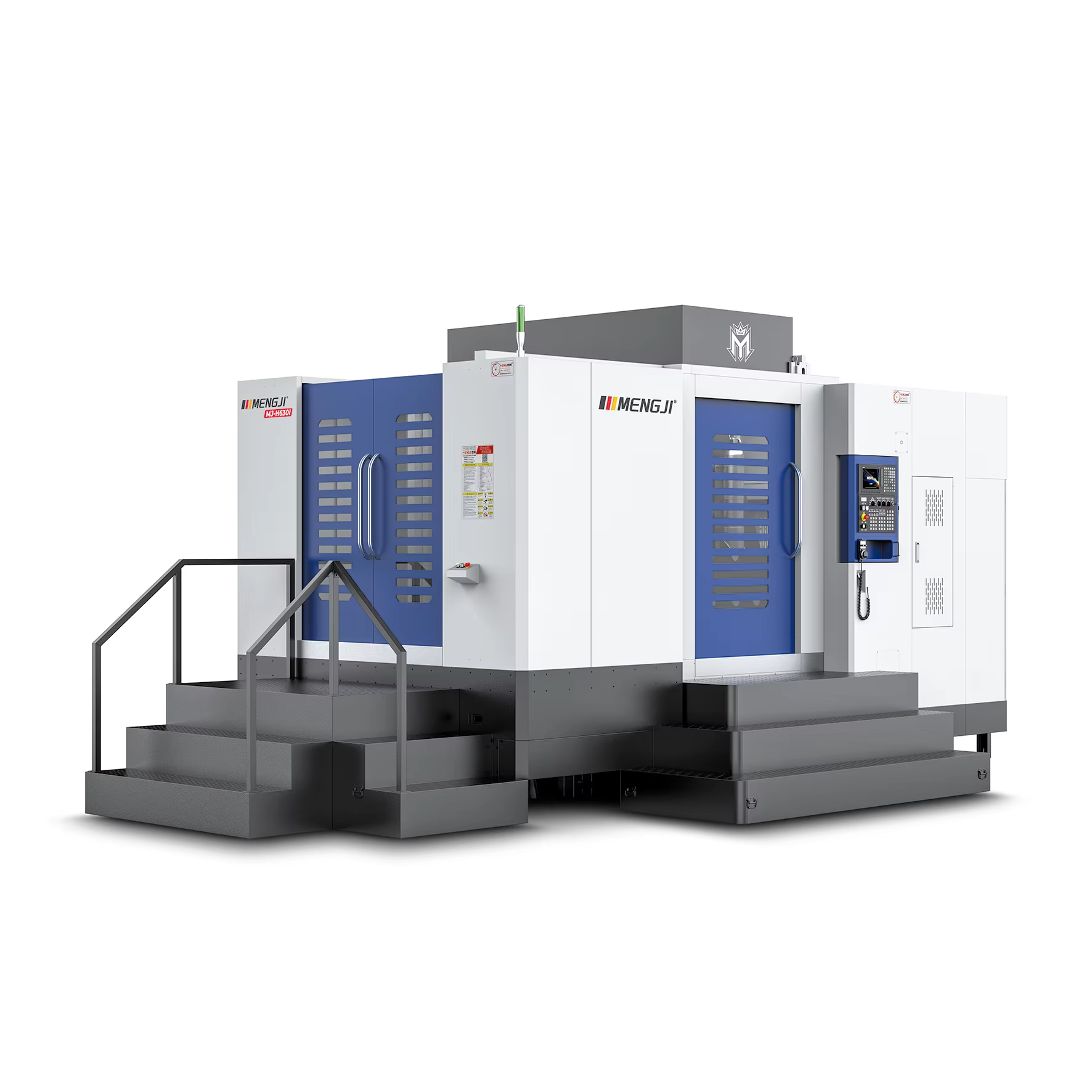
Understanding Horizontal Machining Center Capabilities for Modern Production
Horizontal Machining Center Capabilities for Complex Prismatic Parts
HMCs or horizontal machining centers work really well when dealing with those complicated prismatic parts that show up all over the place in aerospace, energy sectors, and automotive manufacturing. The machines have this horizontal spindle setup combined with tombstone workholding which lets manufacturers machine multiple faces at once without having to constantly reposition parts. This cuts down on handling time especially important for components needing lots of pockets drilled, holes made, and those tricky contour shapes. A recent industry analysis from 2024 actually shows growing interest in these machines among companies making turbine blades and transmission housings. These HMCs can hit pretty amazing tolerances around plus or minus 0.0005 inches thanks to their solid construction and sophisticated thermal compensation technology built right into them.
Transition From Vertical to Horizontal Machining Platforms Driven by Efficiency Needs
More and more manufacturers are switching from vertical machining centers (VMCs) to horizontal ones (HMCs) when they need to boost production output. The horizontal setup cuts down on chip recutting by around 30 to maybe even 50 percent because chips fall away naturally thanks to gravity. This helps keep tools from bending too much and prevents those annoying surface flaws that nobody wants. For things like making cylinder heads where volume matters a lot, car companies have noticed their machines run about 19% quicker now. Why? Because there's no stopping during cutting operations and those automated pallet changers just keep everything moving smoothly without interruption.
Five Axis and Multi-Axis Machining in HMCs Enabling Advanced Geometries
Modern HMCs incorporate five-axis functionality using rotary tables or swivel heads, allowing complete machining of complex geometries—such as combustion chambers and orthopedic implants—in one setup. This eliminates repositioning errors and supports:
- Undercut features for optimized fluid dynamics
- 87–93° sidewall milling with extended-reach tools
- Continuous contouring of non-orthogonal surfaces
High-end models combine rapid traverse rates exceeding 1,500 IPM with spindles up to 20,000 RPM, balancing speed and precision for intricate components.
Assessing Production Volume, Throughput, and Part Complexity Requirements
Production Volume and Efficiency Demands Shaping HMC Adoption
For companies dealing with high mix low volume production, horizontal machining centers just make sense these days. Most shops report real improvements after switching to HMC technology. According to industry reports, around three quarters of manufacturers who adopted HMCs saw their job changeover times drop by about 22% compared to traditional vertical machines. This happens because of those neat pallet systems and the ability to work on multiple axes at once. The real value becomes apparent when moving from small batches under 100 pieces to larger runs between 1,000 and 5,000 units. Shops tell us that during this scale-up phase, HMCs can cut down all that wasted time waiting for setup changes by almost half. Makes a big difference in keeping production flowing smoothly.
Reduction in Cycle Time and Increase in Throughput With Horizontal Machining Centers
A 2024 manufacturing study comparing machine architectures revealed consistent throughput advantages for HMCs across production volumes:
| Production Volume | VMC Cycle Time | HMC Cycle Time | Improvement |
|---|---|---|---|
| Low (50 parts) | 8.2 hours | 5.1 hours | 38% |
| Medium (500 parts) | 41 hours | 24 hours | 41% |
| High (5k parts) | 410 hours | 240 hours | 41% |
Data source: Nature Materials Processing Study
This consistency highlights how automated tool changers and concurrent operations sustain efficiency at scale.
Throughput and Productivity Benefits of HMCs in High-Mix, Low-Volume Environments
For industries such as aerospace and medical device production, many operations actually deal with small batches containing just 25 different components or fewer according to Ponemon's research from last year. This is where HMCs really shine because they cut down on those frustrating setup times so much. The machines come equipped with built-in probing systems along with adjustable rotary tables that make switching from one material to another a breeze. Imagine going from working on titanium engine mounts straight into fabricating aluminum sensor housings within barely 15 minutes total. That kind of transition speed represents about a two thirds reduction compared to what was possible with older methods of setup.
Matching HMC Capabilities to Production Volume and Part Complexity
Picking the right HMC starts with looking at spindle torque requirements. Most shops need at least 40 Nm when working with hardened steels. Pallet capacity matters too, so going for machines with four or more stations makes sense if there's talk about running non-stop operations. Complex prismatic parts that demand tight tolerances down to five microns require special attention. Look for machines equipped with thermally compensated ballscrews and spindles capable of hitting 12,000 RPM minimum. Getting these specs right helps bridge the gap between prototype builds and actual production runs without driving up scrap rates beyond half a percent. That kind of performance difference can really impact bottom line results over time.
Maximizing Productivity Through Automation and Process Optimization
Single Setup Operations and Reduced Operator Involvement Enhancing Productivity
HMCs eliminate manual repositioning by enabling complete machining on multiple sides in one clamping, reducing operator involvement by 60%. This approach maintains positional accuracy within 5 microns, enhancing repeatability and lowering labor costs.
Automation Integration With HMCs (Pallet Pools, FMS, Robots) for Lights-Out Manufacturing
Leading manufacturers achieve 24/7 production using integrated automation such as robotic pallet changers and tool monitoring systems. Flexible Manufacturing Systems (FMS) with 12+ pallets support uninterrupted processing of high-mix parts, proving especially effective for medical implants involving 100+ toolpaths.
Setup Time and Workflow Optimization Through Standardized Fixturing
Modular tombstone fixtures with quick-change hydraulic clamps cut setup time by 75% in automotive applications. Aligned with lean manufacturing principles, standardized workholding allows swift transitions—such as switching between titanium aerospace brackets and aluminum pump bodies in under 15 minutes.
Chip Evacuation in Horizontal Machining Centers Improving Process Reliability
Gravity-driven chip removal in HMCs reduces machine downtime by 25% compared to vertical machines. Auger-based evacuation systems keep the work zone clean, which is critical when machining reactive materials like magnesium, where chip accumulation poses fire risks.
Ensuring Precision, Quality, and Workholding Stability in HMC Operations
Improved Part Quality and Reduced Scrap Rates Due to Stable Workholding
HMCs deliver superior consistency through rigid fixturing that minimizes vibration during high-speed cutting. Advanced clamping systems maintain stability within 0.0004 inches, reducing scrap rates by 18–22% in aerospace production. Hydraulic pallets ensure uniform pressure distribution, vital for thin-walled components susceptible to deformation.
Precision and Tight Tolerances Achievable With Advanced HMC Designs
Top-tier HMCs achieve ±0.0003" positional accuracy using thermally compensated ball screws and linear scale feedback. Multi-stage oil filtration keeps spindle temperatures within ±1°F (±0.5°C), enabling sustained micron-level precision during long cycles. These capabilities allow direct machining of bearing surfaces and sealing interfaces without secondary grinding.
Part Complexity and Multi-Sided Machining Supported by Rotary Tables
Fourth axis rotary tables that offer around 0.001 degree resolution make it possible to machine complicated parts such as turbine blades all at once without needing multiple setups. When running simultaneous five axis operations, manufacturers see a significant drop in handling mistakes somewhere around two thirds reduction actually and they get those smooth tool paths needed for creating organic shaped components. Mold makers really appreciate this capability because things like draft angles and intricate cooling channel designs can now be finished during just one production cycle instead of several separate ones which saves both time and money on the shop floor.
Evaluating Technical Specifications and Return on Investment for HMCs
Tool Capacity and Spindle Specifications in HMC Selection Impacting Performance
Spindle performance must align with material removal requirements. HMCs offering 30+ hp and 15,000 RPM achieve 12–18% faster metal removal rates in aerospace alloys than standard models (Advanced Manufacturing Report 2023). Select machines with automatic tool changers holding at least 120 tools to reduce interruptions during complex sequences.
Workpiece Size, Weight, and Fixturing Considerations for Optimal HMC Utilization
Modern HMCs accommodate workpieces up to 40" x 30" x 25" (WxDxH) with load capacities over 1,500 lbs. Automotive suppliers report 94% first-pass yield using tombstone fixtures that provide four-sided access to medium-sized engine components. For oversized parts, ensure X-axis travel exceeds blank dimensions by 15% to guarantee tool clearance.
Production Speed and Capacity of HMCs Influenced by Axis Travel and Rapid Feed Rates
HMCs with 1,200 IPM rapid traverse complete drilling operations 22% faster than legacy machines while maintaining ±0.0004" accuracy (Precision Machining Journal 2024). Models with 600 mm+ Y-axis travel support simultaneous machining of multiple parts on rotary pallets, increasing throughput in high-volume settings.
Cost Justification and Return on Investment for HMCs in Competitive Markets
Although premium HMCs require investments of $350,000–$500,000, most manufacturers achieve payback in 14–18 months through 24/7 unmanned production of high-value components. A 2023 industry survey found that 83% of adopters reduced part costs by 24% after transitioning from vertical to horizontal machining platforms.
Frequently Asked Questions
What are the main advantages of using a Horizontal Machining Center (HMC)?
HMCs offer enhanced efficiency by reducing handling time, improving chip evacuation, and enabling multi-axis machining which leads to faster and more accurate production. They are especially beneficial in machining complex prismatic parts.
How do HMCs improve production efficiency compared to VMCs?
HMCs cut down on chip recutting and allow for continuous operations without the need for frequent interruptions. This results in reduced cycle times and improved throughput, making them suitable for high-volume production settings.
What type of industries benefit most from HMCs?
Industries such as aerospace, automotive, energy, and medical device manufacturing widely benefit from HMCs due to their capability to handle complex geometries and reduce scrap rates while maintaining precision and quality.
Table of Contents
- Understanding Horizontal Machining Center Capabilities for Modern Production
- Assessing Production Volume, Throughput, and Part Complexity Requirements
-
Maximizing Productivity Through Automation and Process Optimization
- Single Setup Operations and Reduced Operator Involvement Enhancing Productivity
- Automation Integration With HMCs (Pallet Pools, FMS, Robots) for Lights-Out Manufacturing
- Setup Time and Workflow Optimization Through Standardized Fixturing
- Chip Evacuation in Horizontal Machining Centers Improving Process Reliability
- Ensuring Precision, Quality, and Workholding Stability in HMC Operations
-
Evaluating Technical Specifications and Return on Investment for HMCs
- Tool Capacity and Spindle Specifications in HMC Selection Impacting Performance
- Workpiece Size, Weight, and Fixturing Considerations for Optimal HMC Utilization
- Production Speed and Capacity of HMCs Influenced by Axis Travel and Rapid Feed Rates
- Cost Justification and Return on Investment for HMCs in Competitive Markets
- Frequently Asked Questions