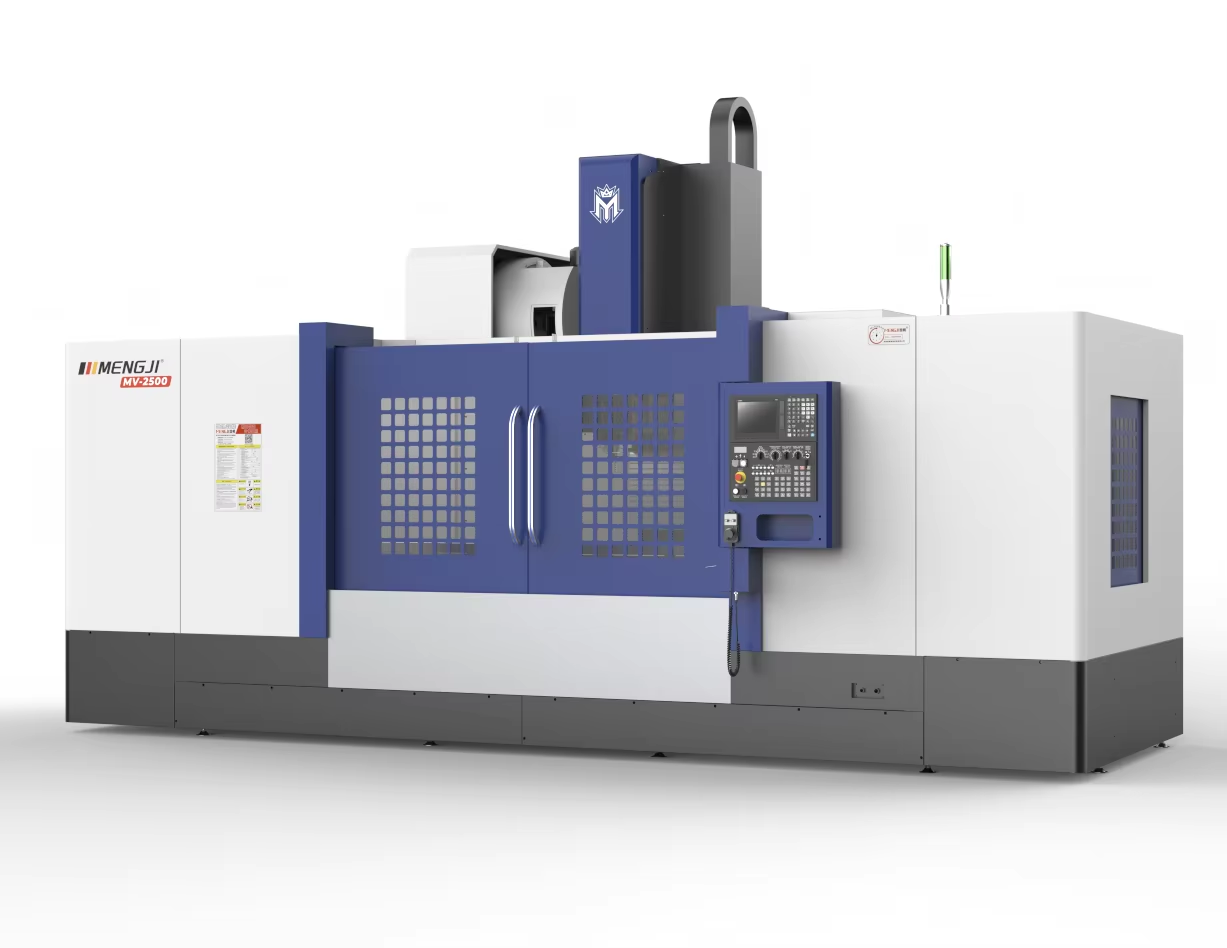
Assessing Production Requirements and Part Complexity
Evaluating Volume, Batch Size, and Production Frequency
Begin by quantifying production needs—low-volume prototyping (≤100 units/year) favors 3-axis vertical machining centers with quick setup, while high-mix batches (5,000+ annually) demand 4/5-axis automation for faster job transitions. Aerospace manufacturers report 27% cycle time reductions when matching batch sizes to machine configurations, as shown in a 2023 machining workflow study.
Matching Machine Capabilities to Material Types and Tolerances
| Material | Spindle Requirement | Tolerance Class |
|---|---|---|
| Aluminum | 15k RPM, 40 HP | ±0.005" |
| Titanium | 8k RPM, 60 HP, box-guides | ±0.0002" |
| High-temp alloys | Geared spindle, 250 ft-lb | ±0.0001" |
Thermally stable bases like polymer granite maintain ±2µm accuracy when milling hardened steels—critical for medical implants requiring Ra <0.8µm finishes.
Defining Output Demands and Expected Throughput
Vertical machining centers with IIoT-enabled toolpath optimization achieve 92% spindle utilization in 24/7 operations. Calculate required throughput using:
(Annual Target Volume) ÷ (Cutting Time per Part + 12% Buffer) = Machine Hours Needed
High-volume automotive suppliers prioritize 600+ IPM rapid traverse and 1.2G acceleration to minimize non-cutting time—key for producing over 20,000 transmission components annually.
Core Technical Specifications: Spindle Performance and Machine Rigidity
Spindle Speed, Torque, and Horsepower for Aluminum, Steel, and Composites
Vertical machining centers today need different spindle speeds depending on what material they're working with. For example, stainless steel typically requires around 12,000 RPM whereas aluminum alloys can handle up to 24,000 RPM. When dealing with harder materials like certain steels, machines equipped with high torque spindles (at least 180 Nm) maintain better performance throughout the job. Composite materials present another challenge altogether. These often demand between 25 and 40 kW of power to keep layers intact during cutting processes. The right combination of speed and torque makes a real difference too. A recent industry study showed that getting this balance right can cut down production time by nearly a third in automotive die manufacturing. That kind of efficiency matters a lot in competitive markets.
Heavy-Cutting Configurations: Geared Spindles and Box-Way Designs for Tough Materials
Geared spindle heads (4:1 ratio) deliver 500—800 lbf-ft torque for titanium milling at feed rates up to 0.5 mm/tooth. Box-way constructions withstand 15—20% higher cutting pressures than linear guides, making them essential for roughing Inconel 718 at metal removal rates of 80 in³/min.
Structural Integrity: Bridge-Style vs. C-Frame and Use of Polymer Granite Bases
Bridge-style machines offer 40% greater torsional rigidity than C-frame models (850 N/µm vs. 600 N/µm). Polymer granite bases dampen 92% of harmonic vibrations in precision turn-mill operations, while thermal growth compensation maintains ±2 micron positioning accuracy over full shifts.
Thermal Stability and Accuracy Control During Extended Operations
Direct-cooled ball screws and axis motors limit thermal drift to 5 microns/meter during extended aerospace runs. Encoder feedback corrects positional errors every 0.0004 seconds, achieving 0.0005 mm repeatability in medical implant manufacturing—a $740k annual saving in rework costs (Ponemon 2023).
Automation, Multi-Axis Integration, and Production Efficiency
Leveraging 4th and 5th Axis Capabilities for Complex Geometry Machining
Vertical machining centers equipped with 4th and 5th rotary axes enable single-setup machining of intricate contours, undercuts, and angled features. This eliminates manual repositioning errors common in 3-axis workflows, improving dimensional accuracy by up to 75% for aerospace turbine blades and medical implants.
Integrating Pallet Changers, Robotic Loaders, and FMS for Unattended Operation
Automated tool changers and Flexible Manufacturing Systems (FMS) reduce idle time between jobs by 40—60%. Plants adopting robotic pallet systems reported 24/7 production capabilities with 30% fewer labor hours, a critical advantage for high-volume automotive component manufacturing.
Reducing Cycle Time: Case Study on Automated VMC Cells in Aerospace
A Tier-1 aerospace supplier achieved a 52% cycle time reduction using vertical machining centers with integrated probing and AI-driven toolpath optimization. Predictive maintenance algorithms cut unplanned downtime by 90% over an 18-month period.
Dynamic Motion Control for High-Speed, High-Precision Performance
Advanced servo drives and ball-screw compensators maintain positioning accuracy within 2 microns at 24,000 RPM spindle speeds. This allows hardened steel mold cores to be finished at 1,200 IPM feed rates without sacrificing surface quality (Ra ≤ 0.4 µm).
Control Systems and Digital Workflow Integration
Seamless CAD/CAM Compatibility and CNC Control Interface Options
Seamless CAD/CAM integration reduces setup time by 25% and minimizes programming errors in complex part production. Modern controllers supporting unified control protocols allow direct import of 3D models, with simulation tools preventing collisions in multi-axis operations—essential for maintaining tight tolerances (±0.0002") in aerospace and medical applications.
Smart Features: AI-Driven Diagnostics and Predictive Maintenance
AI-powered vibration analysis detects bearing wear weeks before failure, significantly reducing unplanned downtime in high-duty environments like automotive die-making. Machine learning algorithms optimize lubrication intervals and tool life management using real-time sensor data, preventing over 90% of potential spindle failures.
Ensuring Reliability in 24/7 Operations with IIoT-Enabled Monitoring
The Industrial Internet of Things (IIoT) enables continuous monitoring of spindle loads and axis positioning via encrypted edge computing devices. Real-time analytics detect thermal growth exceeding 2 microns and trigger automatic tool compensation to preserve precision during long runs. Manufacturers implementing these systems report 99.95% operational availability in round-the-clock production settings.
Total Cost of Ownership and Future-Proofing Your Vertical Machining Center Investment
Balancing Upfront Costs with Long-Term ROI and Downtime Reduction
The real money sink in precision machining isn't what we pay upfront but what keeps coming out year after year. Operational costs typically eat up between 60 to 70 percent of total lifetime expenses, which means spending less on equipment doesn't always mean saving money long term. Recent industry data from 2024 shows something interesting though. Companies that splurge an additional $50,000 on better thermal stability parts end up pocketing around $150,000 each year just by avoiding production stoppages. When setting up machines, look for systems that handle acceleration and deceleration under 25 milliseconds and come with automatic calibration features. These specs help maintain those tight ±0.002mm tolerances even when running nonstop shifts. Most shops find this balance makes all the difference between profitable operations and constant headaches down the line.
Hidden Expenses: Installation, Training, and Service Agreements
Nearly 40% of first-year total cost surprises stem from overlooked factors:
- Site Preparation: Reinforced concrete foundations ($18k—$35k)
- Operator Training: 120—160 hour CNC programming courses ($9k/operator)
- Preventive Maintenance: 500-hour service intervals consuming 7% of annual uptime
Shops bundling extended warranties with IoT-enabled condition monitoring report 23% lower service costs over five years.
Scalability Through Modular Design and Readiness for Hybrid Manufacturing
Forward-thinking manufacturers adopt bridge-style VMCs with standardized interface plates and 600mm+ X-axis travel. These support seamless integration of:
- 4th/5th axis rotary tables
- In-process inspection probes
- Directed energy deposition (DED) heads for hybrid additive manufacturing
Modular pallet systems reduce retooling time by 70% when managing complex aerospace component families.
Investing in Smart Factory Alignment: IIoT and Industry 4.0 Preparedness
Modern VMCs equipped for Industry 4.0 applications cut down on unexpected machine stoppages by around 55%, thanks mainly to those vibration sensors that can spot problems with spindle bearings anywhere between 300 to 400 hours before they occur. These machines also come with built-in thermal compensation features and work seamlessly with MES/MOM systems via OPC-UA protocols. What really makes them stand out though is their cloud connectivity. Manufacturers can now compare thousands of machining parameters in real time across different locations worldwide. We're talking about something like 12,000 data points being analyzed simultaneously. This has completely changed how quickly plants can optimize their processes, cutting what used to take weeks down to just a few hours in many cases. The speed improvements alone make these systems worth considering for shops looking to stay competitive.
FAQ
What are the key considerations when choosing between 3-axis and 4/5-axis machining centers?
3-axis machining centers are ideal for low-volume prototyping, particularly when production volume is ≤100 units/year, as they offer quick setup. 4/5-axis machining centers are better suited for high-mix batches (5,000+ annually) due to their ability to handle complex geometries and faster job transitions.
How do spindle speed, torque, and horsepower affect machining performance?
Different materials require different spindle speeds. For instance, aluminum alloys can handle speeds up to 24,000 RPM, whereas stainless steel might require around 12,000 RPM. The right combination of speed and torque enhances performance, especially when working with harder materials or composites.
What benefits do automation and IIoT bring to vertical machining centers?
Automation, such as integrating pallet changers and robotic loaders, reduces idle time and facilitates 24/7 production capabilities. The IIoT enables continuous monitoring and analytics, resulting in higher operational availability and reduced unplanned downtime.
Why is it important to consider total cost of ownership when investing in vertical machining centers?
Though upfront costs are significant, operational costs account for a larger portion of total expenses over time. Investing in advanced features may result in long-term savings through reduced production stoppages and higher machine reliability.
Table of Contents
- Assessing Production Requirements and Part Complexity
-
Core Technical Specifications: Spindle Performance and Machine Rigidity
- Spindle Speed, Torque, and Horsepower for Aluminum, Steel, and Composites
- Heavy-Cutting Configurations: Geared Spindles and Box-Way Designs for Tough Materials
- Structural Integrity: Bridge-Style vs. C-Frame and Use of Polymer Granite Bases
- Thermal Stability and Accuracy Control During Extended Operations
- Automation, Multi-Axis Integration, and Production Efficiency
- Control Systems and Digital Workflow Integration
- Total Cost of Ownership and Future-Proofing Your Vertical Machining Center Investment
-
FAQ
- What are the key considerations when choosing between 3-axis and 4/5-axis machining centers?
- How do spindle speed, torque, and horsepower affect machining performance?
- What benefits do automation and IIoT bring to vertical machining centers?
- Why is it important to consider total cost of ownership when investing in vertical machining centers?