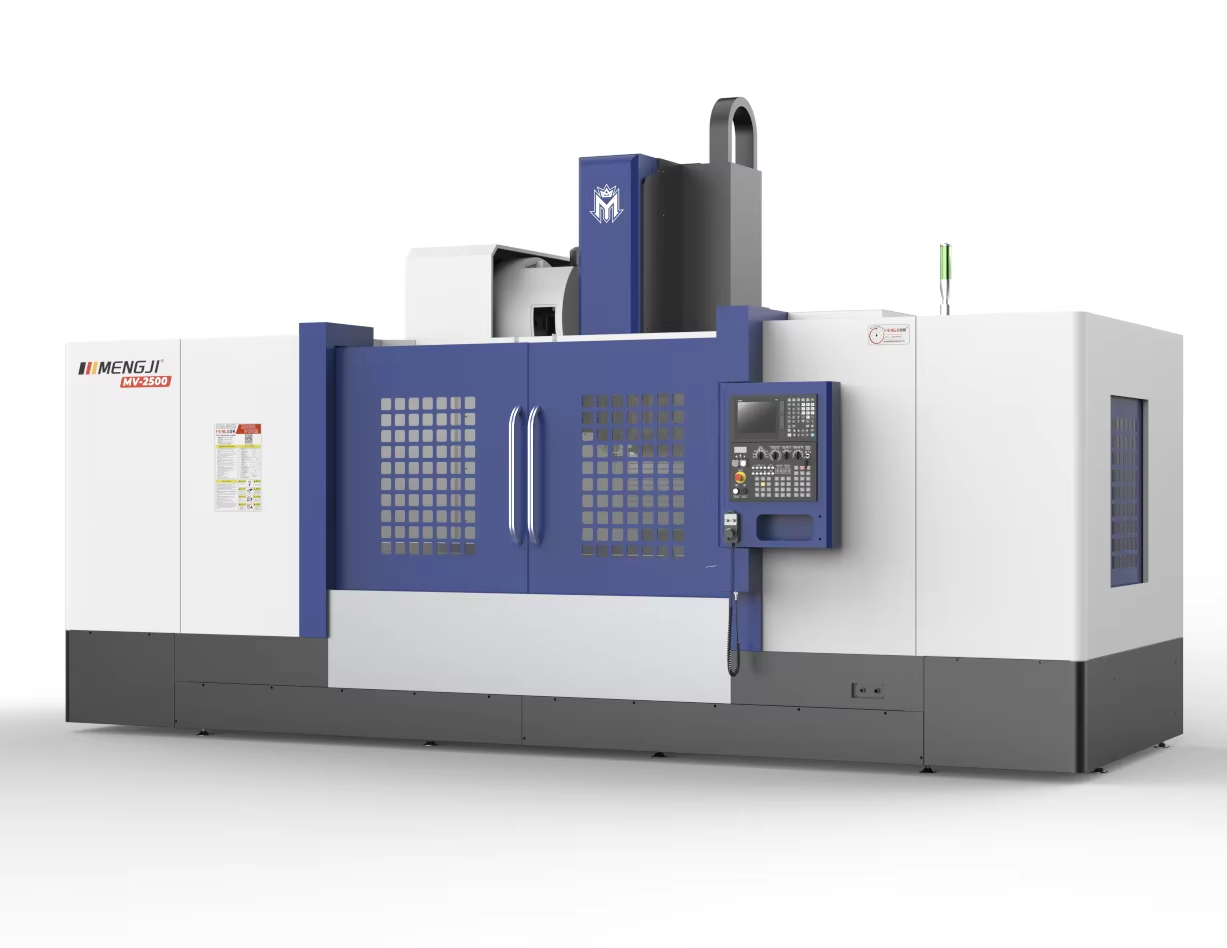
Understanding Core Specifications and Production Requirements
Key Vertical Machining Center Specifications for Automotive Applications
In the world of automotive manufacturing, shops typically rely on vertical machining centers (VMCs) equipped with at least 28 kW spindle power and around 700 Nm torque when working with those tough hardened engine blocks. Most operations find they need machines with X-axis travel exceeding 1,500 mm to accommodate those big transmission housings, while maintaining tight tolerances of about ±0.005 mm for critical parts such as fuel injectors where precision matters most. Industry insiders know that automotive component suppliers generally require their equipment to be roughly 3.2 times stiffer than regular machining centers, aiming for that 45 N/µm rigidity level compared to just 14 N/µm in standard models. This extra stiffness helps machines tackle those rough cuts in cast iron and forged steel without compromising quality or tool life during production runs.
Defining precision equipment requirements begins with evaluating part geometry complexity—54% of automotive manufacturers report that underspecifying axis configurations leads to 18% longer cycle times (Ponemon 2023).
Aligning VMC Capabilities with Production Scale and Part Complexity
For mid-volume production (50k–250k units/year), 4-axis VMCs equipped with 60+ tool magazines reduce fixture changes by 40% when machining aluminum suspension arms. High-mix environments benefit significantly from probe-equipped VMCs, which cut setup times from 45 minutes to under 8 minutes per batch.
A 2024 operational efficiency audit revealed that manufacturers using spindle units below 30 kW for hardened crankshafts incurred $740k in annual downtime costs due to premature tool failure (Ponemon 2023).
Matching Machine Performance to Automotive Manufacturing Demands
Automotive-grade VMCs must sustain 90%+ utilization rates without thermal drift exceeding 15 µm/m. Models with direct-drive spindles and 32-bit CNC resolution are essential for maintaining ±0.01 mm bore concentricity in EV motor housings. Suppliers compliant with IATF 16949 standards experience 47% fewer compliance-related stoppages compared to non-certified counterparts.
Evaluating Spindle Performance: Speed, Feed Rate, and Precision
Impact of Spindle Speed on Machining Efficiency and Surface Finish
Today's vertical machining centers can reach impressive cutting speeds of around 18,000 RPM according to ScienceDirect research from 2025. This speed boost makes a real difference in how fast parts get made and how smooth their surfaces turn out. When working with materials like aluminum, these high spindle speeds mean shops can remove material quicker, which cuts down on production time for items such as engine valve covers. But there's a catch worth noting. Pushing past those recommended RPM limits tends to wear down tools much faster, especially when dealing with tough hardened steels where tool life drops by roughly 23% as MDPI found back in 2024. Getting the most out of these machines really comes down to knowing what works best for each specific material type.
| Material | Optimal RPM Range | Surface Roughness (Ra) at 12,000 RPM |
|---|---|---|
| Aluminum | 8,000–15,000 | 0.8–1.2 µm |
| Cast Iron | 4,000–7,000 | 1.5–2.0 µm |
| Tool Steel | 1,200–3,500 | 2.2–3.5 µm |
Maintaining spindle speeds within material-specific ranges prevents thermal distortion while achieving surface finishes below 1.6 µm—critical for sealing surfaces.
Optimizing Feed Rates for High-Speed Cutting in Engine and Transmission Components
Feed rates above 20 m/min enhance productivity in aluminum transmission case machining but require precise control to avoid chatter. A 2024 study of connecting rod production found that pairing 15,000 RPM spindle speeds with 18 m/min feed rates reduced machining time by 34% compared to conventional parameters, while maintaining ±0.01 mm positional accuracy.
Balancing High-Speed Operation with Dimensional Accuracy and Tool Life
Manufacturers face a key tradeoff between speed, accuracy, and tool longevity:
- Speed Gains: Each 10% RPM increase boosts output by 12–15%
- Accuracy Costs: Sustained operation above 12,000 RPM increases thermal drift by 0.008 mm/°C
- Tool Economics: Carbide end mills last 3× longer at 8,000 RPM vs. 15,000 RPM
Advanced VMCs now integrate thermal compensation systems that maintain ±5 µm accuracy during continuous cylinder head production.
Case Study: High-RPM Spindles in Automotive Engine Block Production
A Tier 1 supplier achieved 99.7% dimensional compliance in V8 engine block machining by implementing 18,000 RPM spindles with active vibration damping. The optimized parameters reduced average cycle time from 42 to 28 minutes while maintaining surface roughness ±1.0 µm across all bearing journals. Adaptive speed control extended tool replacement intervals by 40%.
Leveraging Multi-Axis Capabilities for Complex Automotive Components
Comparing 3-axis, 4-axis, and 5-axis vertical machining centers in automotive contexts
Three axis vertical machining centers work really well for making those boxy shaped parts we see all over the place like brackets and engine mounts. When manufacturers need to produce round parts such as camshafts though, they often turn to four axis models equipped with rotary tables that make things much smoother during production. The folks at NIST have actually done some research on this stuff and found something pretty interesting: five axis VMCs cut down on setup changes by around seventy percent compared to their three axis counterparts when working on parts like suspension knuckles or steering components. What makes these machines so special is their ability to move along multiple axes at once (X, Y, Z plus B and C) which means machinists don't have to keep stopping and manually repositioning parts just to reach tricky angles or complex shapes.
Advantages of 5-axis VMCs for intricate parts like transmission housings and cylinder heads
Five axis machining systems can hit around 0.005mm tolerance levels when working with aluminum transmission valve bodies because they adjust the angle at which tools engage during those fast cutting processes. A major supplier actually cut down their cycle time by nearly a third for electric vehicle motor housing production simply by getting rid of five separate secondary operations thanks to these advanced five axis tool paths. The advantages really stand out in applications like turbine housings and cylinder head porting work, areas where old school methods typically needed three to four different fixtures throughout the process. This represents a significant shift in manufacturing efficiency for many automotive components.
Improving precision and reducing setups with simultaneous multi-axis control
Simultaneous 5-axis control minimizes cumulative errors by machining critical features like fuel injector seats in a single clamping. Manufacturers report 28% fewer geometric deviations in differential carriers compared to incremental 3-axis machining. In steel gearbox components, dynamic axis coordination maintains consistent chip loads, extending tool life by 15–20%.
Trend analysis: Are 5-axis VMCs essential or overkill for mid-volume production?
About sixty percent of mid volume automotive suppliers making between fifty thousand and two hundred thousand parts each year have switched to using five axis vertical machining centers for those really complicated parts. But wait, thirty five percent are still hanging onto their four axis machines because they need experienced workers to run them properly. Why is this happening? Well, the industry is moving fast these days since manufacturers need much tighter tolerances for parts in hybrid electric vehicles. Take a look at EV battery housings for instance - around six out of ten now need five axis machining just to handle those intricate cooling channels. That said, three axis VMCs are totally adequate for most brake rotors and wheel hubs actually covering about eighty percent of that production work. So when evaluating equipment options, it really comes down to what exactly needs to be made and how precise it has to be.
Integrating Automation for Scalability and Unattended Operation
Automation options: Pallet changers, robotic cells, and dual-spindle configurations
Modern VMCs achieve 24/7 productivity through three primary automation strategies. Pallet-changing systems reduce idle time by up to 40% in transmission housing production by alternating workstations. Robotic integration enables automated loading/unloading of complex parts like suspension arms, while dual-spindle configurations double output for high-volume components such as wheel hubs.
Tool changers and automation features enabling continuous operation
Tool changers capable of holding over 60 tools cut down on the need for hands-on work during complex manufacturing tasks. Pair these with real-time measurement checks and smart path corrections, and machines can keep within really tight specs - around plus or minus 0.002 millimeters even after running nonstop for half a thousand hours straight. According to research published last year by XMPro looking at shop floor performance, facilities adopting this kind of automation saw their production cycles shorten by nearly a quarter while getting almost 20% better results on the first try without needing rework.
Case study: Automated vertical machining center in a tier-1 brake caliper line
A leading manufacturer reduced brake caliper machining costs by $47/unit through lights-out production using automated VMCs. By integrating robotic part flipping and multi-axis probing, the system maintained Ra ± 0.8 μm surface finish and achieved 98.6% throughput consistency across 12,000-unit batches.
Scaling production with future-ready, automated VMC solutions
Forward-thinking suppliers prioritize modular automation architectures that support plug-and-play upgrades. This approach reduced integration costs by 35% for engine block producers and cut retooling time for new EV battery component lines by 50%, according to a recent Magnum Systems scalability report.
Conducting a Cost-Benefit Analysis for Long-Term ROI
Balancing Upfront Investment With Long-Term Productivity Gains
When it comes to picking out vertical machining centers, manufacturers usually have to balance what's in the budget today versus what will save money down the road. The better machines tend to set folks back about twenty to thirty percent extra at first glance, but those fancy spindles and all that automation generally cut down on cycle time somewhere between fifteen and twenty five percent. That means getting the money back happens faster than expected. Take a look at this real world scenario: A half million dollar VMC equipped with automatic tool changers might actually start paying for itself within eighteen to twenty four months when used heavily in making transmissions. The shop floor just keeps cranking out parts faster and faster once these systems get going.
Total Cost of Ownership: Maintenance, Reliability, and Downtime Risks
A VMC’s total cost extends beyond purchase price—maintenance, unplanned downtime, and tooling account for 40–60% of lifetime expenses in automotive settings. Key factors include:
- Preventive maintenance: $18k–$35k annually for lubrication and ball screw replacements
- Downtime penalties: $740/minute in assembly line delays (Ponemon 2023)
- Tool life optimization: 5-axis VMCs reduce tool wear by 30% versus 3-axis models in complex applications
Future-Proofing Automotive Machining Operations Through Strategic VMC Selection
More manufacturers are going for VMCs that have modular setups and controls that can be upgraded through software, especially when dealing with changing EV parts and lighter materials. A certain Tier-2 company saw their retooling time drop by about 22% when they switched to machines featuring ISO 13399 compatible tools and connected to the cloud for diagnostics. This shows just how much companies benefit from investing in flexible equipment as car designs keep changing over time.
Table of Contents
- Understanding Core Specifications and Production Requirements
- Evaluating Spindle Performance: Speed, Feed Rate, and Precision
-
Leveraging Multi-Axis Capabilities for Complex Automotive Components
- Comparing 3-axis, 4-axis, and 5-axis vertical machining centers in automotive contexts
- Advantages of 5-axis VMCs for intricate parts like transmission housings and cylinder heads
- Improving precision and reducing setups with simultaneous multi-axis control
- Trend analysis: Are 5-axis VMCs essential or overkill for mid-volume production?
- Integrating Automation for Scalability and Unattended Operation
- Conducting a Cost-Benefit Analysis for Long-Term ROI