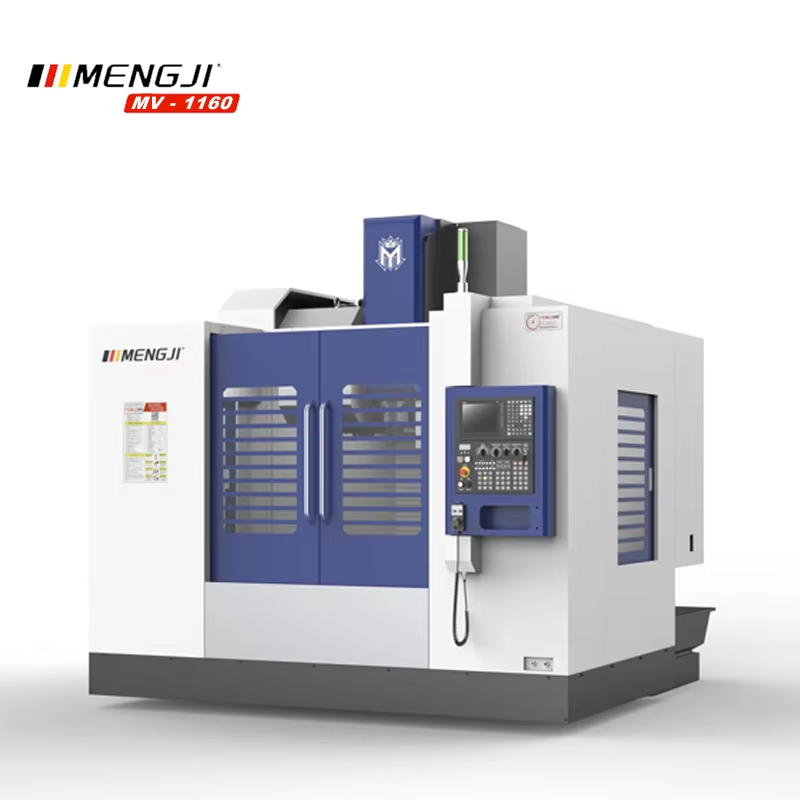
The Critical Role of Preventive Maintenance in VMC Machine Performance
How Proactive Care Minimizes Downtime and Extends VMC Machine Lifespan
Regular preventive maintenance can cut down unplanned downtime for VMC machines by around 45%, which translates to roughly $740k saved each year for companies of moderate size according to a report from the Ponemon Institute back in 2023. Checking things like spindle runout and making sure axes are properly aligned every day stops small problems before they turn into big headaches later on. The National Center for CNC Machining did some research in 2019 showing that when operators take just a few minutes at the start of their shifts to inspect these areas, spindle failures drop by about 80% after three years. This kind of routine care really helps protect important parts such as linear guides and ball screws, often keeping machines running well past the standard 10 year mark we see across the industry. Using ISO 68 grade oil for lubrication makes a noticeable difference too - studies published in the Journal of Manufacturing Systems showed friction levels go down by 32% compared to waiting until something breaks down first. And let's not forget about cleaning out debris regularly either. Getting rid of dust and dirt keeps corrosion away from sensitive electrical components inside those control boxes. Meanwhile, checking belt tensions at set intervals handles nearly 72% of all sudden drive system failures according to Machinery Lubrication's findings from last year.
Linking Regular Maintenance to Sustained Precision and Operational Accuracy
The heat generated during operation of vertical machining centers can lead to positioning drift accumulating as much as 12 microns if weekly adjustments aren't made according to Haas Automation findings from 2022. Shops that stick to monthly calibration schedules for their rotary tables typically maintain around ±2 micron accuracy thanks to those built-in wear compensation features. When operators start using real time vibration monitoring equipment instead of relying on old fashioned visual inspections, they spot problems with the machine's servos about 35% quicker as noted by Siemens Digital Industries last year. This makes all the difference when running complex parts that require tight tolerances day after day. Looking at actual shop floor data from Boeing suppliers in 2024 shows something interesting too: facilities following manufacturer recommended maintenance routines hit an impressive 98% first pass rate on critical aerospace components, while shops with random maintenance habits only managed 82%. The numbers clearly show why sticking to proper maintenance schedules matters so much for keeping production running smoothly.
Daily and Weekly Maintenance Routines for Optimal VMC Machine Function
Cleaning the VMC Machine to Prevent Debris Accumulation and Corrosion
Getting rid of metal chips and leftover coolant on a regular basis helps keep machines accurate and extends their life span. For cleaning out those hard to reach areas like spindle noses, tool changers, and along the linear guides, most shops find compressed air works best though vacuum systems can do the job too. The stuff builds up there really fast and causes premature wear over time. Don't forget to wipe down all the visible parts as well using cleaners that are pH neutral. This prevents that nasty electrochemical corrosion problem, which becomes absolutely essential when working in places with lots of moisture in the air. We've seen way too many machines break down early just because someone skipped this basic maintenance step.
Lubrication Best Practices Using Manual Oiler Systems
Consistent lubrication reduces friction in ball screws and guideways by 18–24% compared to irregular maintenance (Machinery Lubrication Journal, 2023). When using manual oiler systems, operators should:
- Verify oil reaches all distribution points by observing flow indicators
- Purge air pockets from lubrication lines during weekly cycles
- Apply way oil to exposed surfaces after cleaning
These practices align with established CNC machine maintenance standards for protecting high-precision mechanical systems.
Coolant Management: Checking Levels and Concentration with a Refractometer
Maintain coolant concentration within ±2% of OEM specifications using a refractometer; deviations increase bacterial growth risks by 300% (IMTS Research, 2022). Daily tasks include:
| Check | Tool | Acceptable Range |
|---|---|---|
| Coolant Level | Sight Glass | 85–95% Capacity |
| Concentration | Refractometer | 7–9 Brix |
Inspecting Tool Holders and Drawbar Mechanisms to Prevent Tool Pull-Out
Biweekly drawbar force testing with hydraulic pressure gauges ensures clamping forces exceed 3,000 PSI. Replace retention knobs showing >0.0004" runout and polish tool holder tapers exhibiting radial witness marks. This prevents tool ejection incidents responsible for 14% of VMC crashes.
Monthly and Semi-Annual Maintenance for Systemic Reliability of VMC Machines
Inspecting Belts, Filters, and Seals to Avoid Mechanical Failures
Regular monthly checks of drive belts, hydraulic filters, and making sure seals are intact can stop around 70% of mechanical problems in VMC machines according to Machinery Lubrication from last year. When spindle drive belts start showing wear, they tend to cause backlash errors growing at about 0.003 inches every 500 hours of operation. Coolant seals that aren't properly maintained result in contaminated bearings roughly 8 out of 10 times. The best practice for technicians involves checking belt tension with frequency analyzers and running dye penetrant tests on those seals when doing their six month maintenance rounds. Shops that stick with this preventive approach have seen their unexpected downtime drop by nearly 40% versus facilities waiting until something breaks down before fixing it.
Replacing Wear-Prone Components Before Critical Failure
Keeping coolant pump impellers, chuck jaw inserts, and those way cover wipers replaced every six months helps maintain that tight ±0.0002 inch positioning accuracy we all need. Parts wear down at predictable rates too. Take ball screw nuts for instance they generally need swapping out once they've moved around 18 thousand linear feet along the machine axis. When doing maintenance twice a year, don't forget to run force curve tests on those automatic tool changer arms while replacing any spindle coolant nozzles that have lost more than 15 percent of their original flow rate. These little details make a big difference in keeping machines running smoothly over time.
Calibration and Precision Adjustments After Prolonged Use
Laser interferometer verification every 1,500 machine hours compensates for thermal growth and mechanical wear. Quarterly calibration reduced geometric errors by 54% in X/Y planes and 38% in Z-axis positioning (2023 study). Re-establish machine zero points after replacing guideway bearings and clean spindle tapers with MIL-PRF-680 grade solvents to maintain <0.0001" runout tolerances.
CNC Spindle Maintenance: Preserving the Core of VMC Machine Precision
The spindle is the precision engine of VMC machines, requiring targeted care to avoid costly breakdowns and sustain micron-level accuracy.
Identifying Early Signs of Spindle Wear and Required Interventions
Unusual noises like high-pitched whining or irregular vibrations often indicate bearing degradation or imbalance. Thermal variations exceeding 4°C during operation (measured via infrared thermography) suggest lubrication failure or motor winding stress. Key interventions include:
- Replacing angular contact bearings at 8,000-hour intervals
- Rebalancing spindle assemblies after tool collisions
- Installing double-lipped seals to prevent coolant infiltration
According to leading CNC maintenance studies, 34% of premature spindle failures stem from inadequate warm-up protocols before high-speed operations.
Extending Bearing and Motor Life Through Preventive Strategies
Using ISO 220 Grease compatibility standards reduces bearing wear by 40% compared to mixing multi-viscosity lubricants. Quarterly motor phase current analysis detects winding insulation faults 6–8 weeks before failure. Best practices include:
- Maintaining 0.5–1.0 μm filtration in spindle cooling systems
- Limiting peak RPM to 85% of rated capacity for legacy spindles
- Employing polymer-coated tool holders to minimize fretting corrosion
Case Study: Reducing Spindle Failures by 60% with Consistent Maintenance
A European aerospace manufacturer achieved 18-month spindle longevity through:
| Strategy | Implementation | Result |
|---|---|---|
| Vibration Analysis | Wireless sensors tracking 15 frequency bands | 42% fewer bearing replacements |
| Thermal Management | Pre-heating protocol before >15k RPM jobs | 37°C reduction in peak temps |
| Contamination Control | HEPA-filtered enclosure upgrades | 91% fewer particulate-related faults |
Their regimented approach cut unplanned downtime costs by $216k annually while maintaining ±2μm positional accuracy across all VMC machines.
Integrating Predictive Maintenance Technology in Modern VMC Machine Operations
Using IoT Sensors for Real-Time Monitoring of VMC Machine Health
IoT sensors track spindle vibration (with 10% deviation thresholds), temperature (±2°C accuracy), and load inconsistencies in real time. Shops using sensor networks reduced unplanned downtime by 35% through early fault detection (2024 industry report). Modern systems integrate wireless sensors with minimal retrofitting, streaming data to cloud dashboards for continuous monitoring.
Data-Driven Alerts for Timely Calibration and Maintenance Actions
Predictive algorithms analyze historical and live sensor data to prioritize maintenance—such as alerting when tool deflection exceeds 0.005" during heavy milling. By correlating parameters like dropping coolant pressure and rising motor currents, systems identify bearing wear 50–80 hours before failure, enabling planned interventions during non-production windows.
Evaluating Cost vs. Benefit: Predictive Systems Versus Downtime Reduction
While predictive systems require upfront investments ($15k–$50k for mid-size VMC fleets), they prevent losses exceeding $120k/hour from halted production. A cost-benefit comparison reveals:
| Factor | Reactive Maintenance | Predictive Maintenance |
|---|---|---|
| Annual Downtime | 200–300 hours | 50–75 hours |
| Spare Parts Waste | 35–40% overstocked | 8–12% excess inventory |
| Labor Efficiency | 60% emergency repairs | 85% scheduled tasks |
Shops achieving ROI within 12–18 months typically automate 70% of their maintenance workflows through these integrations.
Table of Contents
- The Critical Role of Preventive Maintenance in VMC Machine Performance
- Daily and Weekly Maintenance Routines for Optimal VMC Machine Function
- Monthly and Semi-Annual Maintenance for Systemic Reliability of VMC Machines
- CNC Spindle Maintenance: Preserving the Core of VMC Machine Precision
- Integrating Predictive Maintenance Technology in Modern VMC Machine Operations