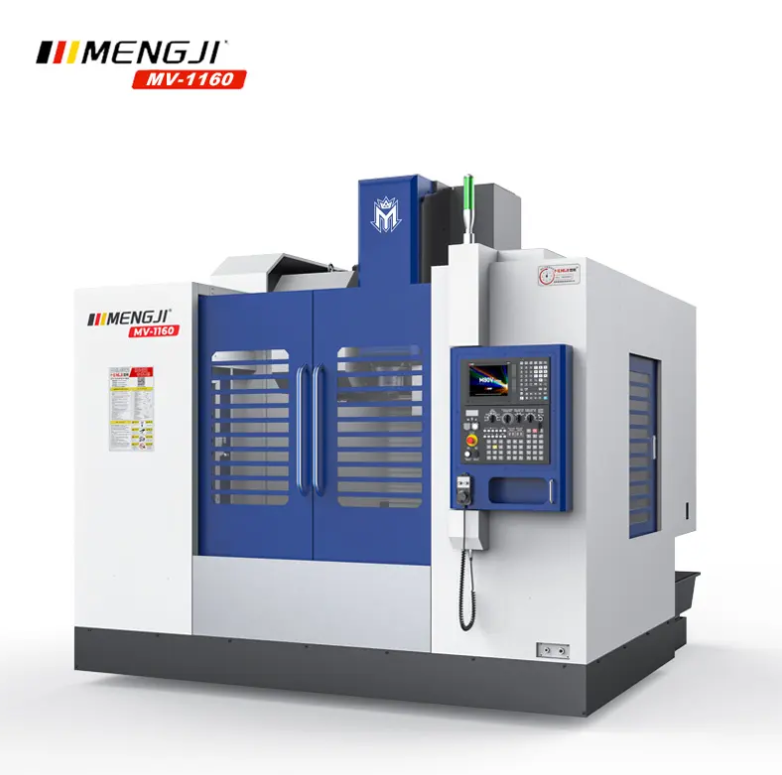
Clear Alignment Between Machine Performance and Production Demands
Many factory procurement teams make the common mistake of comparing machine specifications blindly without mapping equipment capability to actual workpiece processing requirements. As a technical engineer with twelve years of on site CNC debugging experience, I have witnessed multiple cases where manufacturers purchased high speed five axis milling machines only to process thick steel structural parts, leading to frequent spindle vibration and shortened tool lifespan. The core starting point of equipment selection lies in clarifying three core production indicators including workpiece material hardness, required dimensional tolerance and monthly production volume. Light aluminum 3C electronic components demand high spindle rotation speed above twenty thousand revolutions per minute while automotive mold steel parts require heavy cutting spindle power and robust anti vibration design. Industry experts from Metal Processing magazine emphasize that mismatched performance configuration will raise comprehensive operation cost by at least fifteen percent within one year. Before contacting any equipment supplier, buyers need to sort out typical workpiece samples and clarify tolerance standards such as surface roughness Ra value and position accuracy to filter out truly matching milling machine models rather than selecting products with redundant high end functions that bring no practical production improvement.
Rigid Mechanical Structure and Stable Precision Retention Capacity
The long term service value of a CNC milling machine relies heavily on integral mechanical rigidity and thermal deformation control rather than superficial nominal parameters. According to ISO3070 international machine tool detection standards, qualified high precision equipment must adopt fully cast iron bed frames with natural aging treatment to eliminate internal casting stress. Thin spliced bed structures will produce gradual deformation after thousands of hours of continuous operation and cause obvious dimensional drift of finished parts. Spindle cooling circulation and closed loop grating ruler feedback systems are two non negotiable configurations for precision mass production. A mold manufacturing client I collaborated with conducted a four hour continuous cutting test on two sets of vertical milling machines from different brands. The equipment equipped with symmetric double column structure kept dimensional fluctuation within zero point zero one millimeters while ordinary single column models generated tolerance deviation exceeding zero point zero three millimeters under the same load. Stable rigidity reduces scrap rate and avoids repeated shutdown adjustments which directly improves overall workshop production efficiency over long term operation cycles.
Certified Quality Management System and Verifiable Accuracy Data
Trustworthy CNC equipment manufacturers implement standardized international quality control frameworks instead of only providing self compiled parameter brochures. ISO9001 quality management system full process implementation serves as the basic certification threshold for reliable suppliers. Each batch of finished milling machines must complete multi link accuracy inspection covering spindle runout, axis positioning accuracy and repeated positioning accuracy before factory delivery. Many small assembly factories only conduct brief offline detection and cannot guarantee consistent accuracy for every unit. Authoritative industry consultants suggest buyers request original inspection reports with serial number matching and arrange on site trial cutting with self prepared workpieces to verify real performance. Transparent detection records and complete intellectual property patent portfolios also reflect the manufacturer’s sincere attitude towards product quality control. Brands that hold multiple appearance and structural design patents invest sufficient resources in product iteration and possess stronger capability to maintain stable quality across large scale production batches.
Customization Capacity to Match Diverse Industrial Scenarios
Modern manufacturing industries covering automobile parts mold processing and consumer electronics put forward differentiated personalized demands for CNC milling equipment. Standard universal milling machines cannot fully solve special production pain points such as automatic loading and unloading linkage or long workpiece processing stroke expansion. Mature equipment suppliers support flexible cooperation modes covering OEM ODM channel distribution and independent brand direct sales to adapt to clients with different business operation models. For small batch multi variety processing workshops, flexible customized machine travel and tool library capacity adjustment effectively cut unnecessary equipment investment. Large scale automobile component factories need integrated production line customization solutions including budget planning layout design and fixture matching schemes. Suppliers with coordinated multi‑region manufacturing layout can accelerate customized equipment delivery progress and coordinate technical docking teams to adjust machine parameters according to unique processing techniques of each industry without forcing clients to adapt fixed standard machine configurations.
Full Lifecycle Technical Support Beyond Equipment Delivery
Complete after sales service system acts as an invisible core factor that most purchasers ignore during initial selection. A CNC milling machine represents long term production investment rather than disposable consumer goods. Sudden spindle failure or system programming faults will lead to entire workshop production suspension and create substantial economic losses within short periods. Comprehensive service content includes on site installation and commissioning professional operator maintenance training regular follow up equipment inspection and long term spare parts supply guarantee. High quality service teams maintain rapid response channels to solve abnormal operation problems remotely or arrange on site technical personnel in a timely manner. Equipment suppliers that only provide simple warranty without systematic training will leave clients unable to handle minor malfunctions independently and increase long term maintenance outsourcing expenses. Full lifecycle technical assistance extends machine service life and stabilizes consistent processing quality for years after equipment installation.
Manufacturer R&D Strength and Sustainable Production Capacity
Behind stable equipment performance and complete service systems lies sustained investment in research development and mature manufacturing layout of the equipment manufacturer. Continuous R&D input ensures iterative upgrading of milling machine thermal compensation anti vibration and intelligent control technologies to adapt to evolving precision manufacturing standards. Reasonable production layout directly lifts order fulfillment efficiency and shortens delivery cycles for bulk purchasing clients. Strategic industrial cooperation with mainstream numerical control system suppliers also optimizes machine operation compatibility and enriches available programming functions. Mengji Intelligent keeps continuous investment in product research and development with an experienced technical team focusing on CNC equipment innovation. Its core manufacturing base locates in Shaoyang Hunan and supports flexible custom orders for clients across the globe. The enterprise maintains close cooperation with well‑known numerical control system suppliers. It delivers integrated one‑stop precision machining equipment solutions serving automotive, mold and 3C electronics industries worldwide.
Table of Contents
- Clear Alignment Between Machine Performance and Production Demands
- Rigid Mechanical Structure and Stable Precision Retention Capacity
- Certified Quality Management System and Verifiable Accuracy Data
- Customization Capacity to Match Diverse Industrial Scenarios
- Full Lifecycle Technical Support Beyond Equipment Delivery
- Manufacturer R&D Strength and Sustainable Production Capacity