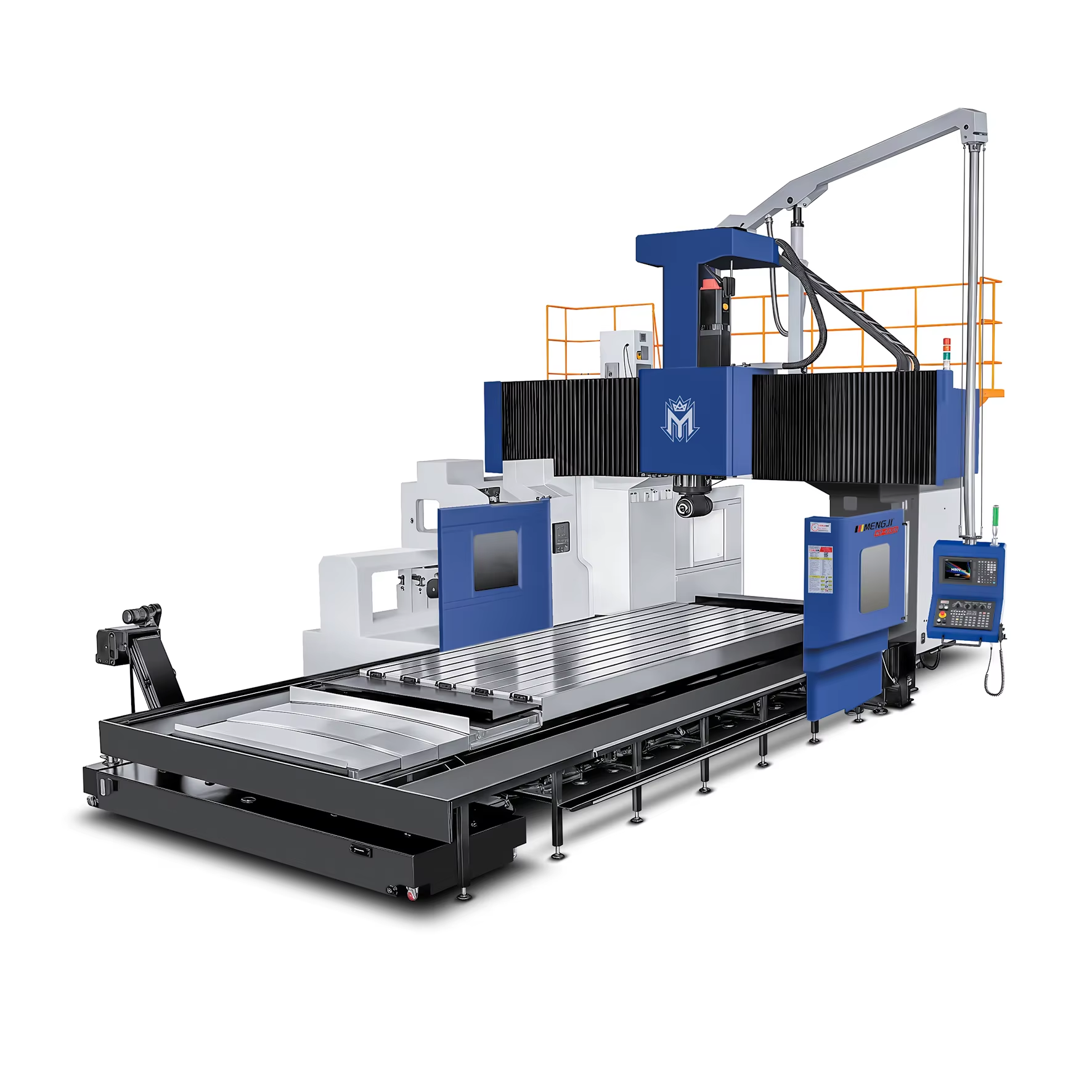
Daily Maintenance for Optimal CNC Machining Center Performance
Cleaning and Debris Removal to Prevent Contamination in CNC Machining Center
Regular cleaning throughout the day gets rid of those pesky metal chips, leftover coolant, and abrasive bits that really take a toll on important parts over time. Most experienced operators grab vacuum extractors along with soft, non-abrasive cloths to sweep away all that junk from places like tool changers, machine guideways, and those delicate spindle tapers. Without proper cleaning, these tiny invaders find their way into lubrication systems or scratch up those super precise ground surfaces. Shops that stick to scheduled cleaning instead of waiting for problems report around 18 percent less unexpected downtime than ones that just react when something breaks down. Makes sense when you think about it – keeping things clean keeps production running smoothly.
Inspecting Toolholders and Workholding for Alignment and Wear
At shift start, inspect collets, vises, and fixture plates for cracks, scoring, or thermal deformation. Misaligned toolholders increase spindle load by up to 22% during high-speed operations, while worn workholding devices risk part slippage. Replace taper surfaces showing radial marks exceeding 0.0005" depth to maintain consistent clamping force.
Initial Vibration Checks for Early Fault Detection in CNC Machining Center
When checking for problems in machinery, technicians take baseline vibration measurements with portable analyzers to spot those telltale abnormal harmonics coming from worn out bearings or cutting tools that are off balance. The key thing is comparing how fast the spindle accelerates to what the manufacturer specs say it should be doing. If we see readings going over 0.15 inches per second, that usually means something mechanical is about to go wrong. Most newer CNC machines now come equipped with built-in sensors that automatically send warnings to operators once these safety thresholds get breached. Some shops even have systems set up to shut down operations completely if vibrations reach dangerous levels, which helps prevent costly breakdowns during production runs.
Verifying Operational Readiness and Component Functionality
Confirm hydraulic pressure remains within 10% of nominal values (typically 50–70 bar) before production. Test emergency stops, axis limit switches, and coolant flow sensors to ensure fail-safes engage within 0.5 seconds. These pre-operational checks validate system integrity and support compliance with ANSI B11.23 safety standards.
Lubrication and Coolant System Management for CNC Machining Center Longevity
Proper lubrication and coolant management account for 37% of CNC machining center lifespan improvements in industrial applications (Machinery Lubrication Report 2023). These systems work synergistically to minimize component wear, stabilize cutting temperatures, and prevent premature failures.
Lubrication Scheduling and Best Practices to Reduce Friction in CNC Machining Center
Automated lubrication systems reduce human error by 72% in heavy-use environments. Key protocols include:
- Use ISO VG 32–68 hydraulic oils for spindle bearings and linear guides
- Apply way oil every 200 operating hours for axis movement components
- Inspect lubrication lines quarterly for blockages using air-pressure tests
Over-lubrication creates 14% more particulate contamination than under-lubrication (Tribology Today 2023), necessitating calibrated dispensing. Grease nipples on ball screws require biweekly replenishment during continuous three-shift operations.
Coolant System Maintenance to Prevent Corrosion and Clogging
Modern CNC machining centers achieve 89% coolant contamination reduction through multi-stage filtration, yet daily maintenance remains critical:
- Check emulsion concentration (5–12% for most alloys) using refractometers
- Remove tramp oil via skimmers before bacterial growth begins
- Replace paper/felt filters when pressure drops exceed 15 PSI
pH levels below 8.2 accelerate machine corrosion by 3Ã. Weekly system flushing with bio-resistant coolants extends sump life by 18 months compared to conventional formulations.
Weekly and Monthly Preventive Maintenance to Ensure CNC Machining Center Reliability
Proactive maintenance schedules reduce unplanned downtime by 34% in CNC machining centers, according to industry-wide reliability studies. A structured approach to weekly and monthly tasks addresses wear patterns before they impact production quality or machine integrity.
Inspecting Way Covers and Bellows to Prevent Contaminant Ingress
Verify rubber bellows and telescopic channel covers weekly to prevent metal shavings and coolant from penetrating into the shaft mechanism. Damaged covers can accelerate the wear of abrasive particles on the guide rail, which is the main cause of positioning errors in old machines.
Ball Screws and Linear Guides Inspection for Smooth Axis Movement
Measure the gap (0.003 inches indicates urgent replacement) and lubrication check monthly to ensure repeatability of movement within a tolerance range of 0.0002 inches. Contaminated recycled bearings account for 28% of all shaft servo motor overload faults.
Tool Changer Maintenance for Rapid, Accurate Tool Swaps
Cleaning the jaws and tapered interfaces every two weeks can maintain tool repeatability of<0.004 ". Worn turntable chains or misaligned pots increase tool replacement time by 1.2-3 seconds, which is a critical delay in high mix production environments.
Spindle and Taper Care to Maintain Cutting Precision
Thermal growth compensation tests every 300 operating hours ensure spindle concentricity below 0.0001" TIR. Neglected taper interfaces lead to tool pullout forces dropping by 40% within six months under heavy machining loads.
Axis Alignment and Calibration for Dimensional Accuracy
The laser interferometer is verified once a month and detects alignment drift exceeding 0.0005 inches/foot, which is a threshold that requires immediate correction. The scrap rate generated by machines exceeding this tolerance is 22% higher than that of calibrated machines.
Monitoring and Replacing Worn Components Before Failure
Scheduled replacement of brushes, seals, and limit switches at 80% of their rated lifespan prevents 91% of electrical faults in CNC machining centers. Predictive maintenance algorithms now alert technicians to bearing vibrations exceeding 0.12 ips–a key indicator of imminent failure.
This tiered maintenance approach leverages scheduled interventions to maintain cutting accuracy within 0.0005" while extending machine service life beyond 15 years in 78% of properly maintained systems.
Annual Professional Servicing and Reconditioning of CNC Machining Center
Spindle Overhaul to Restore Peak Performance in CNC Machining Center
Spindle maintenance once a year tackles all that buildup of wear on bearings, taper areas, and other rotating parts. Techs check how much runout there is usually looking for something under 2 microns in really precise setups before swapping out those preloaded angular contact bearings to get things back to their original stiffness. Getting rid of these annoying harmonic vibrations makes a big difference in the quality of finished surfaces and keeps dimensions accurate. This matters a lot when working with tough materials like hardened steel or titanium where even small deviations can cause major problems down the line.
Reconditioning Ball Screws and Linear Guides to Extend Service Life
About 23% of all positioning issues in older CNC machines come from worn out ball screws. When these need professional work, technicians typically polish those raceway surfaces, swap out any damaged parts that help the balls recirculate, and make sure the grease channels are properly filled again. With linear guides, experts usually adjust the preload forces somewhere around plus or minus 15% of what the manufacturer originally specified. This sweet spot helps cut down on friction without sacrificing stability when the machine is doing heavy cuts. Getting this right makes a big difference in how well the equipment performs over time.
Inspection of Axis Stiffness and Play for Structural Integrity
Certified technicians use laser interferometers to detect micron-level deviations in axis travel. Machines exceeding 5 µm/meter backlash often require mechanical adjustments to gibs, thrust bearings, or servo motor couplings. Structural resonance tests identify foundation weaknesses or frame fatigue, preventing catastrophic failures during high-torque operations.
Scheduled Servicing by Certified Technicians for Compliance and Safety
When OEM trained pros come in for their yearly checks, they make sure everything lines up with ISO 16090 safety rules and keeps the manufacturer's warranty valid. During these routine audits, they look closely at things like how secure those electrical cabinets are, whether emergency stops actually work when needed, and if all the protective guards are still doing their job properly. Safety first folks know these checks aren't just paperwork - they really do prevent accidents on the shop floor. The techs will often spend time updating the control software too, fixing any security holes they find while tweaking those tool path calculations. Most factories see somewhere around an 8 to 10 percent improvement in cycle times after these updates, which adds up nicely over months of regular operation.
Documentation and Best Practice Compliance for Sustainable CNC Machining Center Operation
Proper documentation and adherence to industry best practices are essential for maximizing the lifespan of CNC machining centers while ensuring operational safety and efficiency.
Maintenance Record Keeping for Traceability and Audit Readiness
Keeping digital records for things like when machines get lubricated, parts replaced, and alignments checked makes life easier in so many ways. These detailed notes help companies pass those tough safety audits like ISO 9001 requirements, plus they make it possible to figure out why certain problems keep happening again and again. Take a look at the numbers: according to the Manufacturing Efficiency Report from last year, around three out of four instances where production stops unexpectedly are actually caused by worn components that nobody bothered to document properly. That pretty much proves how important it is to track everything systematically across operations.
Adhering to Manufacturer Guidelines for Warranty and Operational Safety
Always follow OEM-prescribed intervals for spindle rebuilds, coolant replacement, and belt tensioning. Deviating from recommended practices voids warranties in 92% of cases (Industrial Equipment Journal 2023) and increases safety risks from uncalibrated components.
Implementing Consistent Monitoring Routines to Maximize Uptime
Integrate IoT sensors to track vibration thresholds, temperature fluctuations, and tool wear patterns in real time. Automated alerts for abnormal parameters reduce reactive repairs by 41% (Precision Machining Study 2024), keeping production schedules on track.
By prioritizing documentation rigor and protocol compliance, manufacturers extend machine service life while minimizing compliance penalties and unscheduled maintenance costs.
FAQ
Why is regular cleaning important for CNC machining centers?
Regular cleaning prevents metal chips, coolant residues, and abrasives from accumulating in critical parts, reducing wear and maintaining production efficiency.
How often should lubrication be done in CNC machines?
Lubrication schedules vary but typically involve automated systems, with way oil applied every 200 operating hours, and regular inspections to prevent blockages.
What are key indicators of mechanical issues in CNC machines?
Abnormal vibrations, excessive spindle acceleration, and misaligned or worn toolholders are clear indicators of potential mechanical problems.
How does preventive maintenance benefit CNC machining centers?
Preventive maintenance reduces unplanned downtime by systematically addressing wear patterns before they affect production quality or machine integrity.
What role do professional technicians play in CNC maintenance?
Certified technicians perform annual checks to ensure compliance with safety standards, restore peak performance, and conduct necessary reconditioning tasks.
Table of Contents
- Daily Maintenance for Optimal CNC Machining Center Performance
- Lubrication and Coolant System Management for CNC Machining Center Longevity
-
Weekly and Monthly Preventive Maintenance to Ensure CNC Machining Center Reliability
- Inspecting Way Covers and Bellows to Prevent Contaminant Ingress
- Ball Screws and Linear Guides Inspection for Smooth Axis Movement
- Tool Changer Maintenance for Rapid, Accurate Tool Swaps
- Spindle and Taper Care to Maintain Cutting Precision
- Axis Alignment and Calibration for Dimensional Accuracy
- Monitoring and Replacing Worn Components Before Failure
- Annual Professional Servicing and Reconditioning of CNC Machining Center
- Documentation and Best Practice Compliance for Sustainable CNC Machining Center Operation
-
FAQ
- Why is regular cleaning important for CNC machining centers?
- How often should lubrication be done in CNC machines?
- What are key indicators of mechanical issues in CNC machines?
- How does preventive maintenance benefit CNC machining centers?
- What role do professional technicians play in CNC maintenance?