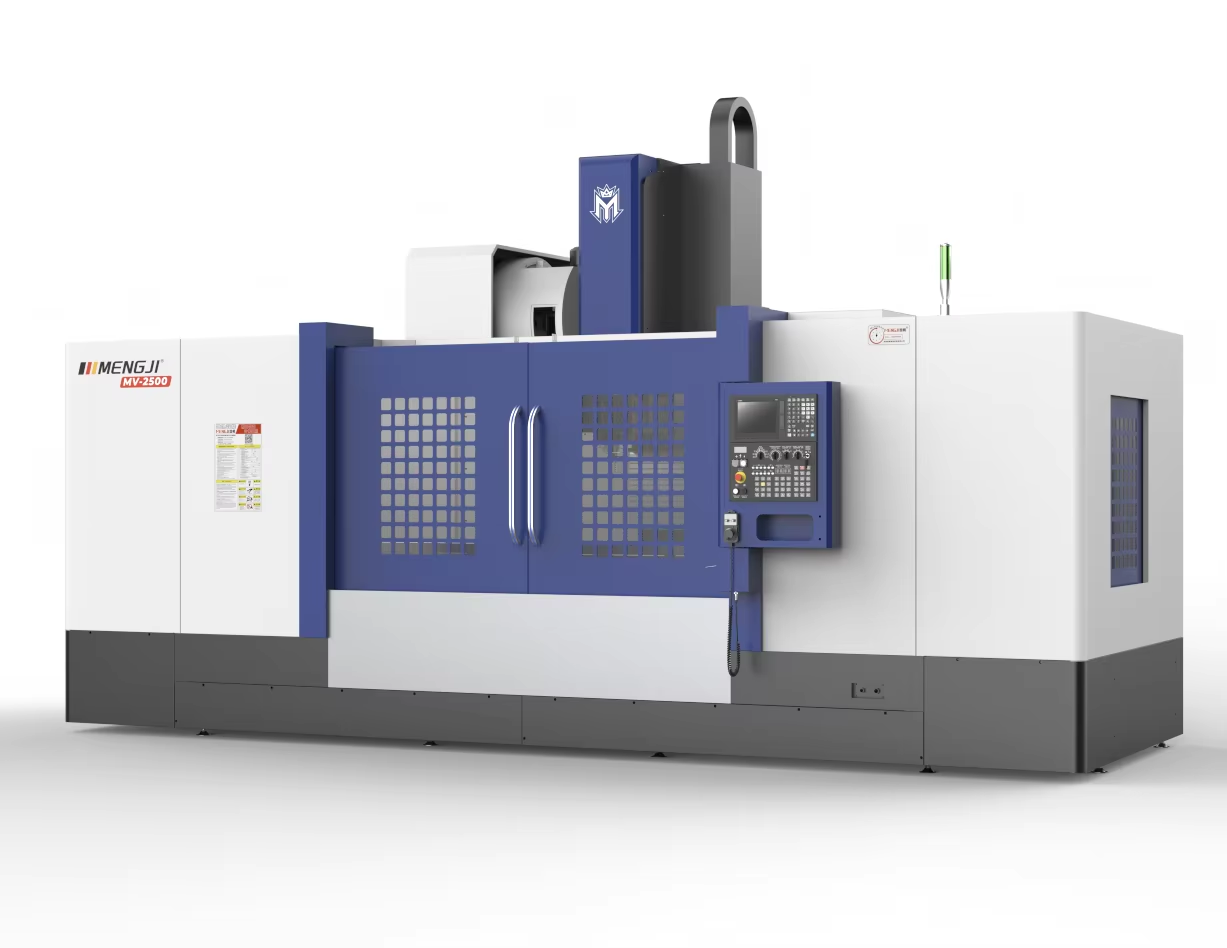
Core Factors Influencing CNC Machine Initial Investment
Cost Differences Between 3-Axis and 5-Axis CNC Machines
Entry-level 3-axis machines handle basic milling and turning operations at lower costs ($3,000–$300,000), while 5-axis systems designed for complex aerospace or medical parts range from $100,000 to over $1 million. Multi-axis capabilities reduce manual repositioning but require advanced programming expertise, as noted in the 2024 CNC Machine Tools Market Report.
| Machine Type | Price Range | Precision Tolerance | Common Applications |
|---|---|---|---|
| 3-Axis CNC Mills | $3,000 – $300,000 | ±0.005" | Brackets, gears, housings |
| 5-Axis CNC Machines | $100,000 – $1,000,000+ | ±0.0005" | Turbine blades, implants |
Machine Type, Size, and Build Quality Impact on Price
The price differences between mills, lathes, and routers are pretty dramatic when looking at their basic construction. Take heavy duty CNC lathes for instance - those built with cast iron frames typically run around 30 to maybe even 50 percent higher than similar ones made from aluminum. But they do last longer under tough conditions where torque is really high. When it comes to mill size, bigger machines with larger work areas like something measuring roughly 60 inches by 120 inches can set buyers back anywhere from fifteen thousand to seventy five thousand dollars extra compared to smaller benchtop versions. And let's not forget about certification requirements either. Machines that carry ISO or CE marks certainly meet all regulatory standards, but this compliance comes at a cost, usually pushing prices up somewhere between eighteen and twenty two percent right off the bat.
Technology Integration: Automation, Controls, and Sensors
Pallet changers, robotic loaders, and IoT-enabled sensors elevate machine prices by 25–40% but reduce labor dependency. For example, shops using automated tool changers report 15% faster job completion, offsetting higher upfront investments over 2–3 years.
How Configuration and Brand Affect CNC Machine Price
Reputable brands with proven reliability benchmarks charge 10–30% premiums over generic manufacturers. Modular configurations—like adding a 15 kW spindle or dual-drive servos—increase base prices by $8,000–$50,000. However, standardized components from industry cost analysis studies show optimized ROI for shops prioritizing scalability over customization.
Operational Costs That Shape CNC Machine Pricing Models
CNC machine pricing extends far beyond initial purchase costs, with operational expenses contributing 35–50% of total expenditures in small-medium shops (MachineMetrics 2023).
Hourly CNC Machine Rates Across U.S. Regions and Shop Sizes
Hourly rates for 3-axis CNC machines range from $40–$90, influenced by regional labor markets and facility size. Midwest shops average 15% lower rates than coastal counterparts due to reduced overhead, while large-scale operations leverage economies of scale to undercut smaller competitors by 20–30%.
Labor, Overhead, and Facility Location Influence on Cost Structure
Skilled labor accounts for 25–40% of operational costs, with Tier 1 manufacturing hubs like Michigan and Ohio offering 18% lower wages than California. A recent industry analysis revealed urban shops pay 22% more in facility costs than rural counterparts, forcing many to relocate for competitive pricing.
Energy Consumption and Maintenance as Ongoing Expenses
High-speed machining centers consume 25–50 kWh hourly, adding $6–$12 per operating hour. Preventive maintenance budgets average 7–12% of machine value annually, but proactive shops reduce unplanned downtime by 40% through predictive maintenance protocols.
Total Cost of Ownership Beyond the Purchase Price
Over 10 years, energy, tooling, and labor often exceed initial CNC machine price by 3:1. Shops implementing IoT-enabled monitoring report 18% lower lifetime costs through real-time optimization of spindle loads and coolant usage.
Production Volume, Batch Size, and Their Effect on CNC Machining Costs
Economies of Scale: How Batch Size Lowers Unit Cost
When companies produce larger batches of parts, they generally see lower prices per part because those fixed setup costs get spread across more units. Recent industry studies show something interesting too. If manufacturers double their batch size, unit costs often drop around 18 to maybe even 25% for parts of moderate complexity. Why does this happen? Well, bigger runs allow for better tool path planning, less time wasted when switching between different jobs, and obviously cheaper materials when buying in volume. These savings stack up pretty nicely for shops looking to maximize efficiency without sacrificing quality.
High-Volume vs. Low-Volume Production Cost Structures
Low-volume batches (10–1,000 units) incur 40–60% higher per-part costs compared to high-volume runs, according to recent industry benchmarks. Small shops face tradeoffs:
- High-volume jobs maximize machine utilization (75–90%) but require specialized tooling
- Low-volume flexibility suits prototypes but increases per-unit programming/setup costs
A machining cost comparison study shows 200-unit batches achieve 31% lower costs than 50-unit orders for aluminum components.
Machining Time and Equipment Utilization in Cost Modeling
Every minute of spindle time directly impacts CNC machine pricing models. Complex parts requiring 8+ hours of machining increase costs 3x faster than simpler 2-hour jobs. Optimize cycle times by:
- Using adaptive toolpaths to reduce air-cutting
- Standardizing tool libraries across similar jobs
- Balancing workloads across multi-axis machines
Balancing Efficiency and Flexibility for Small-Medium Shops
Smart shops offset batch size limitations by grouping geometrically similar parts into "families" for sequential machining. This strategy reduces setup changes by 65% while maintaining flexibility for custom orders—key for shops handling both prototype development and mid-volume production.
Hidden Cost Drivers: Setup, Tooling, and Labor in CNC Operations
Setup Time and Labor Costs in Job Shop Environments
For modern CNC machining work, getting the programming right, picking the right tools, and calibrating machines properly takes up a good chunk of time in most small to mid-sized shops, usually around 15 to 30 percent of the whole project timeline. Putting in place automated systems such as ATCs or Automatic Tool Changers can cut down on setup work by roughly 40% according to some estimates, though many job shops still rely heavily on hands-on operations day to day. The cost of skilled workers is another big factor, making up about a quarter to a third of what gets charged per hour for running CNC machines. And when we look at different regions across the country, there's quite a gap between wages, which means machining jobs in places where labor costs are higher end up costing anywhere from an extra ten bucks to twenty five dollars each hour just because of those wage differences.
Tooling Expenses for Custom vs. Standard Components
Custom tooling costs 3–5x more than standardized options, with specialized inserts or honing wheels averaging $150–$500 per unit. Shops producing low-volume prototypes face recurring expenses: carbide end mills alone account for 12–18% of total operational costs.
Strategies to Reduce Repetitive Setup and Tooling Costs
- Pre-configured tool libraries: Save 8–12 minutes per job by standardizing frequently used tools
- Batch sequencing: Group geometrically similar parts to minimize tool changes
- Hybrid tooling: Combine custom and standard tools for complex geometries
Standardized vs. Custom Tooling: Long-Term Cost Implications
While standardized tooling lowers upfront expenses by 60–75%, custom options often reduce machining time for high-tolerance parts—achieving breakeven after 200–300 units. This trade-off makes hybrid strategies critical for balancing CNC machine price constraints with precision demands.
Part Complexity, Tolerances, and Design Strategies to Control CNC Machine Price
How Tight Tolerances and Precision Requirements Increase Cost
When it comes to CNC machines, tighter tolerances definitely affect the bottom line because they need better tools, slower operation speeds, and extra quality control steps. The difference in cost between parts made to ±0.001 inch accuracy versus those at ±0.005 inch specs can be pretty significant too. We're talking about around 30% higher prices for the super precise ones since they take longer to manufacture and require special machinery. Take sharp internal corners as a good example. Getting those right usually means using smaller cutting tools and investing in multi-axis systems, which drives up labor costs anywhere from forty five to seventy five dollars per hour extra depending on shop conditions and equipment availability.
Design Complexity: Undercuts, Cavities, and Surface Finishes
When dealing with complex shapes such as undercuts or really deep cavities, production costs tend to jump somewhere between 18 and 25 percent because setting everything up takes longer and tools need changing more often. Some research shows interesting results too - when manufacturers cut down cavity depth from six times to four times the tool diameter, they actually see around a 40 percent reduction in machining work. Getting those super smooth surface finishes below Ra 32 microns adds another 12 to 15 percent onto overall expenses since it demands much finer cutting paths plus extra finishing steps afterward. These numbers matter a lot in real world manufacturing where every dollar counts.
Design for Manufacturability (DFM) to Reduce CNC Machine Price
Implementing DFM principles can lower costs by 20–35%:
- Standardizing 80% of tolerances to ISO 2768-medium
- Replacing sharp corners with radii ≥1/3 tool diameter
- Minimizing blind holes exceeding 4:1 depth-to-diameter ratios
These strategies reduce tool wear and machine idle time, cutting per-part expenses by $8–$15 in mid-volume production.
Industry Challenge: High Precision Demand vs. Cost Effective Production
A 2023 survey revealed 68% of shops struggle to balance sub-0.005" tolerances with sub-$50/hour rates. Progressive approaches like tiered pricing models for critical vs. non-critical features help bridge this gap. For instance, applying tight tolerances only to mating surfaces reduces inspection time by 25% while maintaining functionality.
Optimized DFM techniques and modular tooling systems enable small-medium shops to compete on complex projects without exceeding $75/hour machine rates.
FAQ
What are the main factors influencing initial investment in CNC machines? The main factors include the type of CNC machine (3-axis vs. 5-axis), machine size, build quality, technology integration like automation and sensors, and brand reputation.
How do operational costs impact CNC machine pricing models? Operational costs, which include labor, energy consumption, and maintenance, contribute significantly to CNC machine pricing models. These costs often make up 35-50% of total expenditures in small-medium shops.
What strategies can lower CNC machining costs? Strategies include optimizing batch sizes to benefit from economies of scale, using adaptive toolpaths, standardizing tool libraries, and implementing design for manufacturability (DFM) principles to reduce costs by up to 35%.
How does part complexity affect CNC machining costs? Part complexity, including tight tolerances and intricate designs like undercuts and cavities, generally increase production costs. Implementing DFM principles can help reduce these costs.
Are custom toolings cost-effective in CNC operations? Custom tooling can be more expensive initially but often pays off in reduced machining time for high-tolerance parts, achieving breakeven after a certain number of units.
Table of Contents
-
Core Factors Influencing CNC Machine Initial Investment
- Cost Differences Between 3-Axis and 5-Axis CNC Machines
- Machine Type, Size, and Build Quality Impact on Price
- Technology Integration: Automation, Controls, and Sensors
- How Configuration and Brand Affect CNC Machine Price
- Operational Costs That Shape CNC Machine Pricing Models
- Hourly CNC Machine Rates Across U.S. Regions and Shop Sizes
- Labor, Overhead, and Facility Location Influence on Cost Structure
- Energy Consumption and Maintenance as Ongoing Expenses
- Total Cost of Ownership Beyond the Purchase Price
- Production Volume, Batch Size, and Their Effect on CNC Machining Costs
- Hidden Cost Drivers: Setup, Tooling, and Labor in CNC Operations
- Part Complexity, Tolerances, and Design Strategies to Control CNC Machine Price
- FAQ