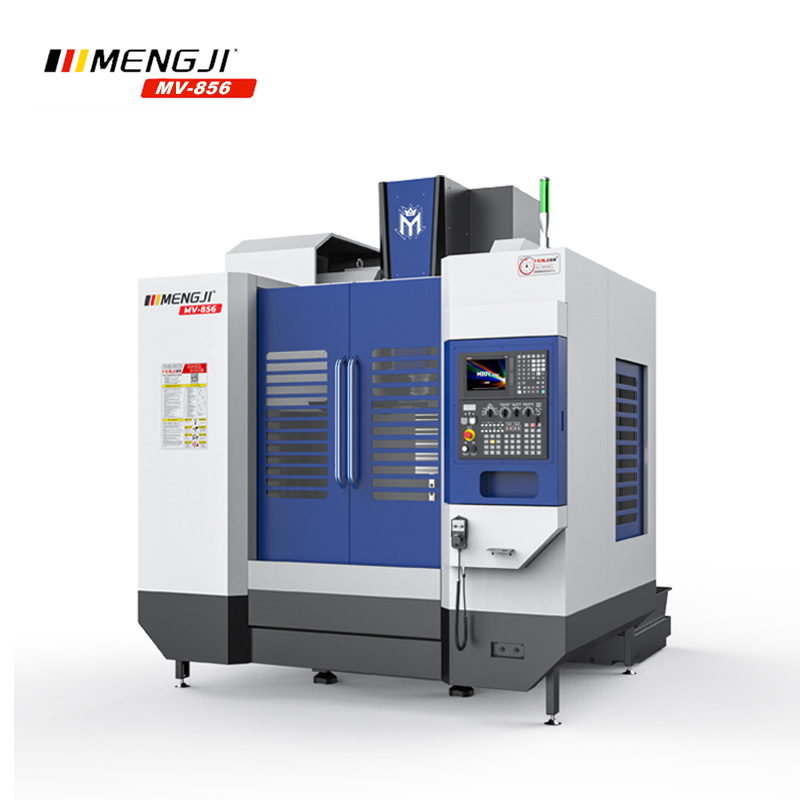
Foundations of Precision in Vertical Milling
Defining Precision and Accuracy in CNC Milling Operations
When talking about vertical milling, precision basically means getting consistent results when making multiple identical parts. Accuracy, on the other hand, is all about how close those finished pieces actually come to what was originally designed. Today's CNC machines, those computer controlled milling tools, can hit really tight tolerances sometimes under plus or minus 0.001 inches thanks to their fancy servo motors and ball screw mechanisms. This kind of setup cuts down on errors quite a bit too maybe around two thirds less mistakes than what happens with old fashioned manual machining methods. For shops that need repeatability and quality control, these improvements make a real difference in day to day operations.
Machine Rigidity, Component Alignment, and Structural Integrity
A 2024 study by Yash Machine found that vertical CNC milling machines with reinforced cast-iron bases reduced vibration-induced dimensional errors by 82% versus standard models. Key alignment factors include:
- Spindle perpendicularity within 0.0002"/ft
- Column-to-table parallelism under 0.0005"
- Way surface hardness exceeding 60 HRC for wear resistance
These structural features ensure long-term stability and minimize deflection during high-force operations.
The Role of High-Quality Tooling in Dimensional Consistency
End mills made from carbide with those tiny micro-grain substrates under half a micrometer actually last about three times longer at the cutting edge compared to regular tools according to ISO 8688-2 specs. When it comes to coatings like TiAlN or Titanium Aluminum Nitride, these really cut down on flank wear by around forty percent when working with high speed steel. That means better surface finishes too since the Ra values improve significantly. For manufacturers running long production cycles, keeping tool performance consistent matters a lot if they want to stick to those tight tolerances throughout entire batches without compromising quality.
Managing Thermal Expansion for Sub-Micron Tolerance Stability
Active cooling systems that maintain bed temperatures within ±0.5°F help prevent thermal growth errors exceeding 0.0003"/10°F in steel components. Linear scale feedback compensates for spindle elongation due to heat, enabling positional accuracy of ±0.0001" over 12-hour cycles. This level of thermal control is essential for sub-micron repeatability in precision applications.
CNC Control Systems and Real-Time Precision Enhancement
How CNC Milling Enables Repeatable, Error-Resistant Machining
Today's computer numerical control systems can hit repeatability down to around 2 microns thanks to their built-in software and network of sensors according to research from Ponemon back in 2023. What makes these systems stand out compared to old school manual approaches is how they automatically adjust for things like tool bending and inconsistent materials throughout the process. Take spindle load monitoring as an example. When working with tough materials like hardened steel, the system will actually change the feed rate on the fly to keep parts from coming out wrong. The whole closed loop feedback mechanism really pays off in mass production settings where it cuts down on wasted material by somewhere between 50 and 70 percent over traditional open loop methods. Of course getting all this technology properly implemented takes some expertise, but the savings in both time and materials make it worth the investment for most manufacturers.
Closed-Loop Feedback and Adaptive Control Technologies
Leading CNC controllers now combine laser measurement systems with AI-driven predictive algorithms. A 2024 material stability study found linear motor drives with real-time feedback achieve positioning accuracy of ±0.1 microns during high-speed milling. Adaptive control enhances this further by:
- Dynamically adjusting cutting parameters based on thermal sensor data
- Compensating for tool wear mid-operation via toolpath recalibration
- Activating vibration-damping protocols for delicate components like thin-wall aerospace parts
These capabilities allow consistent output even under variable operating conditions.
User-Friendly Programming Interfaces Minimizing Human Error
Intuitive touchscreen interfaces reduce setup errors by 42% in facilities with mixed operator experience levels (NIST 2023). Features such as collision-prevention simulation and automated toolpath optimization enable less-experienced technicians to safely program complex geometries. Graphical workflows also standardize procedures across shifts, supporting reliable 24/7 production without compromising quality.
Advanced Spindle Technologies for High-Speed Accuracy
High-Speed Spindles and Their Impact on Machining Precision
Modern CNC milling machines can achieve incredible precision when spindle speeds go above 15,000 RPM. A study from the Society of Manufacturing Engineers back in 2024 found this to be true. At these kinds of speeds, parts get much smoother surfaces, sometimes as fine as Ra 0.4 microns or better. What's really impressive is how much faster production becomes too – around 40% quicker than older spindle technology. The direct drive motors used in these machines make all the difference. They basically remove any play or wear issues that gears typically cause. This means the machine stays accurate even during complex cutting operations, keeping errors below plus or minus 3 microns throughout the whole process.
Thermal Management and Vibration Damping in Spindle Units
The latest thermal control tech combines hybrid ceramic bearings with liquid cooling for spindle housings, keeping thermal expansion under 5 microns even after hours of running non-stop. At the same time, vibration dampers work against those annoying harmonic vibrations, so machines stay accurate within just 2 microns across full 8 hour shifts. For shops working with tough materials like hardened steel, angular contact bearings loaded with about 1,200 Newtons cut down on side movement by nearly two thirds. This matters a lot in precision machining where every tiny deviation counts toward quality issues or tool wear.
Case Study: Surface Finish Gains with Direct-Drive Spindle Technology
Looking at results from Yash Machine Tools back in 2023 shows something interesting happened when they switched to direct drive spindles. Cycle times shot up by around 35%, which is pretty impressive for manufacturing shops looking to save time. The surface finish on those aerospace aluminum parts hit an amazing 0.8 microns Ra. What really stood out though was how much better dimensional consistency became after removing those gear driven vibrations. Across different production runs, measurements varied just 28% less than before. And thermal imaging told another story too. Bearings stayed remarkably steady within plus or minus 1.5 degrees Celsius during full 18 hour shifts. That kind of temperature control makes these systems ideal for industries where precision matters most.
Optimizing Machining Parameters and Environmental Conditions
Speed, Feed, and Depth of Cut: Balancing Efficiency and Tight Tolerances
Getting good precision means finding the right balance when it comes to cutting parameters. When someone boosts feed rates around 15%, they usually see about a 20% drop in cycle time, as long as they're using those adaptive depth-of-cut approaches. But there's a catch worth noting here. The faster the material gets removed, the quicker tools start wearing out too, roughly 12% faster according to some recent research from Springer Open Journal. For shops trying to optimize their operations, these multi-objective models look at more than twenty different factors at once. They help manufacturers improve both surface quality and how long tools last, all while keeping production speeds where they need to be for most shops. Makes sense really, since nobody wants to sacrifice efficiency just to get better results.
Coolant and Temperature Regulation for Thermal Stability
About one third of all machining errors in aluminum parts come down to thermal distortion issues. When manufacturers combine liquid nitrogen with minimum quantity lubrication systems, they can cut down cutting zone temps by around 40% compared to traditional flood cooling methods. What's really impressive is how these cryogenic setups keep things stable within just plus or minus 2 degrees Celsius even when working with titanium at high speeds something absolutely essential for those precision aerospace components where tolerances matter so much. And don't forget about those advanced coolant nozzles either their full 360 degree coverage boosts heat removal efficiency by nearly 30%, making them worth considering for shops looking to upgrade their machining capabilities.
Real-Time Monitoring Using Infrared Sensors and SPC
Putting together infrared pyrometers with statistical process control software helps spot unusual heat patterns right away during production runs. Research from last year found that when manufacturers combine these technologies, they see around a third fewer size problems in medical devices because the system links sudden temperature changes to how tools bend under pressure. The automated system can tweak machine speeds in just half a second, which is roughly fifteen times quicker than what operators could manage manually. This speed makes it much easier to stay within those tight ISO 2768 requirements without constant oversight.
In-Process Quality Assurance and Industrial Applications
On-Machine Metrology and In-Process Probing for Continuous Control
Today's CNC milling machines can hit tolerances below 10 microns thanks to built-in metrology systems. These machines use high precision touch probes along with laser scanners to check measurements while parts are being machined, which cuts down on how much time needs to be spent inspecting after the fact by around 30 to 40 percent according to the Manufacturing Trends Report from last year. The system works through closed loop feedback that makes real time adjustments to tool paths when there's tool wear or temperature changes affecting accuracy. For those making airplane parts, this kind of in process checking has led to about a 22% drop in waste for turbine blades specifically. That means fewer rejected components and better bottom line results for manufacturers dealing with tight specifications.
Applications in Aerospace and Medical Devices Requiring Tight-Tolerance Components
When it comes to aircraft construction, components like engine mounts and wing spar fittings need positioning accuracy down to around 5 microns or better. The medical field has similar demands for precision parts such as orthopedic implants and various surgical tools, where surfaces just can't be rougher than about 0.8 microns Ra. Some research published last year looked at how precision surface work affects manufacturing outcomes, and they found that when manufacturers monitored processes in real time, the consistency of bore diameters in hip replacement shafts actually went up by nearly 20%. Aerospace and medical manufacturing both follow strict standards like ISO 13485 and AS9100, which basically force companies to implement statistical process control methods so defects stay really low, typically under 0.1% across production runs.
FAQ
What is the difference between precision and accuracy in CNC milling?
Precision refers to the consistency of results when producing multiple identical parts, while accuracy indicates how close the finished pieces come to the original design specifications.
How do CNC milling machines enhance machining precision?
CNC machines use advanced servo motors and ball screw mechanisms to achieve tight tolerances, often under ±0.001 inches, and they significantly reduce errors compared to manual machining methods.
Why are high-quality tooling and coatings important in CNC milling?
High-quality tooling, like carbide end mills with micro-grain substrates, and coatings such as TiAlN reduce tool wear and improve surface finishes, ensuring dimensional consistency during production.
What role does temperature control play in precision CNC milling?
Temperature control is crucial in CNC milling to prevent thermal growth errors. Active cooling systems and linear scale feedback help maintain temperature stability and positional accuracy.
How do modern CNC machines manage thermal expansion?
Modern CNC machines use active cooling systems that stabilize bed temperatures and linear scale feedback to compensate for heat-induced spindle elongation, maintaining sub-micron repeatability.
What are the advantages of high-speed spindles in CNC milling?
High-speed spindles can achieve smoother surface finishes and increase production speed by around 40%, improving machining precision by eliminating gear wear and play.
How do CNC control systems enhance error resistance and repeatability?
CNC systems with adaptive control and closed-loop feedback mechanisms automatically adjust for tool bending, inconsistent materials, and spindle load, reducing waste and enhancing precision.
What applications require high precision CNC processes?
Industries like aerospace and medical device manufacturing require high precision CNC processes to achieve tight tolerances for components such as turbine blades and orthopedic implants.