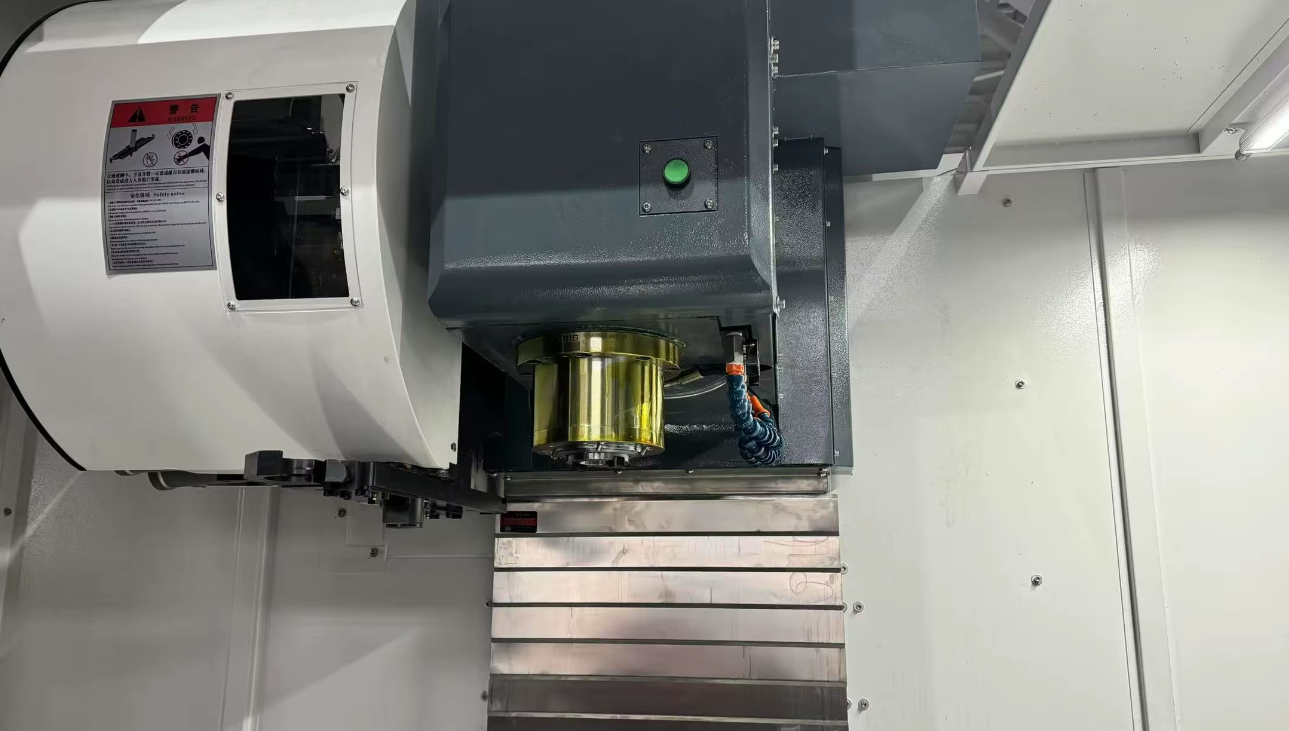
Core Machine Specifications Driving CNC Milling Machine Price
Number of Axes and Kinematic Complexity
The price goes up a lot when adding more axes, not just a little bit more but way more expensive. Three axis CNC mills usually cost around twenty grand, but five axis models tend to jump over seventy five thousand dollars. Why? Because they need those fancy rotating tables, better motion control systems, and all sorts of calibration tech built right in. The machine shop has to spend extra on parts that can handle tight tolerances too. Think about servos that track movement down to fractions of a micron, or ball screws that are preloaded so there's no play in them at all. These upgrades alone push prices up between forty and sixty percent. Sure, having multiple axes lets shops create intricate shapes and work on several surfaces at once, but getting there means serious money spent on making sure the whole system stays rigid under stress, handles temperature changes without warping, and doesn't vibrate itself apart during operation.
Work Envelope, Spindle Speed, and Travel Range
Larger work envelopes directly drive up cost: industry benchmarks show machines with 400 mm à 400 mm à 300 mm (48 million mm³) envelopes average $10,000â$30,000, while industrial models exceeding 800 mm à 600 mm à 500 mm (240 million mm³) commonly range from $60,000 to $100,000+. Key performance differentiators include:
- Spindle power: A 5 HP spindle adds ~$8,000 over base; upgrading to 10+ HP with high-torque vector control increases cost by $15,000+
- Rapid traverse rates: Systems rated at 60 m/min require reinforced guideways and higher-bandwidth servo loopsâcosting ~25% more than 30 m/min equivalents
- Tool changer capacity: A 10-tool carousel adds ~$6,000; expanding to 24-tool or robotic palletized systems adds $14,000+, including interface logic and safety interlocks
Accuracy, Repeatability, and Structural Rigidity
Getting precision right matters a lot when dealing with valuable applications, and this comes at a price. Machines that meet the ±0.001 inch (about 25 microns) accuracy standard typically begin around $35,000. That's about 40 percent more than similar machines rated at ±0.005 inches (around 127 microns). To reach those tight tolerances, manufacturers need special materials like granite epoxy or mineral cast beds. They also require high resolution linear glass scales instead of just regular rotary encoders, plus real time error mapping capabilities which can add anywhere from $12,000 to $25,000 to the base cost. The frame construction makes a difference too. Mineral cast frames cut down on surface errors caused by vibrations by as much as 60% compared to welded steel alternatives, though they come with a 15 to 30% increase in cost. Thermal compensation systems are another must have feature for keeping things consistent between production runs. These systems are pretty much standard equipment on machines used in aerospace manufacturing and will set back an additional $8,000 to $20,000 based on how many axes need monitoring and how dense the sensor network needs to be.
Software, Integration, and Operational Setup Costs for CNC Milling Machines
The real challenge isn't just getting the right machines running. Software, tooling setup, and how everything integrates together creates much bigger hurdles for newcomers. Computer Aided Manufacturing software takes design files and turns them into actual machine instructions called G-code. But there's a lot going on behind the scenes. Licensing fees alone can be a pain, plus the time spent programming and making sure those post-processors work correctly adds up fast. Take a look at what professionals pay for their software suites. Autodesk Fusion 360 might set back around $500 a year for smaller operations doing prototypes, while something serious like Mastercam for full production runs can easily reach into the tens of thousands annually based on what features they need and how many people will be using it. And let's not forget about hiring skilled CNC programmers either. These folks charge anywhere from thirty to seventy five dollars an hour, and creating a new part program usually takes between four and twelve hours of their time. That number goes way up when dealing with complex multi axis tool paths or double checking that nothing crashes during operation.
| Software Type | Cost Range | Primary Function |
|---|---|---|
| Entry-Level CAM | $500â$5,000/year | Basic 2.5-axis toolpath generation and NC verification |
| Advanced CAD/CAM | $5,000â$15,000/seat | Full 3â5-axis machining, adaptive clearing, and integrated simulation |
| Industry-Specific | $15,000â$50,000+ | NIST-traceable toolpath validation, AS9100-compliant reporting, and machine-specific digital twins |
CAM Software Licensing, Programming Time, and Post-Processor Compatibility
Getting post processors to work properly together still ends up costing way more than most people realize. When these tools don't match up or are just too old, they create G code that looks good on paper but doesn't actually work right. This leads to all sorts of problems down the line including endless hours spent fixing errors, running test pieces that waste materials, and redoing entire batches. Staying current with controller firmware means shelling out for those yearly software maintenance fees ranging from around $1k to $5k. These contracts do come with some perks though like access to officially certified post processors and getting help from tech support when things go wrong.
Tooling Ecosystem, Consumables, and Material-Specific Requirements
The upfront cost for tooling alone can set manufacturers back anywhere between five thousand and twenty thousand dollars before they even make their first cut into material. When working with hardened steels, shop owners need to invest in those special micro-grain carbide end mills that run around eighty to two hundred bucks apiece, plus pay extra for those fancy coatings like AlTiN. Things get really expensive when dealing with composites or titanium parts though, since these materials demand either PCD or CBN tooling inserts which easily break the bank at three hundred to twelve hundred dollars per piece. Don't forget about coolant systems either. High pressure through spindle options or minimum quantity lubrication setups will tack on another three to twelve grand to the budget. And let's talk about fixturing costs for different materials. Vacuum chucks work great for holding down aluminum sheets, but aerospace shops need those modular vise systems for handling billets, not to mention all the custom soft jaw sets required for specific applications. These specialized fixtures definitely eat into what was already a tight setup budget.
Total Cost of Ownership: Maintenance, Training, and Uptime Reliability
Installation Prep, Calibration, and Operator Onboarding Expenses
The real cost of getting these machines running goes way beyond what's on the bill. Preparing the site alone eats up between five thousand to twenty five thousand dollars. We're talking about pouring six inch reinforced concrete slabs, setting up isolated power feeds with those fancy harmonic filters, plus installing proper environmental controls throughout the space. Then there's the whole calibration thing. The lasers need precision tuning according to ISO 230-2 standards, which takes anywhere from eight to sixteen hours of skilled labor. And let's not forget about training operators. They spend forty to sixty hours learning everything from basic G-code programming to how to handle tool offsets and run emergency shutdown procedures properly. This training often ends up costing around ten to fifteen percent of what the machine itself originally cost. Skip any part of this process and companies face serious problems down the road. Scrap parts become expensive fast, machines might crash into themselves, and worst case scenario? Regulatory issues pop up, especially when making products for medical devices or aircraft components where even the smallest alignment error can send an entire batch straight to the trash heap.
Brand-Dependent Maintenance Frequency, Spare Parts Availability, and Downtime Risk
How often equipment needs maintenance depends on quality level. Cheaper machines might need attention after just 250 hours of running, whereas those made by companies with ISO 9001 certification typically last around 2,000 hours before needing service checks thanks to their built-in diagnostic systems. Getting replacement parts when needed makes all the difference between smooth operation and costly shutdowns. Big name manufacturers have established distribution centers across regions so they can ship critical components like spindles, motor drives, and control panels within a day. Smaller suppliers usually take between five to ten days to deliver these same items. When unexpected breakdowns happen, the financial hit is serious stuff. Some rough calculations suggest it costs about $450 per hour lost because of stopped production lines, wasted materials, and idle workers waiting for fixes. That's why having modular parts that technicians can swap out on site gives such an edge in reliability. Equipment that uses standard connectors and comes with clear repair instructions tends to get back online 30% quicker after problems occur. Companies should look for suppliers who provide full service packages including things like remote monitoring capabilities, regular checkups, and service level agreements that guarantee quick response times. These arrangements help keep total ownership costs down and reduce the chances of major disruptions in day to day operations.
Frequently Asked Questions
What factors most influence the price of a CNC milling machine?
The number of axes, work envelope size, spindle speed, and structural rigidity are major factors affecting prices. Higher specifications in these areas often lead to higher costs.
How does software impact CNC milling machine costs?
Software like CAM systems incurs licensing fees and impacts overall costs based on programming time and the compatibility of post-processors.
Are there ongoing costs after purchasing a CNC milling machine?
Yes, ongoing costs include maintenance, training, tooling, and consumables. Regular updates and replacement parts also contribute to the total cost of ownership.