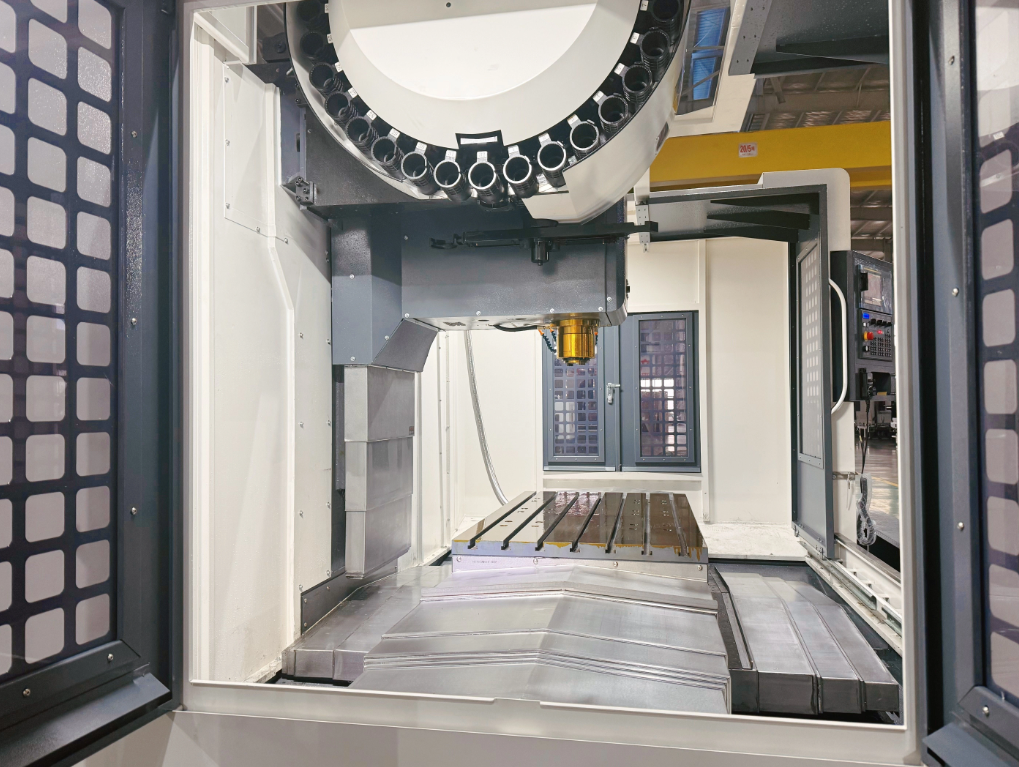
Unmatched Precision and Repeatability at Scale
Sub-micron tolerance control across thousands of identical parts
CNC machining centers today can reach really impressive levels of accuracy, sometimes as tight as plus or minus 0.0002 inches which is about 5 microns. They accomplish this thanks to sturdy cast iron frames, those super smooth ground ball screws, and linear encoders that provide constant feedback. The ability to maintain such tight controls makes it possible to produce large quantities of critical parts like aerospace fittings and medical implants where even a tiny deviation beyond 0.0005 inches could mean the part won't work properly or just won't fit together at all. Looking at some recent data from 2023, studies showed around 98.7 percent of manufactured parts stayed within plus or minus 0.0004 inch tolerance when making runs of 10,000 units. That kind of repeatability simply isn't something traditional manual machining techniques can match.
| Precision Factor | Traditional Machining | CNC Machining Centers |
|---|---|---|
| Tolerance Consistency | ±0.005" | ±0.0004" |
| Reject Rate at 10k Units | 12% | <1.3% |
| Dimensional Drift Over Time | High | Near-zero |
How closed-loop feedback systems eliminate drift in long production runs
Traditional machines tend to drift out of alignment over time because of thermal expansion and mechanical wear from constant operation. CNC machining centers handle this differently by incorporating closed loop feedback systems that track position and measure force through linear scales along with spindle load sensors built right into the machine. If measurements start drifting beyond 0.0001 inch tolerance, the control system will either tweak the cutting path or signal when it's time to swap tools. These automatic corrections keep everything within plus or minus 0.0003 inches even during those long 72 hour production runs. For parts like automotive transmissions where each component needs to fit perfectly against others, this kind of consistent precision makes all the difference between smooth assembly lines and costly rework down the road.
End-to-End Automation That Lowers Labor Cost per Part
From manual setup to lights-out operation: labor reduction benchmarks
CNC machining has really changed things for manufacturing shops moving away from all those time-consuming manual processes toward what's called "lights out" production these days. According to industry data, companies are seeing anywhere between 30% to 50% savings on labor costs per individual part made this way. The machines handle all sorts of repetitive work automatically now too, stuff like changing tools and moving parts around, which means workers don't need to get involved as much anymore. Some factories report needing only about 20% of their previous staff for similar volumes when running multiple machines at once. What's interesting is how one tech person can watch over several CNC machines simultaneously that would have needed separate operators back in the day, particularly during those long overnight runs when nobody else is around.
ROI analysis: typical payback periods for CNC machining centers in high-volume environments
For high-volume manufacturers, CNC machining centers deliver ROI within 12–24 months, driven primarily by labor compression and throughput gains. Key contributors include:
- Labor cost reduction: Direct labor expenses drop 40–60% versus manual processes
- Throughput optimization: 24/7 operation increases output by 3–5× per capital investment
- Secondary cost avoidance: Integrated in-process verification eliminates rework costs—typically 15–20% of manual production budgets
These efficiencies compound significantly in runs exceeding 10,000 units, where per-part labor savings scale across the entire production cycle.
Continuous 24/7 Production Without Quality Compromise
Thermal management and predictive maintenance enabling sustained uptime
Keeping precision at the micron level when running CNC machines continuously is all about fighting off heat-related dimensional changes. Spindle friction plus cutting forces tend to push temperatures up between 15 and 25 degrees Celsius after long production runs. Modern thermal compensation systems tackle this problem through real time sensor data and smart coolant application, keeping tool temperatures stable around half a degree variation. At the same time, predictive maintenance software looks at vibration patterns and how much power the machine consumes to spot potential issues with bearings or servo motors well before they actually fail, sometimes as early as 200 to 400 hours ahead of time. According to a recent article in Manufacturing Technology Review, combining these approaches cuts unexpected downtime by about three quarters and keeps scrap rates under 0.2 percent. That means factories can run their machines day and night without anyone watching them closely, yet still maintain excellent product quality standards.
Multi-Axis Flexibility That Minimizes Secondary Operations and Material Waste
Modern 5-axis CNC machining centers revolutionize high-volume production by consolidating 3–5 separate setups into a single automated cycle. This capability allows simultaneous multi-angle machining without repositioning the workpiece—eliminating manual intervention between operations.
5-axis CNC machining centers: consolidating 3–5 setups into a single cycle
By accessing complex geometries in one fixturing, manufacturers reduce idle time by up to 70% and achieve tighter tolerances (±0.005mm). Eliminating repeated handling minimizes:
- Human error in part alignment
- Cumulative tolerance stack-up across sequential operations
- Fixturing costs for secondary setups
This consolidation cuts scrap rates by 40%, according to peer-reviewed manufacturing efficiency studies. Optimized toolpaths further maximize raw material utilization—particularly valuable when working with costly aerospace alloys or medical-grade polymers. The inherent precision of 5-axis CNC machining ensures consistent quality across production runs while reducing or eliminating post-processing requirements.