Vertical Machining Centers: Regional Production Models and Value Propositions
Europe’s premium VMC ecosystem: Engineering heritage, customization, and service-integrated pricing
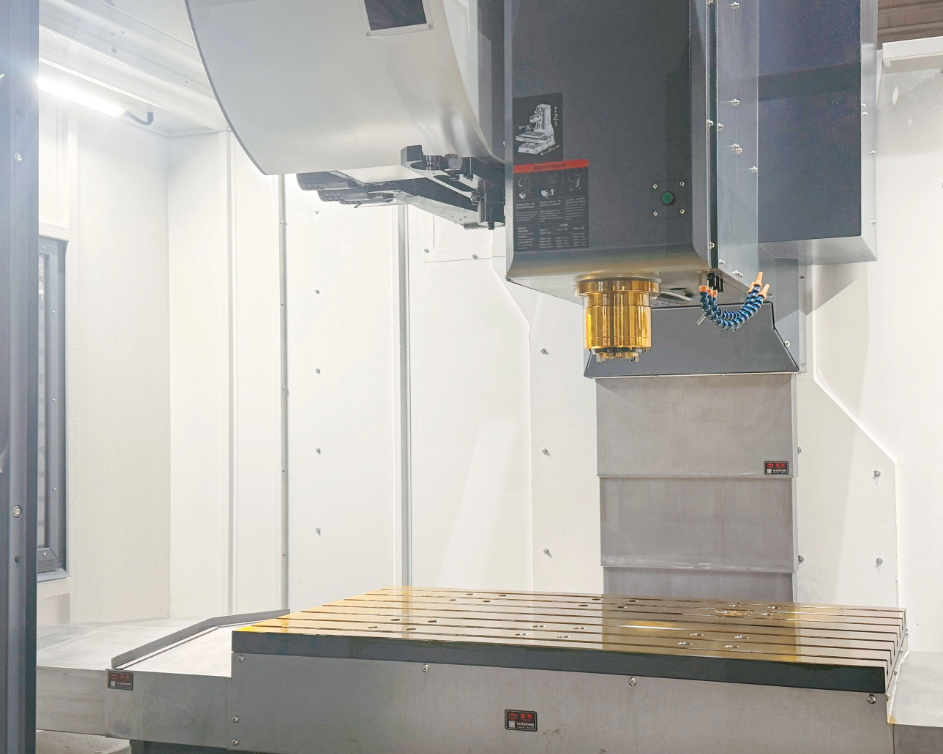
The European Vertical Machining Centers (VMCs) have built their reputation over many years through precision engineering. These machines are known for solid construction, extensive customization options, and reliable performance over time. Top manufacturers create specialized equipment for industries where mistakes aren't an option - think aerospace components, medical devices, or energy sector parts. Repeatability matters here, along with how stable the machine stays during operation and whether every step can be tracked back later. When it comes to service, European VMCs come with comprehensive packages. Most companies include things like regular maintenance checks, remote troubleshooting capabilities, and fast tech support responses. This service component usually accounts for about 15 to 20 percent of what buyers end up paying overall. The starting price tag is roughly 120,000 euros FOB, though this isn't just for the machine itself. That figure reflects all the built-in quality controls, meets strict CE and ISO standards, and incorporates design features meant to last well beyond a decade without major issues.
China’s rapid VMC advancement: Scale-driven cost leadership and emerging high-precision domestic brands
The Chinese VMC industry has shifted away from simple mass production toward something more complex. They're dominating the lower to mid-range market thanks to their massive scale operations, but at the same time they're getting much better at making precision equipment too. Their standard models benefit from centralized parts procurement systems, fully automated manufacturing setups, and supply chain structures that integrate multiple stages together. All this allows them to offer prices around 35 to 40 percent cheaper than similar machines made in Europe. Some of the leading domestic manufacturers can actually hit plus or minus 0.005 millimeters of accuracy on their best models according to ISO 230-2 testing standards. These companies have also been setting up service centers throughout Southeast Asia, parts of the Middle East, and Eastern Europe over recent years. The basic models start at about 400,000 yuan which is roughly equivalent to 50,000 euros. This makes them particularly attractive for industries where large volumes need processing quickly like electric vehicle components, smartphone manufacturing, and factory automation projects where getting products to market fast matters more than having machines last for decades.
Vertical Machining Centers Price Analysis: Europe vs China (2023–2024)
Entry-level to mid-tier VMC price benchmarks: EUR vs CNY, adjusted for FOB and standard configuration
Entry level vertical machining centers from Europe typically cost between 80k and 120k euros FOB, while similar machines made in China fall somewhere around 400k to 600k yuan, which translates roughly to 50k to 75k euros. For mid range models featuring comparable work areas, spindle speeds ranging from 8,000 to 12,000 RPM, and linear guides, European manufacturers generally price them at 150k to 250k euros. Their Chinese counterparts usually come in at about 800k to 1.2 million yuan, or approximately 100k to 150k euros. These figures are based on standard models without extra options. What many people overlook is that European pricing typically includes essential items like basic documentation packages, built in CE compliance for safety standards, and genuine OEM grade CNC controls. These premium control systems alone can push hardware costs up by 15 to 20 percent. Most Chinese suppliers don't bundle these features, instead opting for local controller solutions as standard equipment. And let's not forget about import costs either. If brought into Asian markets, European machines incur additional tariffs and shipping fees totaling around 25 to 35 percent, making their final landed cost significantly higher than locally sourced alternatives.
Key cost drivers shaping VMC pricing: Labor intensity, component sourcing, R&D amortization, and regulatory compliance
There are basically four main reasons why prices vary so much across different regions. First off, labor costs play a big role in explaining why European products come at such a premium. Skilled technicians in Europe typically earn around 35 euros per hour, which is actually over four times what their counterparts in China make at about 8 euros an hour. When it comes to components, there's a clear difference between markets. European manufacturers tend to go for high quality parts like German and Japanese spindles, ball screws, and linear guides that carry ISO certifications. These top tier components can push material costs up by anywhere from 18% to 25%. Meanwhile Chinese companies benefit from their well established domestic supply chains, allowing them to iterate faster and maintain tighter profit margins. Research and development spending also contributes to the gap, making up roughly 12-15% of European product prices compared to just half that amount in China. This extra investment funds things like special vibration damping systems, advanced control software, and digital twin technology integration. Then there's regulatory compliance to consider. Meeting European standards like CE marking, EN ISO 13849 safety requirements, and ISO 50001 energy efficiency rules can add between 10,000 and 15,000 euros per unit. These standards require far more documentation and testing than the equivalent GB/T framework in China. All told, these various factors create a basic price difference of somewhere between 40% and 60% even before we start talking about additional expenses related to service support, employee training programs, or equipment availability issues.
Total Cost of Ownership: Beyond Initial Price for Vertical Machining Centers
Reliability metrics (MTBF), maintenance frequency, and spares availability across regions
European vertical machining centers typically last over 10,000 hours between failures thanks to their robust build quality. These machines go through strict factory tests before leaving the plant, have reinforced mechanical components, and come with top notch subsystems throughout. When it comes time for maintenance, most shops find they can plan for these checks every three months or so. The big manufacturers have established service networks across Europe and other key markets too, so getting replacement parts often happens within a day if needed. Chinese made VMCs generally run about 6,000 to 8,000 hours between breakdowns. They're built with tighter manufacturing specs which is good, but doesn't leave much room when running non stop for long periods. Maintenance tends to happen every two months instead. Parts are readily available domestically, but shipping internationally takes around 2 to 3 weeks. This creates real problems for companies operating globally unless they maintain stockpiles of spare parts locally.
TCO comparison over 5 years: Energy efficiency, operator training, and downtime implications
Looking at a five year period, European VMC machines cut down on energy usage somewhere around 15 to 20 percent thanks to things like regenerative drives, efficient servo motors, and smart power management systems. That translates into roughly 18 thousand to 25 thousand euros saved on utilities over time. The catch though is these machines come with complex control systems and important process features that demand special training for operators and programmers, typically running between 5k and 7k euros each year. Chinese made VMCs don't need as much training investment, maybe only 1k to 3k per year, but they tend to break down more often. We're talking about about 120 extra hours of unplanned downtime every year compared to just 40 hours for European models because their critical parts aren't as reliable. With standard industry rates putting lost productivity at 85 euros per hour, those breakdowns actually cost around 6,800 euros annually or 34k over five years. Throw in all the costs related to energy, training, and getting spare parts when needed, and what initially looked like a 30 to 40 percent price edge for Chinese machines gets reduced to just a 10 to 15 percent total cost advantage for European models in operations where uptime really matters.