Why a CNC Budget Is More Than a Sticker Price
A common phone call that echoes through many machine tool showrooms starts with the same question: what is your cheapest three axis machining center? It is a fair opening, but it skips over a critical truth. The purchase of a CNC machine tool is never just about the number on a quotation sheet. A seasoned production manager once shared a hard lesson with me. He had secured a milling machine at an incredibly low bid, only to discover that the delivery lead time was six months longer than promised, the foundation required a separate concrete pour that cost thousands, and the local tech support simply did not exist. The actual cost to get chips flying reliably was nearly 40% higher than the machine price. Setting a realistic budget means drawing a circle around the entire preparation, installation, and ramp-up phase, not just the iron on the floor.
The Hidden Costs That Surprise First Time Buyers
If you are moving into CNC machining for the first time, or adding capacity to an older workshop, several line items deserve a place in your budget before you even select the machine. Freight for a 6-ton vertical machining center is not a small courier fee; specialized flatbed trucks and forklift rentals for unloading can easily run into several thousand dollars. Then comes the foundation. Many high speed machines demand an isolated concrete pad with specific thickness and leveling tolerances. Next is the electrical infrastructure. A shop floor often needs a dedicated transformer and properly grounded circuits to handle the spindle and servo loads. Then pile on the first batch of tool holders, collets, cutting tools, and a basic workholding setup. An honest purchasing manager will also budget for operator training, often a full week, and the initial coolant and lubricant fill. On average, a prudent starting point is to take the base machine price and add twenty to thirty percent for these make-ready essentials. Skipping this step only leads to a silent machine sitting idle.
Matching Machine Specifications to Real Workloads
This is where engineering expertise directly shapes the budget. A linear guideway machine and a box way machine handle loads completely differently. If a shop’s bread and butter is taking heavy cuts in cast iron, a box way design offers superior damping but comes at a higher base cost and is usually found in heavier, more expensive castings. Conversely, a linear guide machine delivers rapid traverse rates that boost productivity in aluminum and light steel profiling. The spindle is another fork in the road. A belt driven spindle is cost effective for general work, but a direct drive or built in spindle substantially increases the price while unlocking finer surface finishes and higher RPM for small tools. The taper size matters too. An ISO40 or BT40 spindle covers most general machining needs, but stepping up to ISO50 or a high speed HSK interface instantly widens the workpiece envelope and the cost gap. The budget must follow the work, not the other way around. Buying too little machine is a rejection nightmare; buying too much is a depreciating asset that never pays for itself.
Control Systems and the Long Game of Maintenance
A CNC control unit is a decade-long relationship. The choice between FANUC, Siemens, Mitsubishi, or a domestic brand fundamentally alters the total cost of ownership. A widely used system like FANUC may carry a price premium upfront, but it also means a large pool of trained operators is available in the job market and third-party repair services are abundant. Lesser-known proprietary controls might save money on the initial invoice, yet they can lock the owner into single-source service contracts that slowly chip away at the savings. From a professional perspective, also examine the availability of spare parts. A control board failure two years after commissioning should not mean waiting eight weeks for a replacement from overseas. Talking to local job shops about their maintenance experience reveals more real world cost than any glossy brochure. The budget for a CNC machine needs a deliberate line for post-warranty service plans and critical spare parts inventory, especially if the machine is the sole bottleneck in a production cell.
Calculating Return on Investment Before You Sign
Profitability modeling transforms a budget from a shopping limit into a strategic tool. Start with a realistic estimate of spindle utilization hours per month. A machine doing lights out production at 20 hours a day carries an entirely different investment case than one running a single shift with frequent changeovers. Factor in the labor savings: one skilled operator in many modern cells runs two or even three machines simultaneously. Then subtract the fully burdened hourly rate for power, tooling consumption, and floor space. The resulting net cash flow per month, multiplied by twelve, gives a clear payback period. A sensible benchmark for a well matched vertical machining center in general job shop work is a payback of 18 to 30 months. If the calculation shows five years, the budget needs reworking, either by tightening the machine spec or by lining up steadier contract work. This is the conversation that separates a cost center from a profit center.
Turning a Capital Expense Into a Competitive Edge
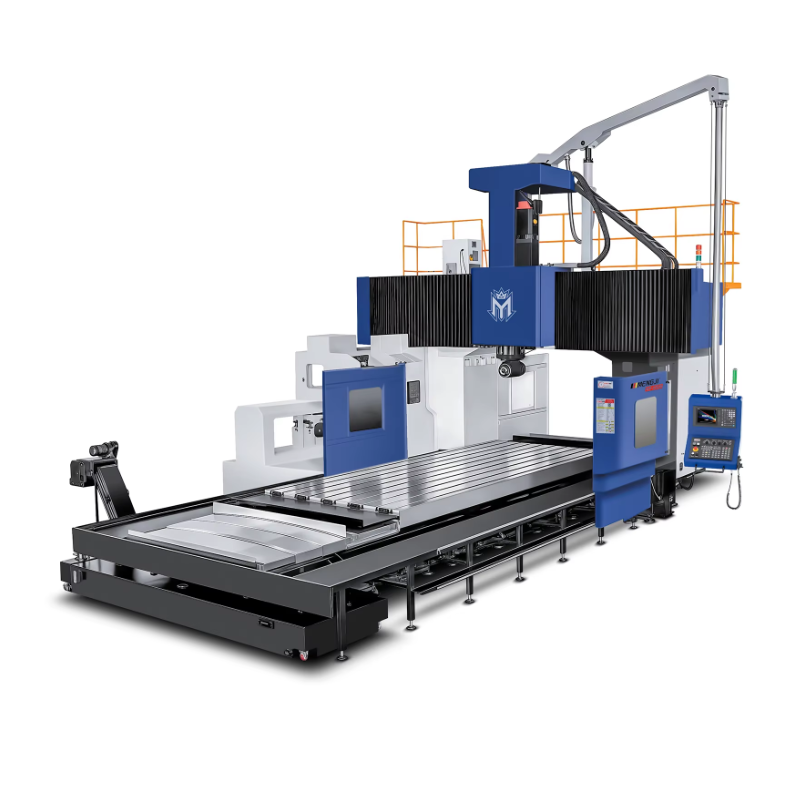
In the end, the budget conversation naturally leads to the partner behind the machine. A supplier that merely ships a crate is a vendor; a supplier that offers pre-delivery inspection reports, laser interferometer accuracy charts, and local application engineering is an ally. This is where Mengji Intelligent Equipment stands apart. With deep manufacturing roots in Hunan and an integrated supply chain for casting, assembly, and precision testing, Mengji turns the budgeting process into a transparent, step-by-step partnership. Whether the requirement is a compact VMC for a startup toolroom or a heavy duty gantry mill for large mold bases, the team provides detailed cost breakdowns that include the essential installation and training line items often blurred by others. When the factory floor is laid out, the power is connected, and the first batch of parts meets tolerance within hours, that is the moment a well planned budget proves its worth, not as a collection of numbers, but as the foundation of a manufacturing advantage that grows stronger every quarter.