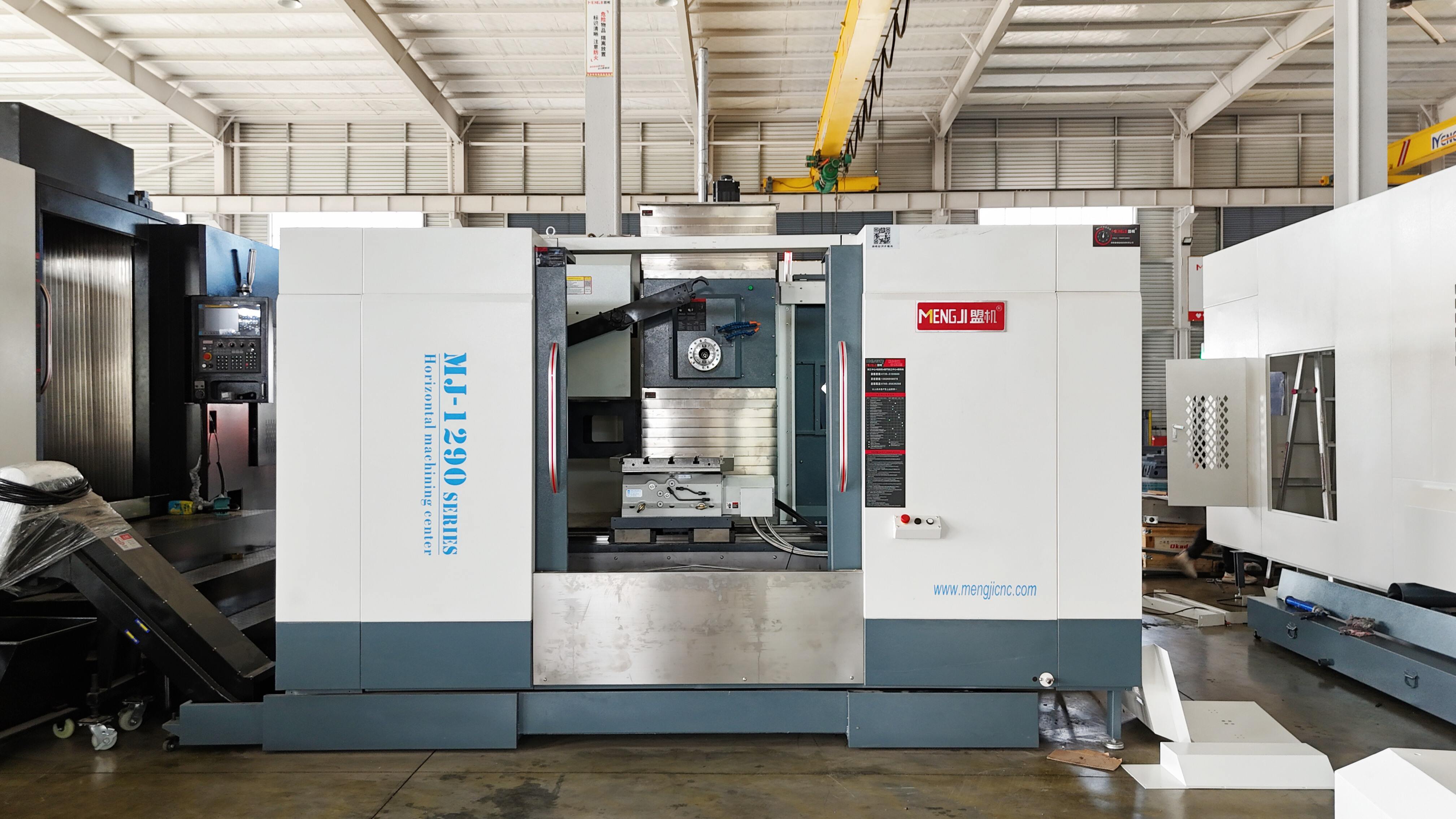
Core Hardware Factors That Drive CNC Machining Centers Pricing
Machine architecture and kinematics: Bed type, travel range, and structural rigidity impact on base cost
Bed type—moving table versus fixed bridge—directly influences both performance and initial investment. Moving table designs offer lower entry costs but sacrifice rigidity for large or heavy workpieces. Travel range (X/Y/Z) dictates frame requirements: larger spans demand reinforced cast iron or polymer-concrete structures to resist deflection under cutting loads. Structural rigidity directly governs vibration damping—critical when machining hard alloys like Inconel or hardened tool steels. High-rigidity steel frames add 15–20% to base pricing yet enable ±0.01 mm positional accuracy under sustained load, a benchmark cited in ISO 230-2 standards for machine tool testing.
Spindle performance and control systems: Power, RPM, thermal stability, and servo/linear motor sophistication
Spindle specifications define material capability and surface quality. High-torque spindles (15+ kW) support aggressive milling of stainless steel and titanium but cost ~30% more than standard 7 kW units. RPM above 20,000 enables fine aluminum finishing but requires liquid-cooled housings to manage thermal growth—per ASME B5.54 guidelines on spindle thermal behavior. Control systems separate tiers: basic servo-driven axes suit prototyping; linear motors deliver 0.1g acceleration and micron-level path fidelity for aerospace contours. Thermal compensation modules—validated in NIST traceable studies—prevent >1.5 µm drift over 8-hour runs and add $12k–$18k to the system.
Precision engineering specifications: Positional accuracy, repeatability, surface finish capability, and exotic material readiness
Achieving sub-10-micron precision demands integrated engineering—not just component upgrades. Ground ball screws, laser-calibrated encoders, and temperature-stabilized enclosures are prerequisites for ±0.005 mm positional accuracy per ISO 230-2. Repeatability below 0.002 mm requires foundation-level vibration isolation, not just machine-level damping. Mirror finishes (Ra <0.4 µm) necessitate 30,000 RPM spindles, HSK-A63 or stronger toolholders, and dynamic balancing—adding ~25% to entry-level pricing. Exotic material readiness includes ceramic spindle bearings ($7k), high-pressure through-spindle coolant (≥1,000 psi), and corrosion-resistant way covers—features that collectively increase cost by 40–60% versus standard configurations, as documented in AMT and SME benchmarking reports.
Technology Tier and Automation Level in CNC Machining Centers
Standard vs. production-tier CNC machining centers: Rigidity, toolchanger speed, and coolant delivery as cost differentiators
Standard CNC machining centers prioritize affordability using lighter castings and simpler guideways—limiting usable cutting forces and long-term accuracy retention. Production-tier machines employ reinforced polymer-concrete bases, box-way or hydrostatic guideways, and dual-nut ball screws to sustain heavy cuts in hardened materials. Toolchanger speed is a key economic divider: standard models average 1–2 second tool changes; production systems achieve sub-0.8-second exchanges via hydraulic accelerators and optimized ATC kinematics. Coolant delivery scales with application: while 500 psi suffices for aluminum, nickel alloys require ≥1,200 psi through-spindle cooling to suppress work hardening—per AMS2750E metallurgical process guidelines. These enhancements drive a 40–60% price premium but yield up to 3× longer tool life in high-volume applications, as confirmed in Sandvik Coromant and Kennametal field studies.
High-end CNC machining centers: ROI drivers like integrated probing, unmanned operation, and multi-process (milling-turning) capability
High-end CNC machining centers integrate capabilities that transform labor economics and part quality. Laser tool setters and touch-trigger workpiece probes automate setup by up to 70%, reducing changeover from hours to minutes—validated across DMG MORI and Mazak installations. Unmanned operation—enabled by pallet changers, adaptive toolpath control, and predictive maintenance—isn’t theoretical: machines running 120+ hours unattended reduce direct labor costs by $18/hour (2024 U.S. Bureau of Labor Statistics manufacturing wage data). Multi-process 5-axis mill-turn centers consolidate operations: a single $500k system often replaces three $200k dedicated units, eliminating secondary handling and fixture duplication. This integration cuts fixture costs by 45% and improves positional accuracy to ±0.0002 inches through unified coordinate systems—per ASME B5.57 alignment standards. Though requiring 2.5× the investment of standard 3-axis models, these systems achieve payback in under 18 months in aerospace and medical device manufacturing, where uptime and first-pass yield are mission-critical.
Operational Cost Drivers Beyond Acquisition: Programming, Setup, and Batch Economics
While the upfront price of CNC machining centers garners significant attention, operational expenditures—spanning engineering preparation, fixturing, and production scaling—often eclipse acquisition cost over the equipment’s lifecycle. These hidden costs directly impact profitability and require strategic management.
Engineering overhead: CAD/CAM programming, fixturing design, and first-article validation costs
Complex part geometries demand extensive engineering effort—typically consuming 15–40% of total project budgets. Key contributors include:
- Programming complexity: Multi-axis toolpaths or exotic materials increase CAM time by 200–400% versus standard 3-axis milling, per Siemens NX and Mastercam user benchmarking.
- Custom fixturing: Dedicated workholding for low-volume prototypes ranges from $1,500–$8,000 per setup—costs that scale disproportionately with part uniqueness.
- Validation protocols: First-article inspection reports (FAIR) and CMM verification add 8–25 labor hours per job, especially for AS9100- or ISO 13485-certified suppliers.
Economies of scale: How batch size shifts unit cost curves—from prototype premiums to production optimization
Batch size dramatically alters per-part economics due to fixed overhead amortization. Prototyping runs (1–10 units) incur costs 300–700% higher per part than production batches (1,000+ units), driven primarily by:
- Setup dominance: Changeovers consume ~70% of processing time in small batches versus <15% in volume runs.
- Tooling utilization: High-volume production spreads perishable tooling costs across thousands of parts—improving cost-per-part predictability.
- Automation feasibility: Quantities exceeding 500 units justify robotic tending, slashing labor by up to 85% per part, as demonstrated in FANUC and Yaskawa deployment case studies.
This non-linear cost curve means manufacturers must align batch strategy with machine capability—over-investing in automation for low-mix work erodes margins, while under-specifying capacity invites bottlenecks and scrap.
Comparative Value Analysis: 3-Axis vs. 5-Axis CNC Machining Centers
When evaluating CNC machining centers, axis configuration fundamentally dictates capability, precision, and cost-efficiency. While 3-axis machines operate along X, Y, and Z planes, 5-axis systems add rotational axes (A and B/C), enabling complex contouring without repositioning. Consider these critical differences:
- Setup Complexity: 5-axis CNC machining centers complete intricate geometries in a single setup, whereas 3-axis workflows require multiple fixturing changes—increasing labor hours by 40–60% and introducing cumulative alignment error.
- Precision & Surface Quality: Continuous tool contact in 5-axis systems achieves surface finishes ≤0.8 µm Ra, versus ≥1.6 µm Ra in 3-axis workflows that often require secondary grinding or polishing.
- Material Utilization: 5-axis toolpath optimization reduces material waste by 15–25% by minimizing sacrificial fixtures and repositioning errors—verified in Boeing and GE Aerospace supplier audits.
- Production Throughput: For complex parts like turbine blades or orthopedic implants, 5-axis machines cut cycle times by up to 70% compared to 3-axis alternatives, per MTConnect analytics from over 120 production sites.
Though 5-axis CNC machining centers command a 40–60% higher initial investment ($200k–$500k vs. $80k–$250k for 3-axis), they deliver ROI within 18–30 months for high-mix, high-precision production through reduced scrap, labor, and secondary operations. For simpler components like brackets or housings, 3-axis remains cost-optimal at $75–$120/hour operating costs. Always match axis capability to part geometry: over-specifying invites unnecessary capital drain, while under-specifying risks quality penalties and customer rejection.
FAQ
What factors influence the pricing of CNC machining centers?
Key factors include machine architecture, spindle performance, control systems, precision specifications, and automation features. Additional costs come from operational expenses like programming, setup, and batch production.
How do 5-axis CNC machines differ from 3-axis machines?
5-axis machines enable complex contouring in a single setup, offering better precision, surface quality, and material utilization. However, they cost 40–60% more than 3-axis models and are better suited for high-mix, high-precision production.
What are the major operational costs beyond acquisition?
Operational costs include CAD/CAM programming, custom fixturing, first-article validation, and economies of scale adjustments, all of which significantly impact long-term profitability.
Why is structural rigidity important in CNC machining centers?
Structural rigidity ensures vibration damping, which is critical for precision and surface quality, especially when machining hard alloys or achieving tight tolerances.
When does investing in high-end CNC machining centers make sense?
High-end systems are ideal for industries like aerospace or medical devices where uptime, automation, precision, and reduced labor costs justify the higher upfront investment.
Table of Contents
-
Core Hardware Factors That Drive CNC Machining Centers Pricing
- Machine architecture and kinematics: Bed type, travel range, and structural rigidity impact on base cost
- Spindle performance and control systems: Power, RPM, thermal stability, and servo/linear motor sophistication
- Precision engineering specifications: Positional accuracy, repeatability, surface finish capability, and exotic material readiness
- Technology Tier and Automation Level in CNC Machining Centers
- Operational Cost Drivers Beyond Acquisition: Programming, Setup, and Batch Economics
- Comparative Value Analysis: 3-Axis vs. 5-Axis CNC Machining Centers
-
FAQ
- What factors influence the pricing of CNC machining centers?
- How do 5-axis CNC machines differ from 3-axis machines?
- What are the major operational costs beyond acquisition?
- Why is structural rigidity important in CNC machining centers?
- When does investing in high-end CNC machining centers make sense?