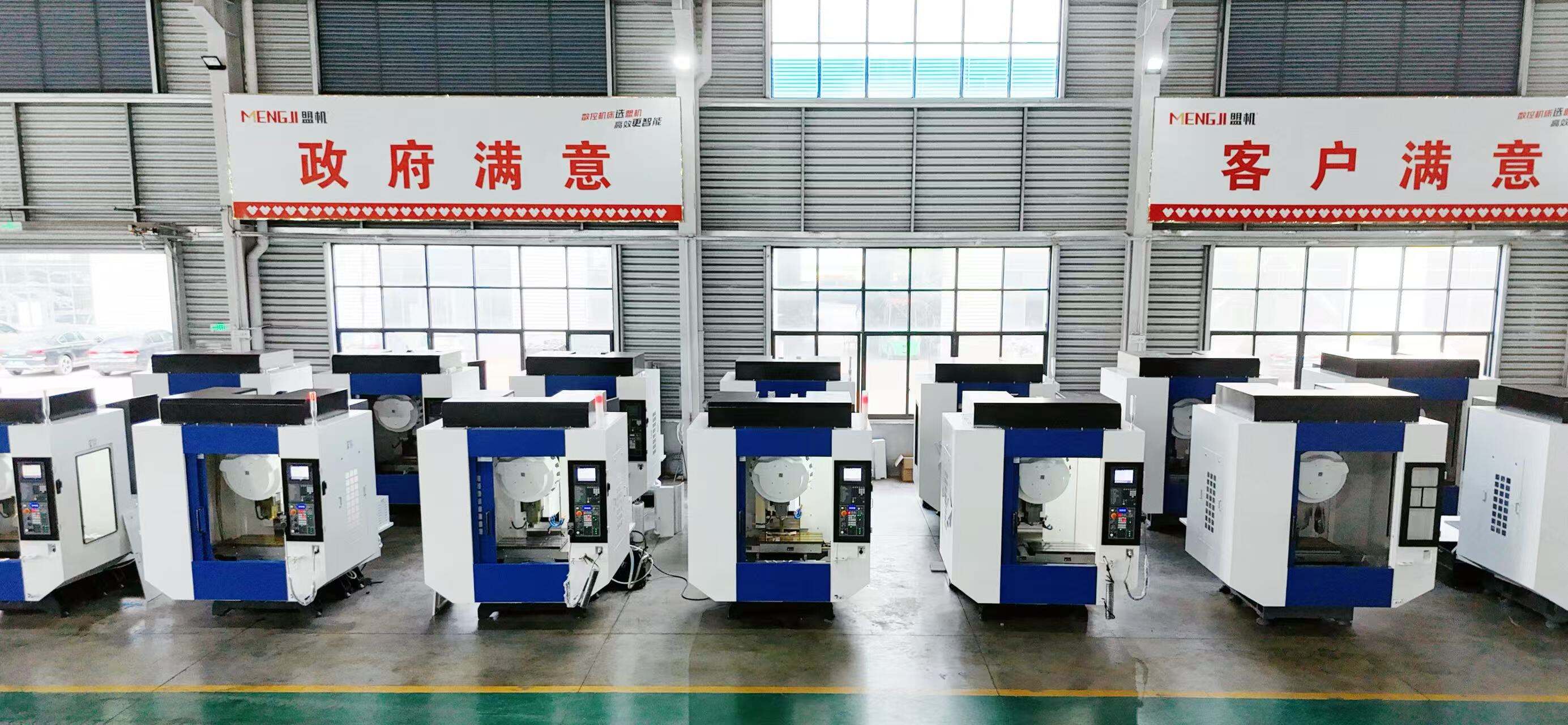
Define Your Workshop Application and Material Requirements
Matching Small CNC Milling Machine Capabilities to Common Workshop Materials (Aluminum, Brass, Plastics, Wood)
Selecting a small CNC milling machine starts with analyzing your primary materials—each imposes distinct mechanical and thermal demands:
| Material | Spindle Power Needs | Rigidity Requirement | Feed Rate Sensitivity |
|---|---|---|---|
| Aluminum | Medium-High (≥800W) | Critical | Moderate |
| Brass | Medium (≥500W) | High | Low |
| Plastics | Low (≥300W) | Medium | High |
| Wood | Low-Medium (≥400W) | Low | Variable |
Aluminum requires high rigidity and torque to resist tool deflection during aggressive cuts; soft alloys typically perform best at 10,000–15,000 RPM with flood cooling. Brass machines well at lower speeds but demands stability to avoid chatter-induced surface defects. Plastics demand precise speed control—excessive RPM causes melting or delamination—while wood tolerates broader parameters but benefits from consistent depth control and air cooling at 8,000–12,000 RPM.
Prototyping vs. Small-Batch Production: How Output Volume Influences Machine Choice
Your project volume fundamentally shapes machine selection:
-
Prototyping prioritizes flexibility:
- Lower continuous duty requirements
- Broad tooling compatibility
- Software that supports rapid iteration and design changes
-
Production runs (50+ units/month) require durability and repeatability:
- Spindles rated for ≥60% duty cycle
- Hardened linear guides and ball screws to withstand cumulative wear
- Thermal stability features to maintain accuracy across extended cycles
A 2023 study in the Journal of Manufacturing Systems found production-focused units experience three times more spindle replacements annually than prototyping systems—underscoring how duty-cycle engineering directly impacts long-term reliability and TCO.
Verify Physical Compatibility with Your Workshop Space and Setup
Footprint, Weight, and Assembly Needs of Popular Small CNC Milling Machines (e.g., 3018, 4040, Desktop Models)
Before purchasing a small CNC milling machine, precisely measure available workshop space—including ceiling height, door width, floor load capacity, and access paths for maintenance. Desktop models like the 3018 series (typically 300 × 180 × 45 mm) fit on standard workbenches but require ≥50 cm clearance around all sides for safe operation and routine servicing. Larger 4040 variants occupy ~1.5 m² and often weigh over 80 kg—necessitating reinforced surfaces and careful handling during setup.
Critical considerations include:
- Assembly complexity: Bolt-together kits (e.g., Genmitsu 4040-Pro) require 4+ hours of calibrated assembly; pre-assembled units reduce setup time and alignment risk.
- Weight distribution: Steel-frame machines exceeding 100 kg may require structural reinforcement—especially on upper-floor workshops.
- Material flow: Maintain 60 cm clearance on all sides to accommodate stock loading, part removal, and fixture adjustments.
A single 20 cm miscalculation in doorway or ceiling clearance can render equipment non-operational—making dimensional verification the first and most critical step in procurement.
Evaluate Core Performance Metrics and Mechanical Rigidity
Spindle Speed, Power, and Z-Axis Clearance — Critical for Precision in a Small CNC Milling Machine
Spindle performance defines your material and tolerance envelope. For aluminum or brass, target 10,000+ RPM spindles with 800 W–1.5 kW power to ensure clean, chatter-free cuts. Z-axis clearance of ≥100 mm enables taller fixtures, multi-layer setups, or deeper cavity milling. Mechanical rigidity is non-negotiable: insufficient frame stiffness can induce up to 0.1 mm deflection under load—eroding dimensional consistency and surface finish. As documented in the 2023 Machining Efficiency Report, rigid frames extend tool life by 40% when cutting hardened metals—a direct ROI in consumables and downtime reduction.
Drive System Reliability: Linear Rails vs. Timing Belts for Stability and Long-Term Accuracy
The drive system governs positional fidelity during complex toolpaths. Linear rails and timing belts serve different operational profiles:
| Feature | Linear Rails | Timing Belts |
|---|---|---|
| Precision | ±0.01mm repeatability | ±0.05mm (requires periodic tension checks) |
| Maintenance | Lubrication every 500 hours | Belt replacement annually |
| Best For | Hard metals, tight-tolerance work | Wood/plastics, light-duty prototyping |
Linear rails resist backlash and torsional flex—critical for brass finishing or aluminum pocketing—but add 15–20% to upfront cost. Timing belts suffice for low-load applications but degrade faster under sustained production loads. According to the Precision Engineering Journal (2024), rail-based systems reduce recalibration frequency by 60% over 1,000+ operating hours—justifying their premium in workshops targeting long-term accuracy.
Prioritize User Experience: Software, Controls, and Learning Support
Beginner-Friendly Interfaces, Compatible CAM Software (Fusion 360, LinuxCNC), and Community Resources
A small CNC milling machine must accelerate operator proficiency—not complicate it. Prioritize systems with intuitive interfaces featuring guided workflows, contextual tooltips, and real-time visual feedback. Essential usability features include:
- Drag-and-drop toolpath visualization
- One-touch work zeroing
- Collision detection alerts
Native compatibility with industry-standard CAM platforms—particularly Fusion 360 and LinuxCNC—ensures seamless integration with existing design pipelines and eliminates error-prone G-code translation. Equally important is vendor-supported learning infrastructure: video libraries, active troubleshooting forums, and responsive technical support. Workshops leveraging these resources achieve 20% faster operator ramp-up—cutting scrap rates and accelerating ROI during early-stage use.
Calculate Real-World Value: Budget, Upgradability, and Total Cost of Ownership
When selecting a small CNC milling machine, the purchase price is only the entry point. True value lies in Total Cost of Ownership (TCO)—a holistic view of lifecycle expenses including operations, maintenance, upgrades, and residual value. Use this formula:
TCO = Initial Cost + (Operating Costs × Years) + Maintenance + Downtime Expenses – Resale Value
| Cost Component | Key Considerations |
|---|---|
| Initial Cost | Machine price, delivery, installation |
| Operating Costs | Power consumption, tooling, materials, labor |
| Maintenance | Spare parts, lubrication, software updates |
| Upgradability | Support for 4th-axis kits, higher-power spindles, or controller swaps |
| Resale Value | Depreciation curve and market demand for used units |
Prioritize machines designed for modular upgrades—such as spindle swaps or axis expansions—as they extend functional lifespan and defer full-replacement costs. For example, a $5,000 machine with $2,000/year in operating costs over five years and $1,500 resale value yields a $13,500 TCO. Compare this against a $7,500 model with $1,200/year operating costs and $2,200 resale value ($11,500 TCO)—revealing meaningful long-term savings. Always calibrate assumptions to your workshop: local energy rates, typical batch sizes, and projected maintenance intervals.
FAQ
What materials can be processed with a small CNC milling machine?
Small CNC milling machines can process materials like aluminum, brass, plastics, and wood. Each material requires different spindle power and rigidity considerations.
How does project volume affect the choice of a CNC milling machine?
Project volume influences whether you need a machine optimized for prototyping (flexibility) or small-batch production (durability and repeatability).
What spatial factors should be considered when selecting a CNC milling machine?
Considerations include footprint, weight, assembly requirements, and clearances for operation and maintenance when choosing a CNC milling machine for your workshop.
Why is spindle speed important in CNC milling machines?
Spindle speed is crucial for precision and material compatibility. For example, aluminum needs high spindle speeds for clean cuts, while wood can tolerate lower speeds.
What are the cost considerations when purchasing a CNC milling machine?
Beyond the initial purchase, consider the Total Cost of Ownership (TCO), including operating expenses, maintenance, upgradability, and resale value.
Table of Contents
- Define Your Workshop Application and Material Requirements
- Verify Physical Compatibility with Your Workshop Space and Setup
- Evaluate Core Performance Metrics and Mechanical Rigidity
- Prioritize User Experience: Software, Controls, and Learning Support
- Calculate Real-World Value: Budget, Upgradability, and Total Cost of Ownership
-
FAQ
- What materials can be processed with a small CNC milling machine?
- How does project volume affect the choice of a CNC milling machine?
- What spatial factors should be considered when selecting a CNC milling machine?
- Why is spindle speed important in CNC milling machines?
- What are the cost considerations when purchasing a CNC milling machine?