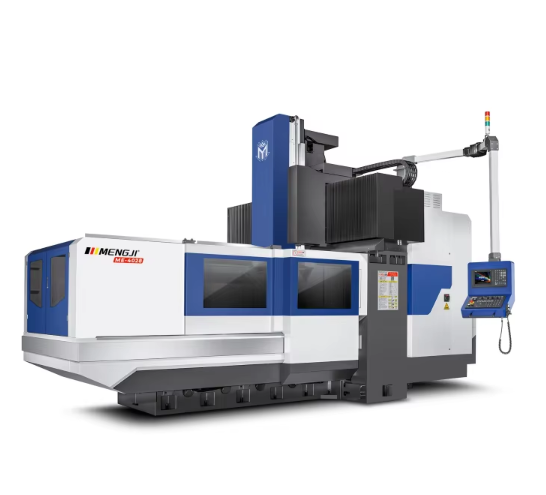
Align Machine Capabilities with Workshop-Specific Part Requirements
Backward Engineering Selection: From Part Dimensions to Required Travel, Rigidity, and Axis Configuration
Start with those really complicated part designs and work backwards. Get out the measuring tools and figure out what kind of X-Y-Z movement range is actually needed. Machines that are too small just won't cut it when it comes to getting the job done right, but going way overboard on size takes up precious shop space nobody wants to waste. When looking at machine frames, cast iron is still king for keeping things stable and dampening vibrations. Most shops do a lot of aluminum milling work these days, probably around half or so according to what folks tell me. The axis setup matters a ton too. Three axis machines take care of most prototype work, sure, but when dealing with those tricky organic shapes that need cutting across multiple planes at once, nothing beats having a good 5-axis CNC machine in the mix.
Material Compatibility Mapping: Aluminum, Plastics, Wood, and Low-Volume Prototyping Needs
Before getting started, it's important to match up spindle specs with what kind of materials will be worked on most often. Aluminum requires spindles running at least 10,000 RPM and needs good flood coolant system because otherwise chips tend to stick together during cutting. Plastic and wood work differently though since they don't need as much torque. Brushless motors can save money here but watch out for heat buildup that might melt things unexpectedly. Shops making small runs of prototypes usually find faster tool changes more valuable than sheer horsepower. Manual change systems still work fine when producing less than 20 pieces at a time. Getting those feed rates and speed settings right from day one saves headaches later on when production gets underway and nobody wants to stop everything just to tweak parameters halfway through a job.
Evaluate Mechanical Build, Power, and Space Constraints for Non-Industrial Environments
Small workshops face unique challenges when integrating CNC milling machines. Unlike industrial facilities, they often operate within tighter spatial, power, and structural limitations. Selecting equipment that aligns with these constraints prevents costly retrofits and ensures sustained productivity.
Frame Rigidity, Linear Motion Systems, and Spindle Quality: Distinguishing Entry-Level from Workshop-Ready CNC Milling Machines
Entry-level machines frequently compromise rigidity to reduce costs, using lighter materials and simpler linear guides. Workshop-ready CNC mills prioritize:
- Cast-iron or polymer-concrete frames for superior vibration damping
- Precision-ground linear rails supporting high cutting forces
- Spindles with balanced rotors minimizing runout under load
This mechanical integrity directly impacts achievable tolerances. For example, machines with box-way guides maintain positional accuracy within ±0.005" during heavy aluminum milling, while low-cost alternatives may drift beyond ±0.015" under identical loads. Thermal stability is equally critical—rigid frames expand predictably, enabling effective software-based compensation.
Electrical & Footprint Realities: 110V/220V Compatibility, Single-Phase Operation, and Shop Floor Integration
Most small workshops lack three-phase power, necessitating 110V/220V-compatible machines. Key considerations include:
- Power Draw: Spindles above 3HP typically require 220V circuits
- Footprint: Machines under 6'×4' fit typical garage spaces while allowing operator access
- Single-Phase Viability: Converters add complexity; native support simplifies installation
A compact 5-axis CNC machine can maximize capability in limited spaces—but only if voltage and amperage align with existing infrastructure. Workshops with 30A/220V circuits can typically support mills drawing ≤5kW without panel upgrades—a decisive factor for cost-effective deployment.
Interpret Performance Metrics Accurately—Especially for Small-Batch Precision
Accuracy, Repeatability, and Thermal Stability: What Tolerances Actually Deliver in Daily Use
When looking at CNC milling specs for their workshops, owners need to know the difference between what manufacturers promise and what actually happens on the shop floor. Let's talk about two key factors here: accuracy, which means how close the machine gets to where it should be, and repeatability, basically whether it can hit the same spot again and again across different runs. Many machines boast ±0.001" accuracy ratings but tend to deliver around ±0.003" to ±0.005" once they start running hot from spindle operation or when temperatures fluctuate throughout the day in the workshop. If someone needs to machine aluminum brackets with tight 0.005" tolerances, they should look for machines equipped with thermally stable ballscrews and solid base construction materials. A good test is to run these machines continuously for at least half an hour before checking their performance. Machines that maintain repeatability under 0.0008" during this period are generally worth investing in, while those that drift beyond that threshold usually belong in home garages rather than professional shops.
Spindle Torque, RPM Range, and Material Capability—Including When a 5-Axis CNC Machine Adds Real Value
What really matters for materials processing isn't just about peak horsepower but the entire torque curve of a spindle. When working with aluminum, operators need plenty of torque between around 6,000 to maybe 10,000 RPM to keep tools from deflecting during cuts. Plastics tell a different story though they generally want speeds pushing past 15,000 RPM for those nice clean edges everyone looks for. Milling steel parts or working with big diameter tools gets tricky below 3,000 RPM where low speed torque makes all the difference. Complex shapes such as turbine blades or intricate mold cavities demand something special. That's where 5 axis CNC machines shine because they cut down on fixture changes while keeping the tool at the right angle throughout the job. Setup times drop dramatically – we're talking roughly 70% reduction – and there's far less chance of making mistakes when manually positioning parts across multiple surfaces.