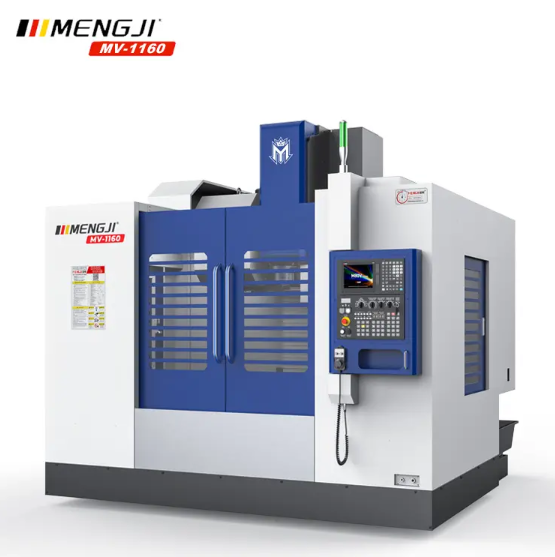
Spindle Accuracy and Thermal Stability in Vertical Machining Centers
When it comes to dimensional accuracy issues in vertical machining centers, thermal expansion stands out as the main culprit. The problem gets really noticeable after prolonged operation periods when parts can deviate by more than 0.0013 mm from their intended specifications. Top manufacturers have started deploying real-time thermal compensation systems these days. These advanced setups constantly tweak axis positions based on data from built-in sensors that pick up even minor temperature changes down to 0.1 degree Celsius differences. To keep things stable, most systems aim to hold ambient temperatures around 20 degrees Celsius plus or minus just 1 degree. They achieve this through specially designed liquid-cooled spindles, especially models featuring carbon fiber reinforced polymer sleeves that actually shrink back when heated, counteracting the natural tendency of materials to expand. Research published in 2024 shows that implementing this kind of active thermal balancing cuts down orientation problems by roughly 60 percent. At the same time, proper temperature-controlled coolant application helps prevent warping of workpieces, keeping movement below one micron per hour throughout continuous cutting processes. For industries working on critical aerospace components, this combination of techniques makes all the difference since thermal drift alone causes about seven out of ten tolerance breaches in production environments.
HSK Toolholding, Spindle Rigidity, and Their Effect on Runout and Repeatability
How well toolholding interfaces perform has a direct impact on what kind of tolerances can be achieved when working with vertical machining centers. Take the HSK (Hollow Shaft Taper) system for instance. Its unique dual contact approach engages both the taper and face at the same time, which gives it around 40% more rigidity compared to older CAT/BT systems that most shops still use. What does this mean practically? Less vibration during operation, so radial runout drops down to about 0.001 mm according to ISO 230-3 standards, whereas standard equipment typically struggles with around 0.005 mm. The bearings are ground with extreme precision and loaded with 15,000 Newtons force to keep things from shifting axially. Meanwhile, the spindle walls are designed thicker to handle those intense centrifugal forces when running at speeds up to 30,000 RPM. All these factors combine to create remarkable stability, allowing surface finishes under Ra 0.2 microns and repeatable positioning within just 0.0005 mm. These specs matter a lot in industries like medical device manufacturing where implant components need to meet incredibly tight tolerances of less than 5 microns throughout entire production runs.
| Parameter | Standard Spindle | Precision HSK Spindle |
|---|---|---|
| Runout | 0.005 mm | 0.001 mm |
| Vibration Damping | Moderate | High |
| Repeatability | 0.002 mm | 0.0005 mm |
| Comparative rigidity and accuracy metrics |
CNC Programming and Intelligent Toolpath Optimization for Vertical Machining Centers
Adaptive Milling and High-Speed Toolpaths for Dimensional Consistency
CAM software these days comes with adaptive clearing features that change cutting settings on the fly as work progresses. The smart algorithms keep chip load steady throughout cuts by watching how much material is actually being removed, which cuts down tool deflection around 40% and makes tools last longer too. When it comes to high-speed machining or HSM for short, the technique relies on those smooth curved paths instead of abrupt turns, so there's less vibration and heat buildup during operations. Vertical machining centers can hit tolerances as tight as 5 microns even when working on complicated shapes. Real-time adjustments to feed rates and stepovers mean shops save between 15 to maybe 25% on cycle times without sacrificing surface quality. Most shops find this balance between speed and precision pays off big time in their bottom line.
AVC and SCC Integration: How Advanced CNC Features Reduce Positional Error
Advanced Vibration Control (AVC) systems keep an eye on those annoying spindle vibrations through accelerometers and then apply counter vibrations to reduce resonance issues when making heavy cuts. Pairing these with Smart Contour Control (SCC) takes things further, as the combined system can actually change how fast the machine axes accelerate while keeping track of position during complex contours. What makes SCC work so well is that its algorithms look ahead at what comes next in the cutting path. They'll slow down feed rates just before hitting those sharp corners to avoid overshooting the mark. Combine both technologies and manufacturers see around half fewer positioning errors in their high precision work, particularly important when dealing with tough materials like hardened alloys where heat buildup really messes with accuracy over time.
Structural Rigidity and Vibration Control in Vertical Machining Center Design
Getting down to sub-5 micron tolerances on vertical machining centers requires solid structural foundations. Most shops opt for machine frames made from either high density cast iron or polymer concrete mixes because these materials naturally dampen vibrations. And this matters a lot since even small amounts of chatter during cutting can blow up dimensional errors by around 15 to 20 percent when working with heavier cuts. Passive vibration control is pretty common too. Tuned mass dampers built right into the column assembly help fight off those annoying resonant frequencies without needing any extra power source. When dealing with trickier harmonic issues though, manufacturers turn to active systems that use piezoelectric actuators along with real-time data from accelerometers to constantly tweak counter forces as needed. Combining passive and active approaches cuts tool tip movement almost in half compared to just using one method alone. The combination of sturdy materials and smart vibration management lets machines maintain their precision no matter what kind of workload they face day after day.
In-Process Quality Assurance for Sub-5μm Tolerances on Vertical Machining Centers
Maintaining sub-5μm tolerances—thinner than a human hair—demands integrated quality systems within vertical machining centers. On-machine probing provides immediate dimensional feedback during machining cycles, enabling automatic tool offset adjustments when deviations exceed thresholds. This real-time correction compensates for thermal drift and tool wear before errors compound.
On-Machine Probing and Statistical Process Control Integration
When we combine measurement data with Statistical Process Control (SPC), it changes how we look at those numbers on the screen. Instead of just seeing raw measurements, SPC helps us spot patterns that predict problems before they happen. The software looks at dimensions across different production runs and catches things like when fixtures start slipping or spindles begin to wear down. Take for instance when bore diameters stay stable within plus or minus 2 microns for 50 parts in a row – that tells us everything is running smoothly. But if there's a gradual increase of about 0.8 microns over time, that's our signal to check what's going wrong. These kinds of systems work great because they catch issues right in the middle of production instead of waiting until after something goes bad. We've seen shops cut their scrap rate almost in half using this approach, especially important in aerospace where tolerances are razor thin and mistakes cost big money.
FAQ
What are the main causes of dimensional inaccuracy in vertical machining centers?
Thermal expansion is the primary cause of dimensional inaccuracies, leading to deviations from intended specifications after prolonged operation.
How do real-time thermal compensation systems work?
These systems adjust axis positions in real-time based on temperature data collected from built-in sensors to maintain precision.
What is the advantage of HSK toolholding systems?
HSK systems provide around 40% more rigidity due to their dual contact approach, reducing vibration and improving tolerances.
How can CNC programming techniques improve machining accuracy?
CNC programming, including adaptive milling and high-speed toolpaths, helps maintain dimensional consistency and reduce tool deflection.
Why is vibration control important in machining centers?
Effective vibration control, both passive and active, is essential to maintaining precision, particularly during heavy cutting operations.
Table of Contents
- Spindle Accuracy and Thermal Stability in Vertical Machining Centers
- CNC Programming and Intelligent Toolpath Optimization for Vertical Machining Centers
- Structural Rigidity and Vibration Control in Vertical Machining Center Design
- In-Process Quality Assurance for Sub-5μm Tolerances on Vertical Machining Centers
-
FAQ
- What are the main causes of dimensional inaccuracy in vertical machining centers?
- How do real-time thermal compensation systems work?
- What is the advantage of HSK toolholding systems?
- How can CNC programming techniques improve machining accuracy?
- Why is vibration control important in machining centers?