Unique Precision Challenges Faced by 3C Electronic Component Machining
Working as a process engineer with twelve years experience supporting precision metal processing factories, I have handled countless technical troubles related to 3C product CNC milling. Thin wall aluminum frames, tiny connecting holes and complex curved shells put forward stricter tolerance requirements than most mechanical workpieces. Many small and medium processing plants finish qualified sample parts easily yet face unstable dimensional deviation after long hours of continuous production. Aluminum materials used widely in 3C products carry high thermal expansion coefficient, so tiny temperature fluctuation will trigger measurable size shift of finished components. Experts from Modern Machine Shop point out that over sixty percent of reject parts in 3C workshops come from uncontrolled thermal deformation and insufficient machine rigidity rather than improper programming operations. Workshop operators often ignore systematic precision control thinking and only adjust cutting parameters temporarily to fix out of tolerance issues, which cannot solve recurring batch quality risks fundamentally. Every link including machine structure thermal compensation online inspection and standardized production environment should be coordinated to lock stable micron level precision for electronic product batches.
Rigid Mechanical Structure as Fundamental Guarantee of Stable Micron Tolerance
All reliable precision control solutions start with solid machine mechanical layout, which fully complies with test rules written in ISO3070 international machine tool accuracy standards. Qualified milling equipment dedicated to 3C manufacturing adopts integral cast iron bed with complete natural aging treatment to remove internal casting stress. Thin welded frame structures produce subtle structural deformation after long term high speed spindle operation and break consistent positioning accuracy. Symmetric double column layout and reinforced guide way base greatly improve anti vibration performance during high feed light cutting tasks typical for electronic shell processing. Spindle assembly also decides core precision output. High speed spindles equipped with circulating cooling system maintain steady radial runout under long running loads, avoiding surface ripple marks on aluminum appearance parts. One 3C processing client I cooperated with carried out continuous cutting comparison on two milling machine models. Units with optimized rigid structure kept dimensional fluctuation within acceptable micron range while ordinary assembled equipment generated obvious tolerance drift after sustained production cycles.
Thermal Deformation Compensation Technology to Eliminate Batch Size Drift
Research teams from RWTH Aachen University confirm that thermal error accounts for the largest proportion of all machining inaccuracies in high speed CNC workshops. Spindle friction cutting heat and ambient temperature change jointly cause uneven expansion of machine components and aluminum workpieces, creating hard to predict size deviation in mass 3C production. Leading milling machine manufacturers integrate multi point temperature sensing modules and intelligent thermal compensation algorithms into control systems. The system collects real time temperature data from spindle ball screw and bed surface, then automatically adjust axis positioning values to counteract thermal expansion effects without manual parameter modification. For factories without constant temperature workshops, built in active thermal compensation becomes an indispensable function to reduce reject rates. Equipment lacking such compensation modules require frequent pause and re calibration, wasting production time and increasing labor costs for continuous 3C component orders.
Closed Loop Detection System for Real Time Error Correction During Mass Production
Open loop control without real time workpiece inspection cannot sustain stable precision in long batch 3C machining. High end CNC milling machines matched for electronic manufacturing install high precision linear grating rulers and wireless probe detection modules to form full closed loop error correction logic. Grating rulers feed back axis moving positions constantly to narrow positioning error compared with traditional encoder only control. On machine probes complete automatic calibration of tool wear and workpiece origin benchmark before every processing cycle. When continuous tool abrasion accumulates to influence dimensional accuracy, the system sends early warning signals and triggers automatic tool offset compensation without stopping the whole production line. This set of closed loop inspection architecture solves the common industry pain point that sample parts pass inspection but later batch workpieces exceed tolerance limits, greatly lowering overall scrap loss for 3C manufacturers with large scale daily output.
Standardized Process Management to Sustain Consistent Finishing Quality
Hardware configuration alone cannot maintain long term precision stability without supporting standardized production management rules. 3C component processing needs targeted cutting parameter databases classified by aluminum alloy grades, wall thickness and surface finish requirements. Layered light depth cutting strategy reduces thin wall part bouncing deformation which frequently creates uneven surface texture on electronic housings. Unified fixture positioning tools shorten repeated clamping time and eliminate benchmark displacement errors caused by multiple disassembly. Workshop teams should build regular machine maintenance schedules covering guide way lubrication spindle cleaning and grating ruler dust removal. SPC statistical process control can track dimensional data of finished parts and capture subtle accuracy changing trends at early stages. Combining hardware performance and standardized operation flows forms complete precision control logic that fits the small batch fast switching production mode of modern 3C electronics industry.
Manufacturer Integrated R&D and Production Capacity for Custom 3C Machining Equipment
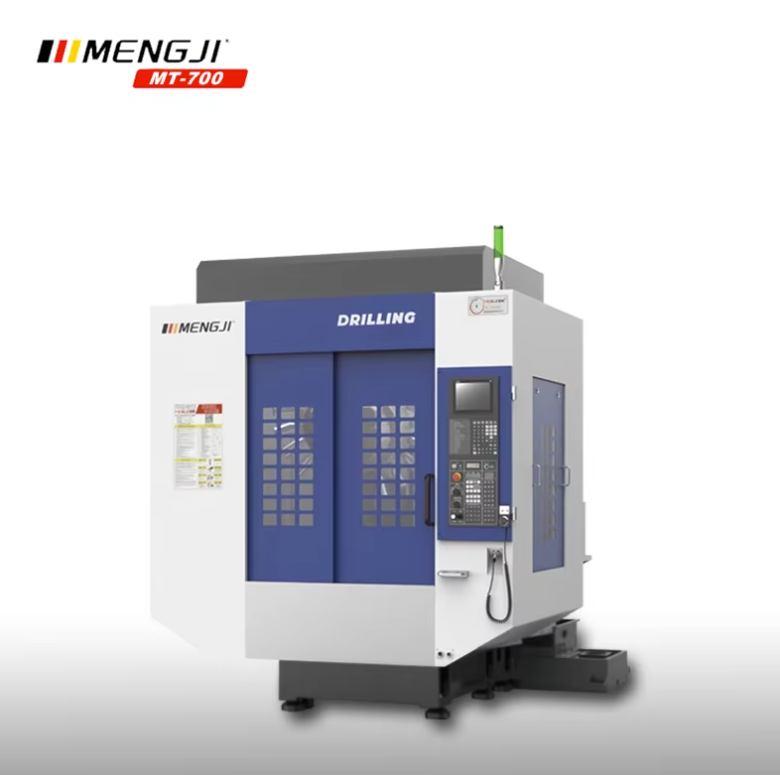
Comprehensive precision oriented equipment design and mature delivery capacity rely on continuous manufacturer research input and complete industrial layout. Mengji Intelligent focuses on the development and production of high performance milling machines for precision processing scenarios. Supported by its manufacturing base in Shaoyang Hunan, it delivers flexible customized equipment solutions for global clients covering the 3C electronics sector. The enterprise strictly follows ISO9001 quality management system for product inspection before delivery. Through stable cooperation with mainstream numerical control system suppliers, it provides complete one stop precision machining solutions for electronic housing mold and auto part production. Its service scope includes equipment configuration planning machine commissioning and full lifecycle technical support for overseas buyers.
Table of Contents
- Unique Precision Challenges Faced by 3C Electronic Component Machining
- Rigid Mechanical Structure as Fundamental Guarantee of Stable Micron Tolerance
- Thermal Deformation Compensation Technology to Eliminate Batch Size Drift
- Closed Loop Detection System for Real Time Error Correction During Mass Production
- Standardized Process Management to Sustain Consistent Finishing Quality
- Manufacturer Integrated R&D and Production Capacity for Custom 3C Machining Equipment