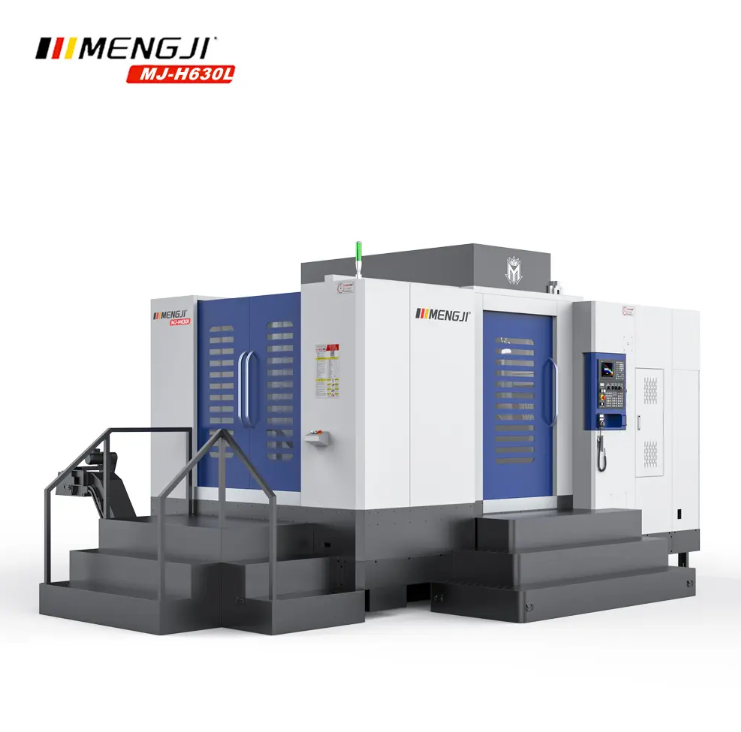
Core Precision Benchmarks Defined for Mold CNC Machining Centers
Mold production sets the strictest precision thresholds among all CNC processing scenarios, and all qualified machining centers must meet unified international and domestic measurement benchmarks to serve mold workshops stably. According to ISO 230 series standards for machine tool geometric accuracy evaluation, professional mold dedicated CNC equipment needs to control positioning accuracy within 0.008mm and repeat positioning accuracy below 0.003mm, while the universal dimensional tolerance requirement for mold cavity and core parts stays at ±0.01mm with surface roughness controlled under Ra 0.4μm. Drawing on over eighteen years of on-site mold machining workshop experience, many small manufacturers ignore these basic benchmarks and adopt general-purpose milling machines to process injection molds, which directly leads to over 20 percent of finished molds failing assembly tests due to inconsistent axis movement deviation. Domestic GB/T 17421.1 standards further clarify laser interferometer detection rules for three linear axes and rotary axes, requiring quarterly full calibration for all mold machining equipment to avoid thermal expansion induced size drift during continuous all-day production. These fixed precision benchmarks are not optional technical targets but mandatory entry barriers for factories supplying high-end automotive and 3C electronic molds.
Full Process Quality Control Under ISO9001 System
A single qualified machine cannot guarantee stable mold precision output; standardized full-process quality management systems form the core foundation of reliable precision execution. Formal high-tech CNC equipment manufacturers fully implement ISO9001 quality management system to build closed-loop inspection covering raw material verification, program simulation, semi-finished product measurement and finished mold comprehensive testing. Every batch of mold steel undergoes material composition scanning before clamping, and all G code programs pass virtual collision simulation to eliminate tool offset errors and coordinate misalignment issues in advance. During continuous processing, inspectors record real-time spindle temperature and cutting force data every two hours, and key mold structures receive full three-coordinate measuring instrument inspection rather than random sampling. This transparent inspection mechanism solves the common pain point of uneven precision between early and late workpieces in long-hour production. Without standardized process supervision, even top-grade machining centers will produce defective molds after several weeks of continuous operation due to accumulated tiny parameter deviations.
Equipment Structural Design Supporting Stable Long Term Precision
Long-term precision retention relies on targeted structural design customized for mold processing, rather than simple assembly of standard mechanical components. Mold manufacturing involves deep cavity milling, complex curved surface five-axis linkage and heavy material cutting, so machining centers need reinforced cast frames and high-speed vibration resistant spindles to offset cutting pressure deformation. Senior R&D specialists in CNC equipment point out that thermal compensation modules are indispensable for mold dedicated vertical and gantry machining centers, as temperature fluctuation will change spindle elongation and guide rail clearance without automatic parameter adjustment. Entry level universal machining centers lack independent thermal compensation systems, and their precision will decline obviously after three months of heavy mold processing. Professional mold equipment manufacturers match high rigidity linear guide pairs and high response servo drive systems for all mold machining center models, effectively reducing micro vibration during fine finishing and keeping surface roughness stable within the required range for months of continuous production.
Practical Production Cases of Precision Standard Implementation
A complete set of precision standards creates tangible efficiency and cost advantages in real mold mass production. A large automotive parts manufacturer once replaced old three-axis ordinary milling machines with mold dedicated five-axis machining centers to produce automotive interior injection molds. Before equipment upgrading, the workshop faced a 18 percent scrap rate caused by curved surface tolerance out of range, and each mold required three rounds of manual polishing to meet assembly standards. After switching to equipment that fully complies with mold industry precision benchmarks, the dimensional deviation of all mold cores stayed within ±0.01mm, scrap rate dropped by 15 percent, and overall mold processing cycle shortened by 40 percent. The client also cut post processing labor expenditure significantly and extended mold service life by nearly one third. This real case proves that investing in machining centers that meet strict mold precision standards delivers clear return on investment within half a year, far outweighing the extra upfront equipment procurement cost.
How Precision Standards Drive Commercial Value for Mold Manufacturers
Strictly executed precision standards become core competitive advantages for mold enterprises in the current competitive manufacturing market. Research data released in the 2026 China Precision Mold Industry Report shows that mold suppliers capable of stable micron level precision gain 12 to 18 percent higher average order profit margins than factories relying on low precision equipment. Molds processed within unified precision standards have smoother demolding performance, fewer product burrs and lower maintenance frequency after being delivered to injection molding workshops, which greatly improves customer satisfaction and long-term cooperation willingness. Many mold buyers now add machine tool precision inspection clauses into procurement contracts, refusing to cooperate with suppliers unable to provide complete accuracy test reports. For mold manufacturers, matching standard compliant CNC machining centers is no longer a technical upgrade choice but a necessary measure to maintain stable customer orders and expand market share in automotive, mold and 3C electronics sectors.
Integrated Manufacturing Capacity to Sustain Consistent Precision Output
Maintaining long term stable precision delivery requires matching complete independent R&D, production and after sales supporting capacity, which Mengji Intelligent has built through years of layout as a professional high-end CNC equipment supplier. Established in 2007 with two production bases in Hunan Shaoyang and Guangdong Dongguan, the brand invests over 120 million RMB in R&D and owns more than twenty product design patents, supported by a fifty person professional technical team with decades of mold equipment development experience. The official launch of phase two production plant lifted overall annual production capacity by 50 percent, enabling sufficient supply of vertical, horizontal, gantry and drilling milling centers customized for mold processing. The brand carries out four sales modes including OEM ODM and direct brand sales, providing one stop customized services covering production line planning, equipment installation, operation training and regular after sales maintenance. Strategic cooperation with Guangzhou CNC further optimizes numerical control system matching for mold machining, ensuring all delivered equipment can continuously meet the full set of precision standards required by global mold manufacturers and deliver consistent high accuracy performance for long term batch production.
Table of Contents
- Core Precision Benchmarks Defined for Mold CNC Machining Centers
- Full Process Quality Control Under ISO9001 System
- Equipment Structural Design Supporting Stable Long Term Precision
- Practical Production Cases of Precision Standard Implementation
- How Precision Standards Drive Commercial Value for Mold Manufacturers
- Integrated Manufacturing Capacity to Sustain Consistent Precision Output