The Real Cost of Neglect
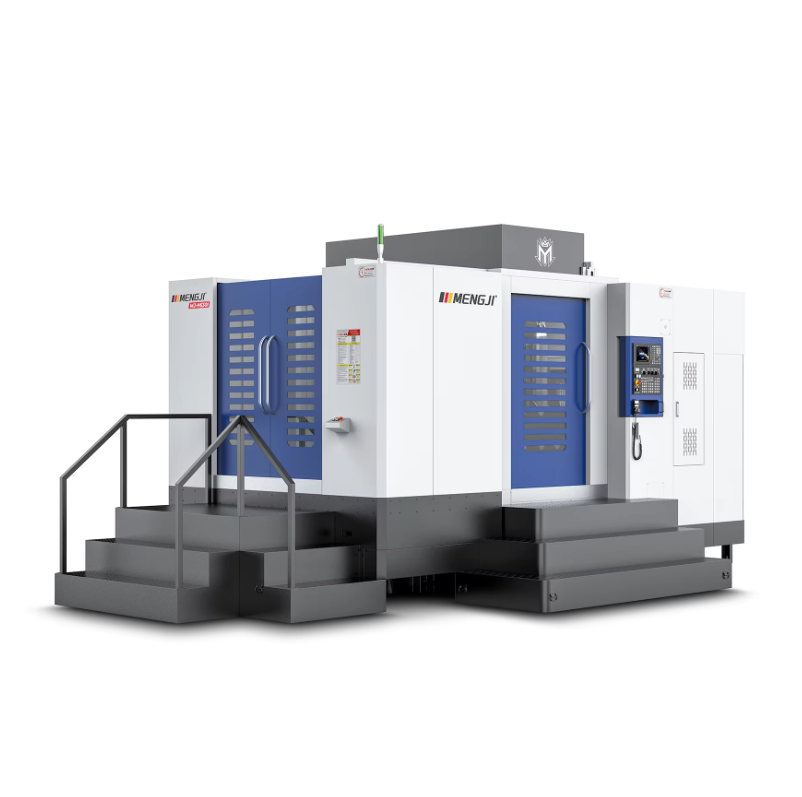
A horizontal machining center represents a significant capital investment, and how it is maintained directly determines the return on that investment. In our work with manufacturers across Southeast Asia and other regions, we have seen the same pattern repeat itself: shops that treat maintenance as an afterthought inevitably face unplanned downtime, scrapped parts, and costly emergency repairs-. One shop we worked with in Indonesia ignored the coolant system for months until thermal drift caused a 0.05mm deviation across an entire production batch. The scrap cost alone exceeded what a full year of preventive maintenance would have run. The math is straightforward. Preventive maintenance can reduce CNC machine downtime by up to 30% and extend equipment lifespan by 20%-. For a machine that runs two shifts a day, that translates directly to more parts shipped and fewer service calls.
Spindle Care as the Heart of the Machine
The spindle is the single most critical component on any horizontal machining center. It delivers cutting speed, holds the tooling, and determines surface finish quality. When bearing condition degrades or the taper becomes contaminated, runout increases and part quality suffers. A monthly spindle inspection routine pays for itself many times over. This means removing the front cover, cleaning internal dust and oil residue, checking bearing condition, and applying or replacing specialized grease as needed-. Operators should also log spindle vibration on a daily basis. A sudden change in vibration signature is often the earliest warning of bearing failure. Catching it early means a scheduled bearing replacement during a planned downtime window rather than a catastrophic spindle seizure in the middle of a production run. The difference in cost and disruption is enormous.
Coolant Systems and Thermal Stability
Temperature control is everything in precision machining. Horizontal machining centers generate significant heat during operation, and if the coolant system is not properly maintained, thermal drift will compromise dimensional accuracy. The daily routine should include checking coolant levels and topping up as needed, while the weekly routine should include checking coolant concentration and adjusting based on the material being machined and ambient temperature-. Filters need regular cleaning to prevent clogging from chips and debris. One manufacturer we know lost an entire week of production because a neglected coolant filter caused the system to overheat and trip the machine's thermal safety shutdown. That week cost them not just in lost output but in rushed delivery penalties and damaged customer trust. Clean coolant at the right concentration is cheap insurance against expensive problems.
Lubrication and the Fight Against Friction
The linear guideways and ball screws that carry motion on a horizontal machining center depend on proper lubrication to maintain accuracy and prevent premature wear-. Insufficient lubrication leads to increased friction, which accelerates wear and introduces backlash and positioning errors. The daily checklist should include verifying that lubrication levels are adequate and that the automatic lubrication system is functioning properly-. Operators should also listen for any unusual sounds from the gearbox or hydraulic pump during operation. These audible cues are often the first sign that something is wrong. A squeaking guideway or a noisy pump should never be ignored. In our experience, shops that train operators to report these early warning signs consistently have lower maintenance costs and longer machine life than those that wait until something breaks.
Precision Calibration and Geometric Accuracy
Over time, even the best-built horizontal machining center will experience some drift in geometric accuracy. Thermal expansion, normal wear, and the cumulative effect of cutting forces all contribute-. Monthly calibration checks using test pieces help verify that the machine is holding tolerances. Periodic backlash checks preserve positional accuracy and reduce scrap. For shops running high-value parts in aerospace, automotive, or medical applications, these calibration routines are non-negotiable. We have seen shops that skipped calibration for six months suddenly discover that every part produced in that period was out of specification. The rework costs were devastating. A disciplined calibration schedule is not an expense; it is an investment in quality assurance.
Documentation and Operator Training
The best maintenance plan is useless if it is not followed consistently. Detailed service records allow maintenance teams to spot patterns and predict when components will need replacement-. A machine that logs every lubrication, every calibration, and every part replacement gives the maintenance team the data they need to move from reactive to predictive maintenance-. Operator training is equally important. The people running the machine every day are the first line of defense against problems. When operators know what to look for and understand why each maintenance task matters, compliance improves and problems get caught earlier. One of our clients in Malaysia implemented a simple operator checklist and saw their unplanned downtime drop by nearly 40% within six months. The checklist did not add new tasks; it just made sure the existing ones got done.
Putting It All Together
Maintaining a horizontal machining center is not complicated, but it does require discipline and a systematic approach. The daily, weekly, and monthly tasks are well documented in industry guides. The challenge is execution. Shops that commit to a rigorous preventive maintenance program consistently outperform those that do not. They have higher uptime, better part quality, lower scrap rates, and fewer emergency repairs. They also have happier customers because they deliver on time.
For manufacturers looking to maximize the lifespan and performance of their horizontal machining centers, partnering with an equipment provider that understands both the technology and the application is invaluable. Mengji CNC, with its 40000-square-meter production base in Hunan and its long-standing partnerships with Mitsubishi, Fanuc, Siemens, and Hiwin, builds horizontal machining centers engineered for durability and precision. The company's product lineup spans over eighty models across four major series, serving industries from automotive and aerospace to new energy and medical devices. With a sales and service network covering Southeast Asia, Russia, Europe, and the Americas, Mengji CNC provides the technical support and spare parts availability that keep production lines running. A machine is only as good as the support behind it, and that is where a committed manufacturing partner makes all the difference.