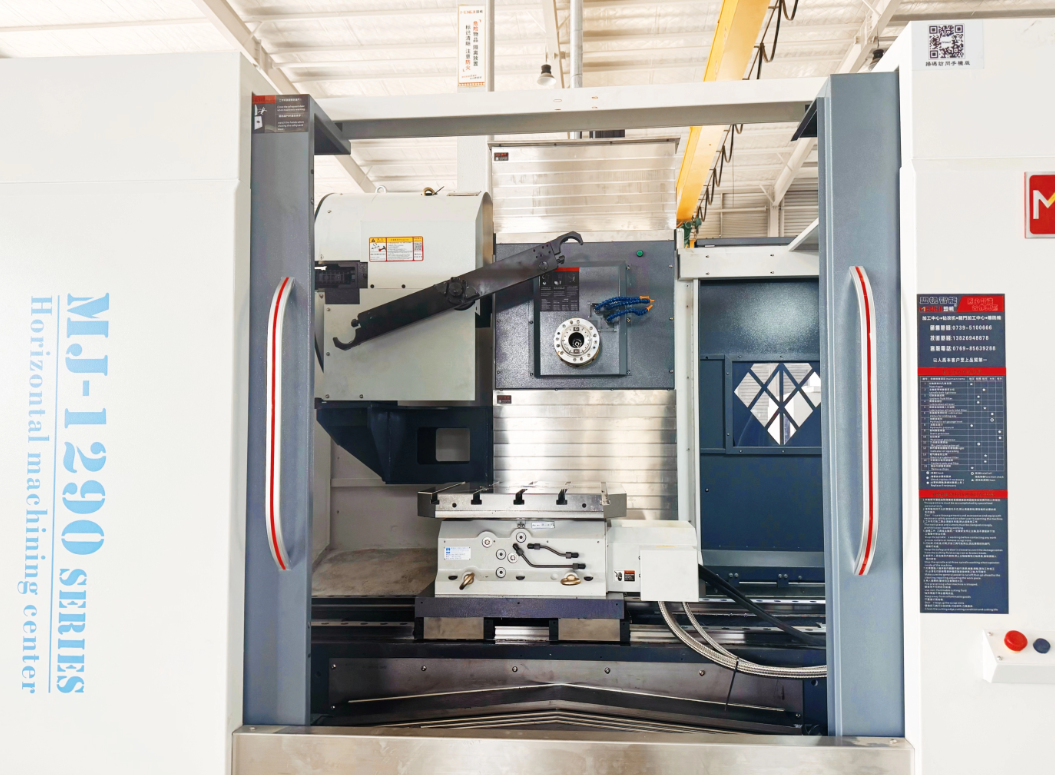
Match CNC Machining Center Configuration to Your Precision Application
Selecting Between 3-Axis, 5-Axis, and Swiss-Type CNC Machining Centers for Tolerance Bands (±0.0002 in) and Surface Finish (Ra µ 0.4 µm)
When dealing with tolerances below ±0.0002 inches and surface finishes smoother than Ra 0.4 µm, the type of machine being used makes all the difference in what can actually be achieved. Regular 3-axis CNC machines handle flat surfaces and boxy shapes just fine, but they struggle with complicated curves because they can't adjust their movement as freely. This often leads to errors building up when parts need to be set down and picked up again during production. That's where five-axis systems come in handy. These advanced machines keep the tool moving continuously without needing to stop and reset, which is why they're so important for making things like airplane turbine blades, camera lens elements, and spherical parts that require repeatable accuracy within 0.1 µm. For really long, thin components such as medical screws or tiny wires used in brain surgery, Swiss-style lathes are the go-to solution. They combine special cutting tools with built-in guides that prevent bending, allowing manufacturers to maintain incredibly tight diameter control of ±0.0001 inches even on parts that are 50 times longer than they are thick.
When Micromachining Centers or Turn-Mill Hybrids Are Essential: Medical Implants, Aerospace Turbine Blades, and Micro-Electronics Connectors
When working with features smaller than half a millimeter or needing multiple processes combined to maintain shape accuracy, micromachining centers and turn-mill hybrids aren't just nice to have anymore. They're essential. These advanced machining platforms come packed with high speed spindles that can spin at 60 thousand RPM and incredibly precise encoders down to the nanometer level. Such capabilities make them perfect for creating complex structures like vascular stent lattices where wall thickness needs to stay within plus or minus five microns and surface roughness must be between 0.2 and 0.3 microns for proper bone integration. The turn-mill hybrids are particularly useful for making full titanium spinal implants all in one setup, keeping the alignment between different parts within an amazing 0.8 microns. Looking at aerospace applications, these machines handle drilling cooling holes in turbine blades at tricky compound angles up to fifteen degrees, hitting those targets with incredible precision within two arc minutes. And don't forget about micro-D connectors either. Hybrid systems here keep pin spacing below three microns across hundreds of cavities while still meeting strict positional tolerances of no more than 1.5 microns for those gold plated contacts.
Prioritize Hardware and Control Systems That Guarantee Sub-Micron Repeatability
Getting down to sub-micron repeatability at or below 0.5 microns isn't just about throwing together high spec components. It requires hardware and control systems that work seamlessly together. Thermal expansion is actually responsible for around 70% of those annoying dimensional changes during precision machining. Just think about it - when temperatures rise by 0.1 degrees Celsius, steel expands by about 1.2 microns per meter length. That's why top tier manufacturing systems invest heavily in liquid cooled spindles that maintain stability within plus or minus 0.01 degrees Celsius. They also use mineral cast bases which handle vibrations much better than regular structural steel, absorbing roughly 40% more movement. For active damping, manufacturers employ piezoelectric counterweights activated by real time accelerometers. These systems knock out resonant chatter in just four milliseconds, cutting vibration levels by 15 to 20 decibels while maintaining surface finishes under 0.3 microns even after long production periods. All these layers of rigidity keep positional accuracy well within 0.8 microns throughout an entire eight hour shift. This kind of performance makes all the difference when manufacturing critical components like titanium blades for aircraft engines or high quality medical implants where tolerances simply cannot be compromised.
Spindle Thermal Management, Structural Rigidity, and Active Vibration Damping in High-Precision CNC Machining Centers
Three interdependent engineering pillars sustain consistent sub-micron performance:
- Thermal Management: Direct-cooled spindles paired with closed-loop chillers maintain thermal stability within ±0.3 µm—even during prolonged titanium machining where spindle temperatures exceed 800°C
- Structural Integrity: Polymer-concrete frames deliver 2.5× greater vibration damping than cast iron; linear motor drives eliminate mechanical backlash inherent in ball-screw systems
- Active Dampers: Integrated accelerometers detect emerging vibration signatures and initiate counterforces in under 4 ms—preserving contour fidelity and enabling Ra µ 0.3 µm surface finishes without post-process polishing
Real-Time Compensation Tools: Dynamic Look-Ahead Interpolation, Laser Ballbar Calibration, and On-Machine Probing
Modern CNC controls embed metrology-grade compensation directly into the motion system:
- Dynamic Look-Ahead Interpolation pre-processes toolpaths at 1,000 blocks/sec, dynamically adjusting feed rates to prevent contour deviations beyond ±0.2 µm—especially vital for tight-radius transitions on turbine airfoils
- Laser Ballbar Systems perform full volumetric accuracy mapping, identifying and compensating for squareness, straightness, and positioning errors down to 0.1 arc-seconds
- On-Machine Probing, using touch-trigger probes with 0.1 µm repeatability, verifies critical geometry every 10 cycles—enabling real-time SPC without unclamping or offline CMM verification
This hardware-control synergy reduces scrap rates by 90% in regulated medical batches where ±0.0002 in consistency is mandatory [Ponemon Institute, Cost of Manufacturing Failure in MedTech, 2023].
Validate Quality Infrastructure and Certification Alignment with Your Industry Requirements
When it comes to precision manufacturing, we need actual proof not just fancy marketing brochures. Certification documents act as tangible evidence that processes meet specific standards matching what the product needs. For example, anyone supplying parts to the aerospace industry must have AS9100 certification. This shows they follow strict rules for making components that go into planes and spacecraft. Medical device makers face similar requirements with ISO 13485, which keeps track of materials that touch human bodies and makes sure surfaces can withstand sterilization procedures. Automotive manufacturers dealing with precision parts rely on IATF 16949 standards, which force them to implement statistical process control for mass production runs. Studies indicate shops with either AS9100 or ISO 13485 tend to maintain around 40% tighter control over temperature variations during testing than those only certified under basic ISO 9001 standards. Good quality management systems don't just collect data points. They actually integrate things like automatic coordinate measuring machine reports, digital records showing when cutting tools were last calibrated, and live dashboards tracking process statistics. These aren't optional extras but fundamental parts of how work gets done properly. Before signing contracts, always double check exactly what each certification covers regarding specific parts being produced. Especially important for items implanted inside people or used in aircraft construction, since missing documentation details can lead to massive financial penalties running into hundreds of thousands of dollars according to recent research from the Ponemon Institute on manufacturing failures in medical technology sectors.
Frequently Asked Questions (FAQ)
What are the key differences between 3-axis and 5-axis CNC machining centers?
3-axis CNC machines are suitable for flat surfaces and simple geometries, while 5-axis machines handle complex curves and continuous movements, providing higher precision for intricate parts such as airplane turbine blades.
Why are Swiss-type CNC lathes preferred for long, thin components?
Swiss-type lathes use special cutting tools and guides to maintain tight diameter control, making them ideal for parts much longer than their thickness, such as medical screws and tiny wires.
What role do turn-mill hybrids play in manufacturing?
Turn-mill hybrids allow multiple processes in one setup, essential for precise parts like titanium spinal implants, maintaining alignment within microns.
How do modern CNC controls enhance precision?
Modern controls incorporate real-time compensation tools like dynamic look-ahead interpolation and on-machine probing, reducing scrap rates and maintaining tolerances within strict limits.
Table of Contents
-
Match CNC Machining Center Configuration to Your Precision Application
- Selecting Between 3-Axis, 5-Axis, and Swiss-Type CNC Machining Centers for Tolerance Bands (±0.0002 in) and Surface Finish (Ra µ 0.4 µm)
- When Micromachining Centers or Turn-Mill Hybrids Are Essential: Medical Implants, Aerospace Turbine Blades, and Micro-Electronics Connectors
- Prioritize Hardware and Control Systems That Guarantee Sub-Micron Repeatability
- Spindle Thermal Management, Structural Rigidity, and Active Vibration Damping in High-Precision CNC Machining Centers
- Real-Time Compensation Tools: Dynamic Look-Ahead Interpolation, Laser Ballbar Calibration, and On-Machine Probing
- Validate Quality Infrastructure and Certification Alignment with Your Industry Requirements