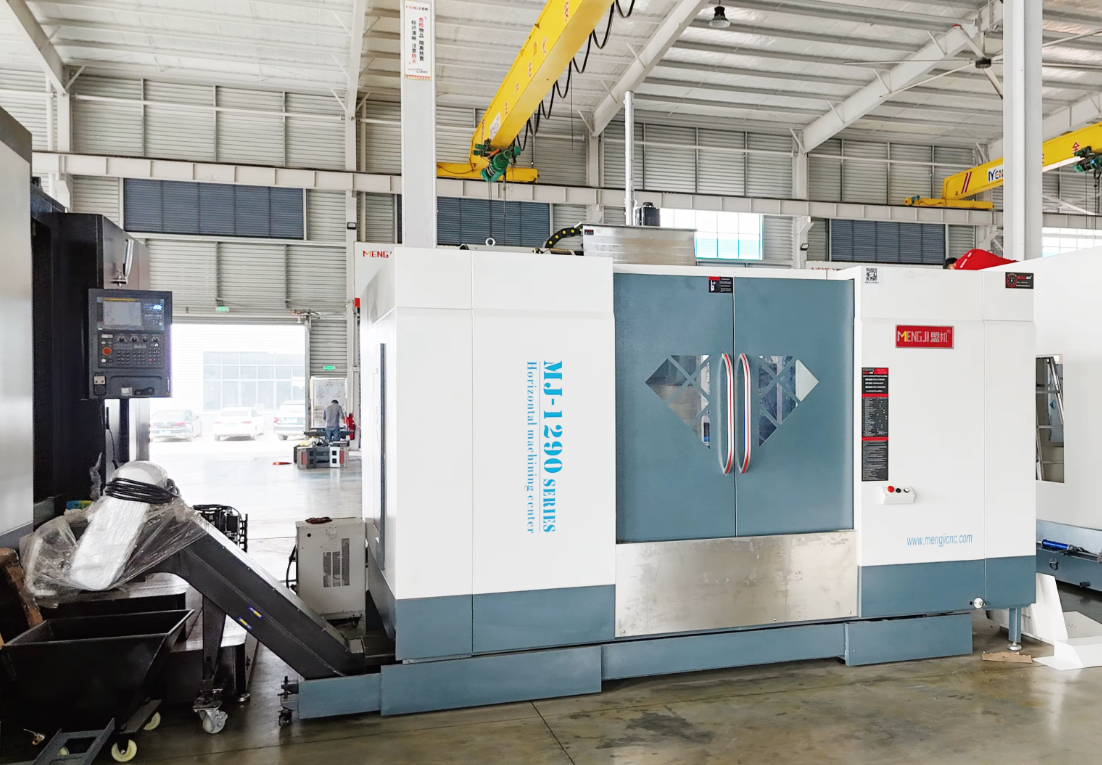
True Multi-Side Machining in a Single Setup
How Horizontal Orientation Enables Simultaneous Access to Multiple Part Faces
In Horizontal Machining Centers (HMCs), the spindle runs parallel to the work surface which gives operators straight line-of-sight access to almost all four sides of a part during one setup. With this layout, cutting tools can reach neighboring surfaces at just the right angle, sometimes even working on multiple areas at once without needing to manually adjust positions. Vertical machines have a different problem altogether since gravity tends to drop chips right back into the cutting area. But HMCs work differently because chips naturally fall away into built-in conveyors, keeping things cleaner and moving faster through the process. What does this mean for real world machining? Less hands-on work for machinists when finishing off prismatic parts. Setup mistakes that come from trying to align parts across several fixtures get cut down dramatically. When dealing with complicated parts such as those used in valves or transmission cases, manufacturers report saving around three quarters of the time usually spent on repositioning tasks according to recent data from the AMT's 2023 efficiency reports.
Tombstone Fixturing and Indexable Rotary Tables for Complete Part Completion
Tombstone fixtures mount multiple workpieces vertically on rigid, modular bases, while indexable rotary tables provide precise, programmable rotation around horizontal axes. Together, they enable full 5-axis machining access through automated angular positioning—delivering true “done-in-one” manufacturing:
| Feature | Benefit |
|---|---|
| Modular tombstone faces | Hold 4–8 workpieces simultaneously |
| Programmable indexing | Rotate parts to exact angular positions (±0.001°) |
| Pallet systems | Enable continuous machining during loading/unloading |
By keeping everything aligned to one main reference point during manufacturing, this method gets rid of those annoying tolerance issues that build up when parts are set up multiple times. Recent research from the aerospace industry in Precision Engineering back in 2024 showed some impressive results. They found that when making turbine housings with these special tombstone and rotary table machines, almost 99.8% came out right on the first try. That's way better than the old ways which only hit around 87%. And let's not forget about those tiny details. When we stop having to clamp parts over and over again, measurements stay consistent between batches. This matters a lot for hydraulic parts where surfaces need to be super flat - talking about less than 0.01 mm difference here. Getting that kind of precision makes all the difference in quality control.
Enhanced Operational Efficiency with Horizontal Machining Centers
30% Average Productivity Gain Through Reduced Setup and Handling
Horizontal machining centers really boost productivity because they cut down on all those little tasks that don't actually add value to the product. With tombstone fixtures, shops can clamp several parts at once instead of dealing with them individually. Pallet changers let machines run overnight without anyone watching, which saves a ton of time. The whole process between operations basically disappears, cutting down on manual work by around 45% compared to traditional vertical machines. When it comes to setting things up, especially for parts that need machining on multiple sides, the time saved is pretty impressive. According to industry data from AMT, most companies see about a 30% jump in productivity after switching to these systems. A major automotive parts manufacturer even reported their cycle times dropped by nearly 37% after implementing HMC technology across their shop floor.
Gravity-Driven Chip Evacuation: Less Recutting, Longer Tool Life
Horizontal spindles just happen to work better when it comes to managing chips during machining operations. The chips tend to drop right out of the cutting area into those conveyor belts below, so they don't get recut which wears down inserts much faster than normal. For shops doing lots of aluminum milling, this means changing out inserts happens about 15 to maybe even 25 percent less often. Coolant can move through the system without getting blocked, which helps keep temperatures under control and extends how long tools last before needing replacement. Work areas stay cleaner overall too, so there's less chance of having to stop production unexpectedly to clear away all that metal scrap. On average, factories save around 18 extra minutes each shift when running non-stop because of this.
Superior Dimensional Accuracy and Repeatability
Elimination of Cumulative Tolerance Stack-Up Across Setups
Horizontal machining centers get better results because they handle multiple sides of a part during just one setup. With traditional vertical machining, parts usually need to move from machine to machine or be reclamped several times, which causes small misalignments every time. According to some studies published in engineering journals, these repeated setups can actually reduce precision by around 0.05 to 0.1 millimeters each time we reset things. Horizontal machining avoids this problem entirely since it works on all important features like bores, faces, and ports without needing to adjust clamps again. When engine blocks are made using horizontal methods, the alignment stays within about plus or minus 0.01 mm between cylinder banks. This level of consistency means manufacturers see significantly fewer defective parts, sometimes cutting waste by as much as 30% in industries where precision matters most like aerospace components and medical devices.
Minimized Alignment Errors from Part Re-Clamping and Fixture Variation
Every time parts get reclamped during machining, there's a risk involved. Studies from NIST traceable metrology show that things like fixture wear, thermal expansion, or just plain old human error can actually move those part datums anywhere from 0.03 to 0.08 mm on average. But HMCs completely sidestep this problem. With these machines, parts stay locked into those solid tombstone fixtures throughout the whole process. Meanwhile, the rotary tables do all the heavy lifting when positioning parts for cutting tools. What does this mean? Critical features like valve seats and guide holes maintain their proper alignment. No more worrying about those pesky datum shifts messing up how everything fits together functionally. And look at the numbers: manufacturers report first pass success rates over 98% for really important components, even when running batches that last weeks or months straight through.
Advanced Rotary Axis Integration for Complex Multi-Surface Work
B-Axis and Dual-Rotary Table Capabilities in Modern Horizontal Machining Centers
Today's high-end machining centers come equipped with B-axis tilting spindles along with dual rotary tables that enable what's called true 5-axis machining. Basically, this combines standard X/Y/Z movements with rotation capabilities. The big advantage? No need to stop and reposition parts for different faces. Take the B-axis for instance it lets tools engage at compound angles while the rotary tables move the workpiece around. This makes it possible to machine those tricky undercuts and create smooth contours on things like turbine blades or impellers all in one go. Some aerospace companies have seen about 40% fewer issues with tolerances on complex impellers since they started using this tech according to a recent 2023 study from Sandvik Coromant. What's really important is that the machines stay rigid even when cutting through tough materials hard enough to cause bending problems. Pair these systems with good CAM software and suddenly we're talking about tool paths that avoid collisions, remove metal faster, yet still keep the part intact. Parts that used to be impossible to make are now becoming regular production items thanks to these advancements.
FAQ Section
What are Horizontal Machining Centers (HMCs)?
Horizontal Machining Centers are machines where the spindle is oriented horizontally parallel to the work surface, allowing for easier access to multiple sides of a part during production.
How do HMCs enhance productivity?
HMCs reduce setup and handling time due to their layout, resulting in significant productivity gains, often by around 30% compared to traditional methods.
What advantages do tombstone fixtures offer?
Tombstone fixtures accommodate multiple workpieces at once, reducing the need for frequent reclamping and contributing to higher precision and efficiency.
Why is chip management better in HMCs?
The horizontal spindle design allows chips to fall away naturally, reducing recutting, preserving tool life, and keeping work areas cleaner.
What benefits do modern machining centers with advanced rotary axis integration provide?
They enable complex multi-surface work without the need for repositioning parts, creating opportunities for efficient and accurate production on challenging components like turbine blades.